Driving into Positano looks more complicated online than it usually is in practice.
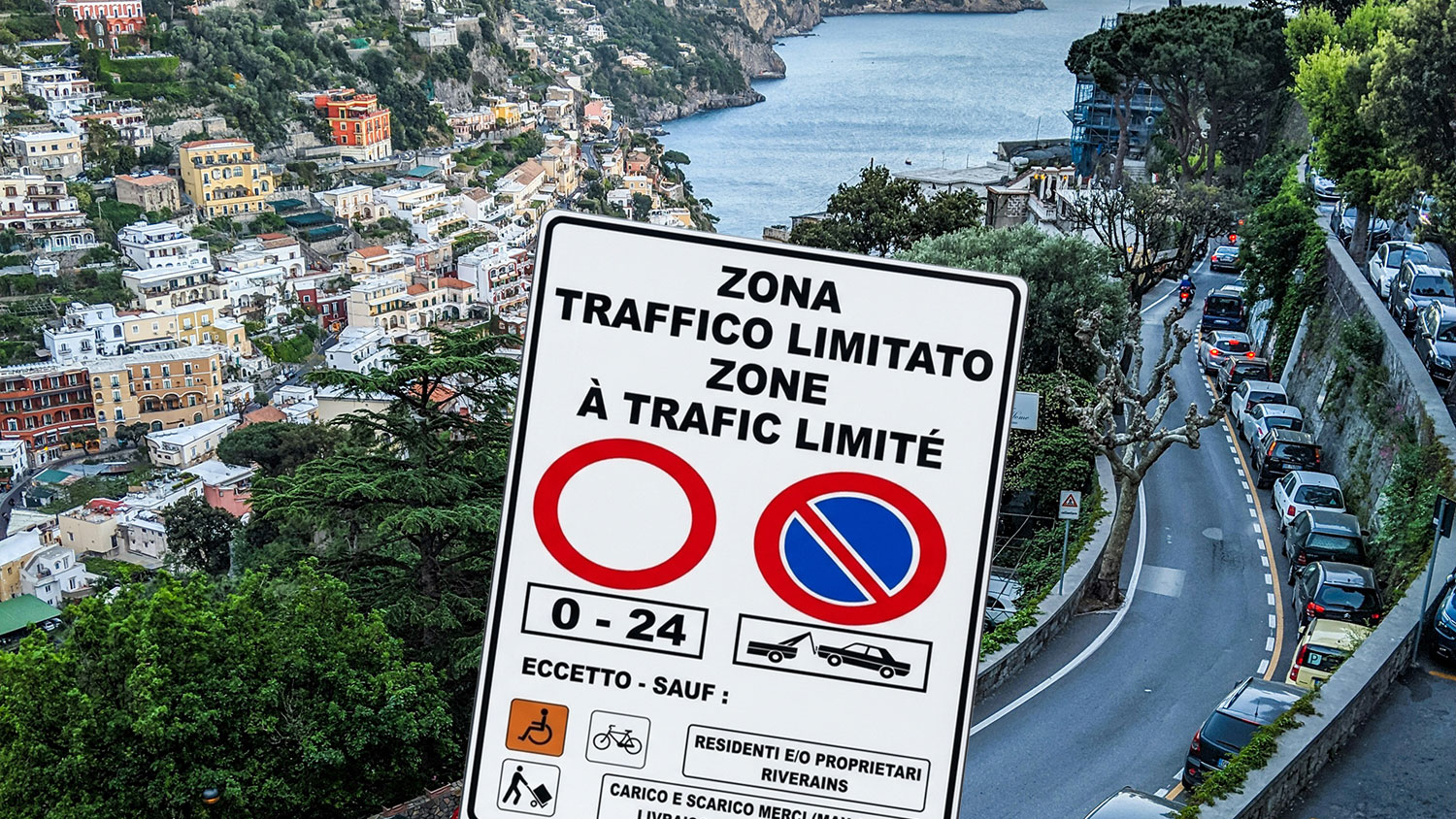
Part of the confusion comes from two completely different traffic rules being mixed together: Positano’s local ZTL and the odd/even license-plate restrictions on the SS163 Amalfitana.
If you are visiting in an ordinary rental car, that distinction is important.
Positano’s current 2026 ZTL guide specifically lists vehicles with six or more seats, including the driver, and qualifying buses among the vehicle categories subject to payment and registration through the ZTL portal. An ordinary five-seat passenger car is not listed among those paid categories.
That does not give you permission to ignore local signs or drive wherever Google Maps sends you, of course. Positano still has controlled streets, pedestrian areas, temporary traffic measures and very limited parking.
But it does mean that for most visitors in a normal rental car, the bigger issues are the SS163 license-plate rule and where you are going to park.
Positano ZTL at a glance
The Positano ZTL is not the same as the Amalfi Coast odd/even licence-plate rule. For most visitors in a normal 5-seat rental car, the SS163 restrictions and parking are the things to check first.
Does a normal rental car need a Positano ZTL permit?
For a normal 5-seat rental car, the current Positano ZTL guide does not list your vehicle among the categories that have to pay and register through the portal.
The municipality specifically names:
→ Vehicles with 6 or more seats, including the driver
→ Qualifying buses
So if you are driving a typical small rental car — a Fiat Panda, Peugeot 208, VW Polo or something similar — you do not need to buy a Positano ZTL permit simply because you are a tourist.
The part worth checking is the official number of seats, not how big the car looks. This matters if the rental company gives you a larger people carrier or 7-seat vehicle instead.
There is one important caveat: ZTL payment rules are not the same thing as unrestricted access everywhere in town. Positano still has pedestrian streets, local traffic controls and temporary restrictions, so always follow the signs you see when you arrive.
If your hotel has a garage or wants you to unload luggage near the property, ask them for the exact arrival instructions beforehand. In Positano, that is often more useful than trying to work out the route from Google Maps alone.
Where is the Positano ZTL?
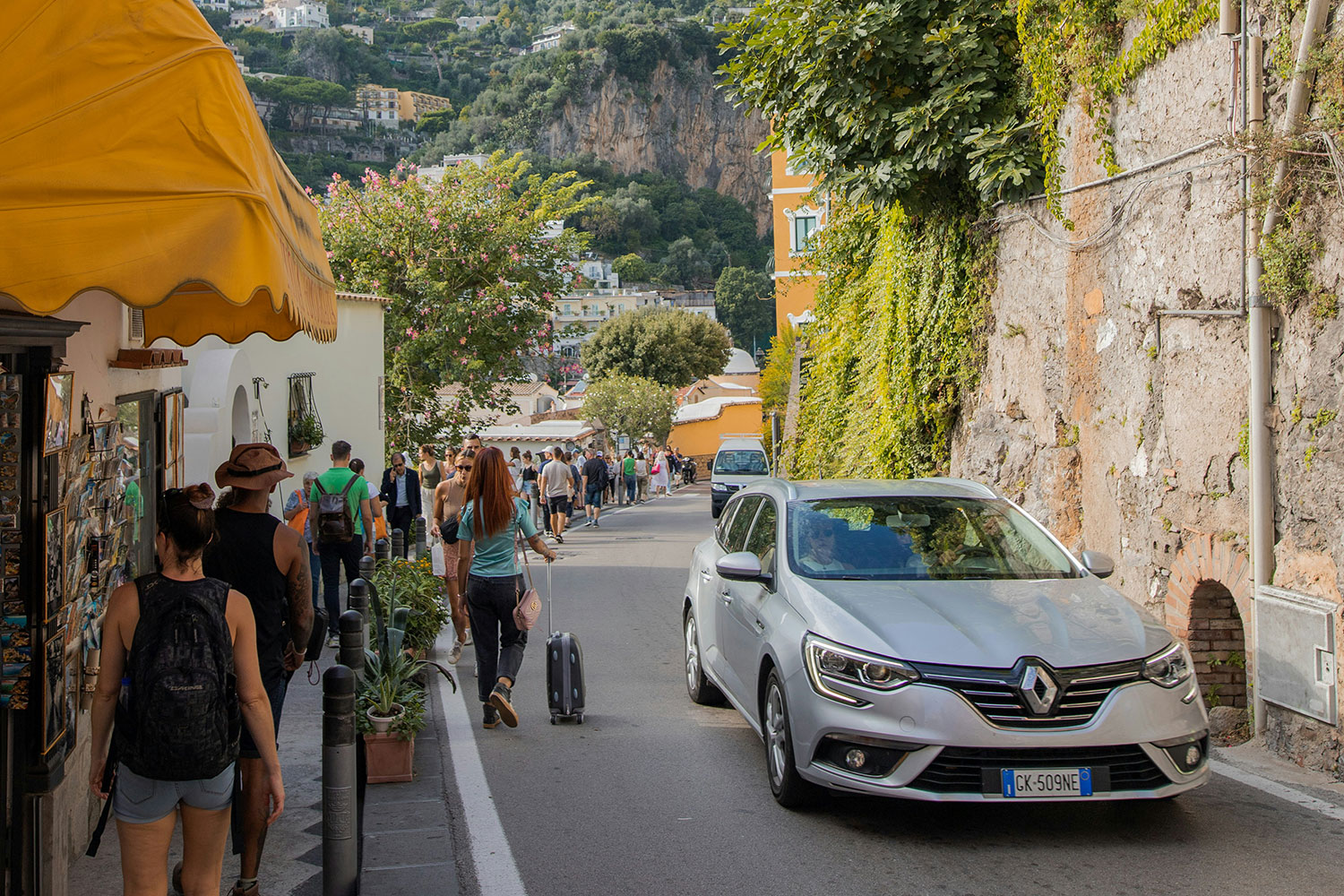
The official municipal guide identifies the ZTL along Via Pasitea, Piazza dei Mulini and Via Cristoforo Colombo.
📍 Piazza dei Mulini on Google Maps
These are not roads on the edge of town. They are part of the main internal route through central Positano, so this is exactly where visitors can start overthinking the rules.
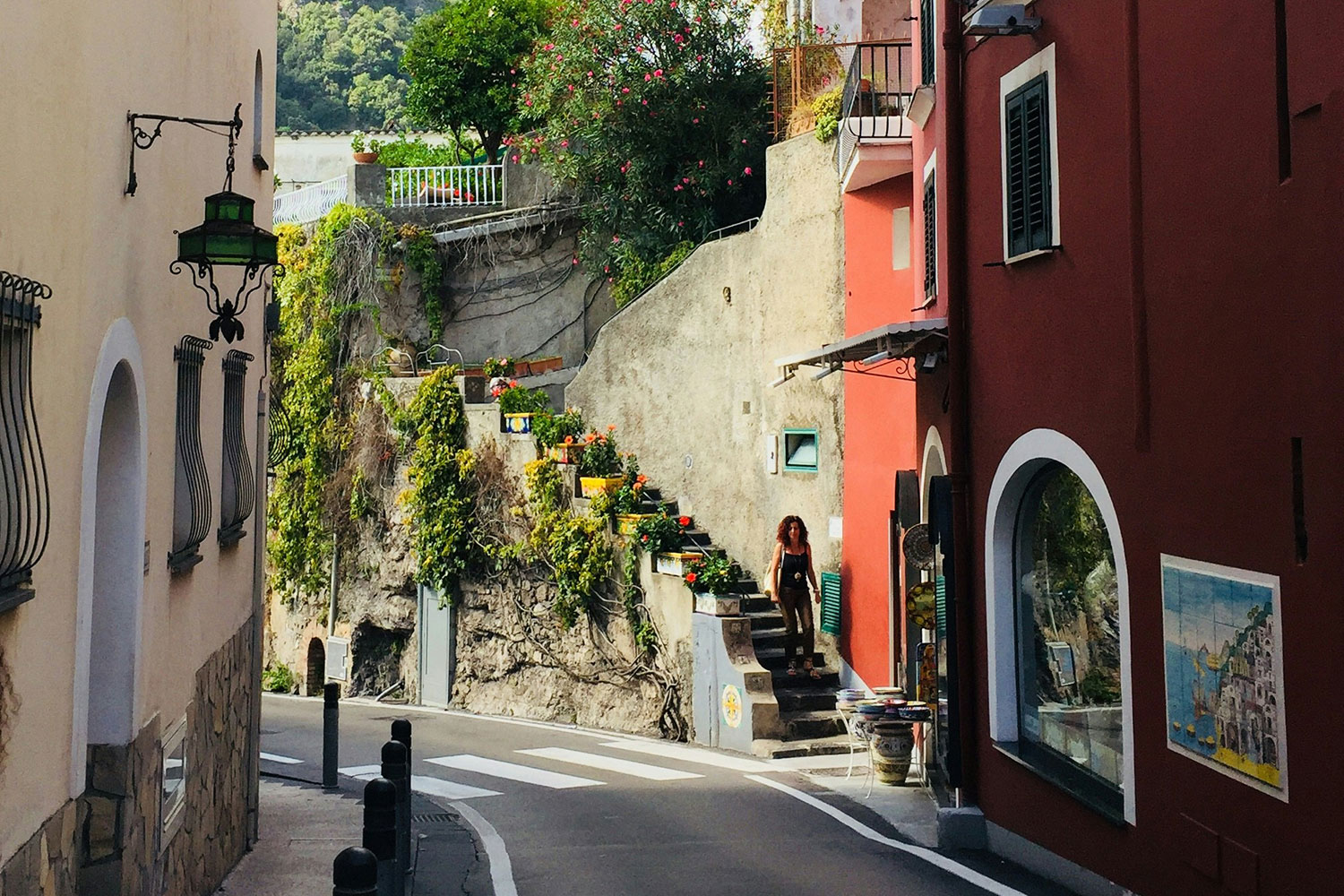
The easiest way to understand the layout is to remember that Positano is built vertically. Cars follow the winding road around the hillside, while pedestrians cut between levels using stairs and narrow lanes.
That is why a hotel can look just a few hundred metres away on the map and still be awkward to reach by car.
For the official wording, see the current Positano ZTL guide.
The other rule matters more to most rental-car drivers
For most visitors in a normal rental car, the bigger thing to check is not the Positano ZTL itself but the seasonal odd/even licence-plate rule on the SS163 Amalfitana.
This is a completely separate system.
On restricted dates and during restricted hours, access to the coastal road depends on the last numerical digit of your licence plate and whether the calendar date is odd or even.
So you can be driving a perfectly normal five-seat rental car that does not need Positano’s paid ZTL registration, but still be unable to use the SS163 at that time. That is the rule most likely to catch visitors out.
A simple way to remember it:
Positano ZTL → paid access system for certain larger vehicles inside Positano
Odd/even rule → access to the wider SS163 coastal road
Check both before you drive, and the whole thing becomes much easier.
Before choosing the day, check our 2026 Amalfi Coast driving restrictions for the current odd/even licence-plate rules.
What if you rented a six- or seven-seat car?
Then the ZTL rules become more important.
Positano’s current municipal guide specifically includes vehicles with six or more seats, including the driver, among the categories subject to payment and registration.
So if the rental company gives you a larger people carrier, minivan or 7-seat SUV, do not assume the same rules apply as for a normal compact car.
Check the number of officially registered seats in the vehicle documents. That is what matters.
The municipality’s online system also supports foreign visitors, so if your vehicle falls into the covered category, you can use the official Positano ZTL service to register and obtain the required access.
This is worth checking before you arrive rather than trying to work it out while already driving through Positano’s narrow streets.
Five things to check before you drive in
Parking is usually the bigger headache
Once you understand the ZTL, the more practical question is simple: where are you going to leave the car?
Positano has very little flat space, the road through the centre is narrow and mostly one-way, and private garages become increasingly valuable the closer you get to the pedestrian centre.
For a normal day visit, I would plan around a private garage rather than street parking. The two most useful central options are Parking Di Gennaro and Mandara, both on the road descending towards central Positano. (amalfimap.com)
Current central private parking is typically around €8–10 per hour, with larger cars sometimes costing more. In July and August, reserving ahead is sensible; from May through September, arriving earlier in the day also improves your chances. (amalfimap.com)
Coming by car? See our Amalfi Coast parking guide for Positano garages, current prices and Google Maps links.
Street parking does exist, including some paid blue-line spaces, but availability is the problem. If you spot a legal space, great. I just would not build the day around finding one.
The best approach is to treat the garage as part of the route. Choose it before you start driving into Positano, save the location, and head there directly. Once the car is parked, the rest of town is much more enjoyable on foot.
Positano has been managing traffic for years
The ZTL is not a recent response to social media crowds or rental-car tourism.
Positano’s current ZTL system for larger vehicles dates back to 2016, when the municipality introduced an experimental restricted-traffic zone for vehicles with more than five seats. After later legal challenges, the rules were updated again in 2024, extending the system to qualifying NCC vehicles, taxis and private-use vehicles.
That makes the rule easier to understand once you are there.
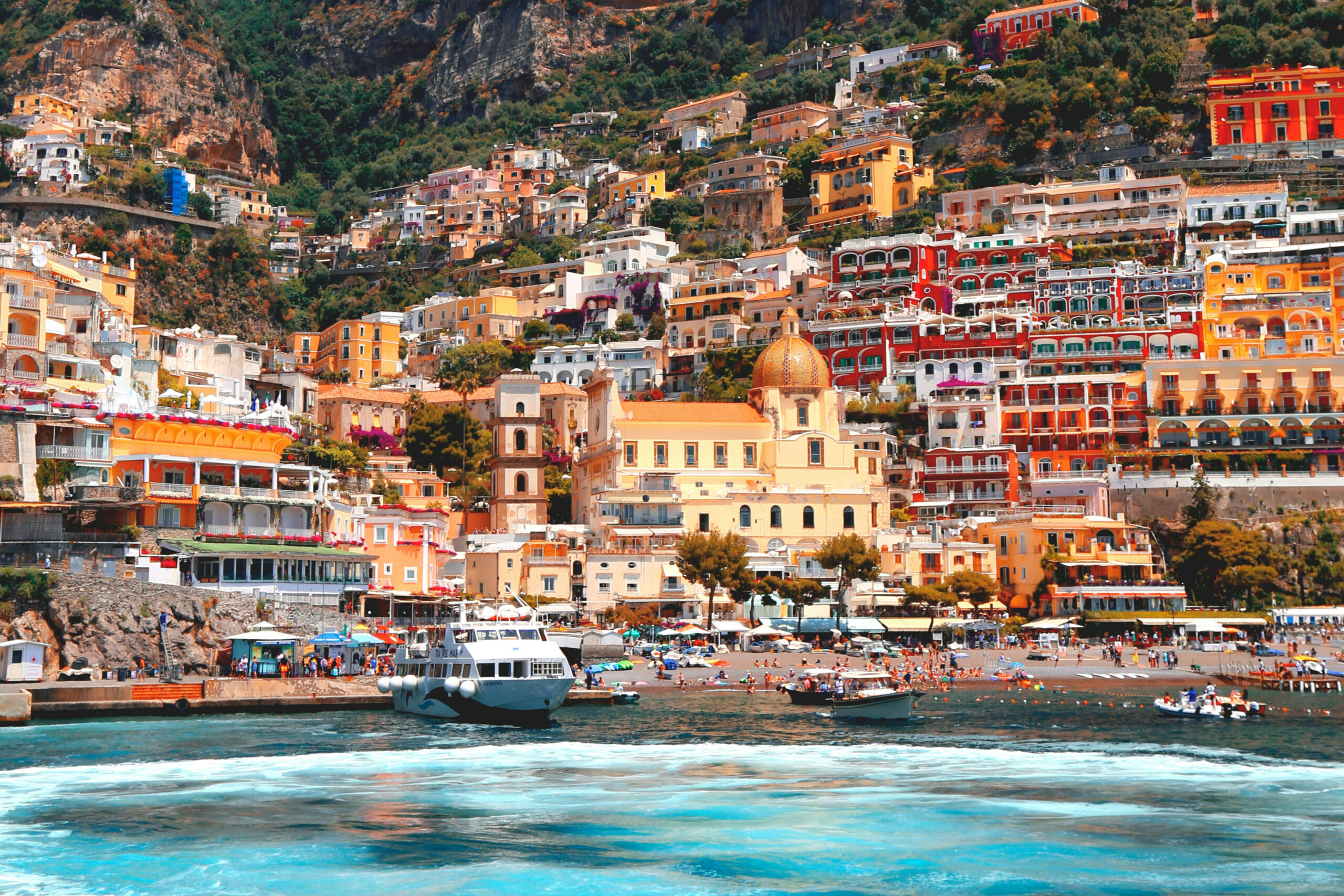
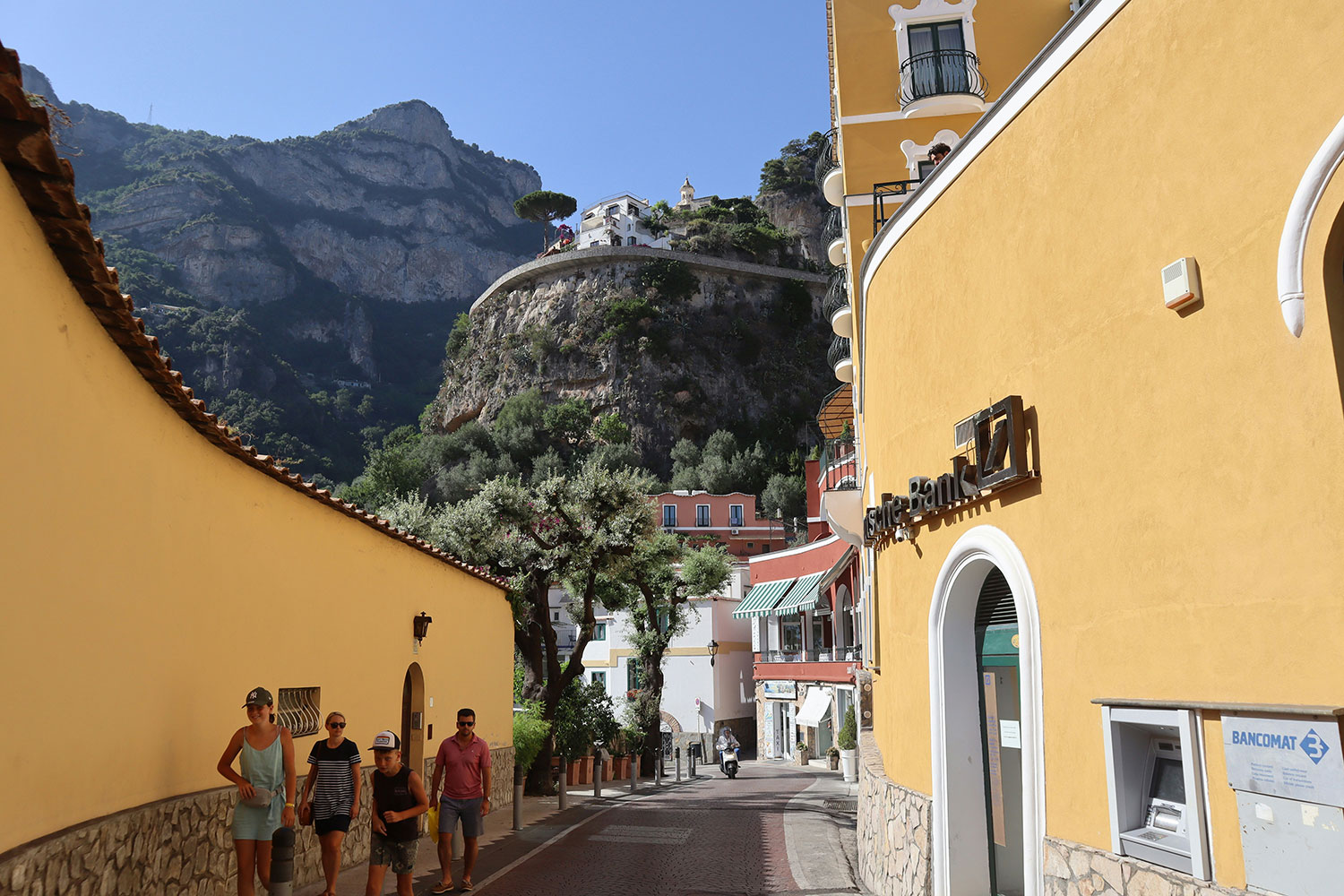
Positano is squeezed between the mountain and the sea. There is very little room to widen roads, add extra lanes or create large parking areas, so traffic has to be managed instead of simply accommodated.
The town’s layout explains a lot of what feels unusual to first-time drivers: tight bends, one-way sections, pedestrians sharing narrow stretches of road and vehicles waiting for each other to pass.
It is also why a small car feels completely normal here, while a large SUV can suddenly feel like a very ambitious decision.
In short, the ZTL is not there to make visiting difficult. It is one of the tools Positano uses to keep a very small road system functioning at all.
Why are Positano’s traffic rules so strict?
Because there is almost no space to absorb more traffic.
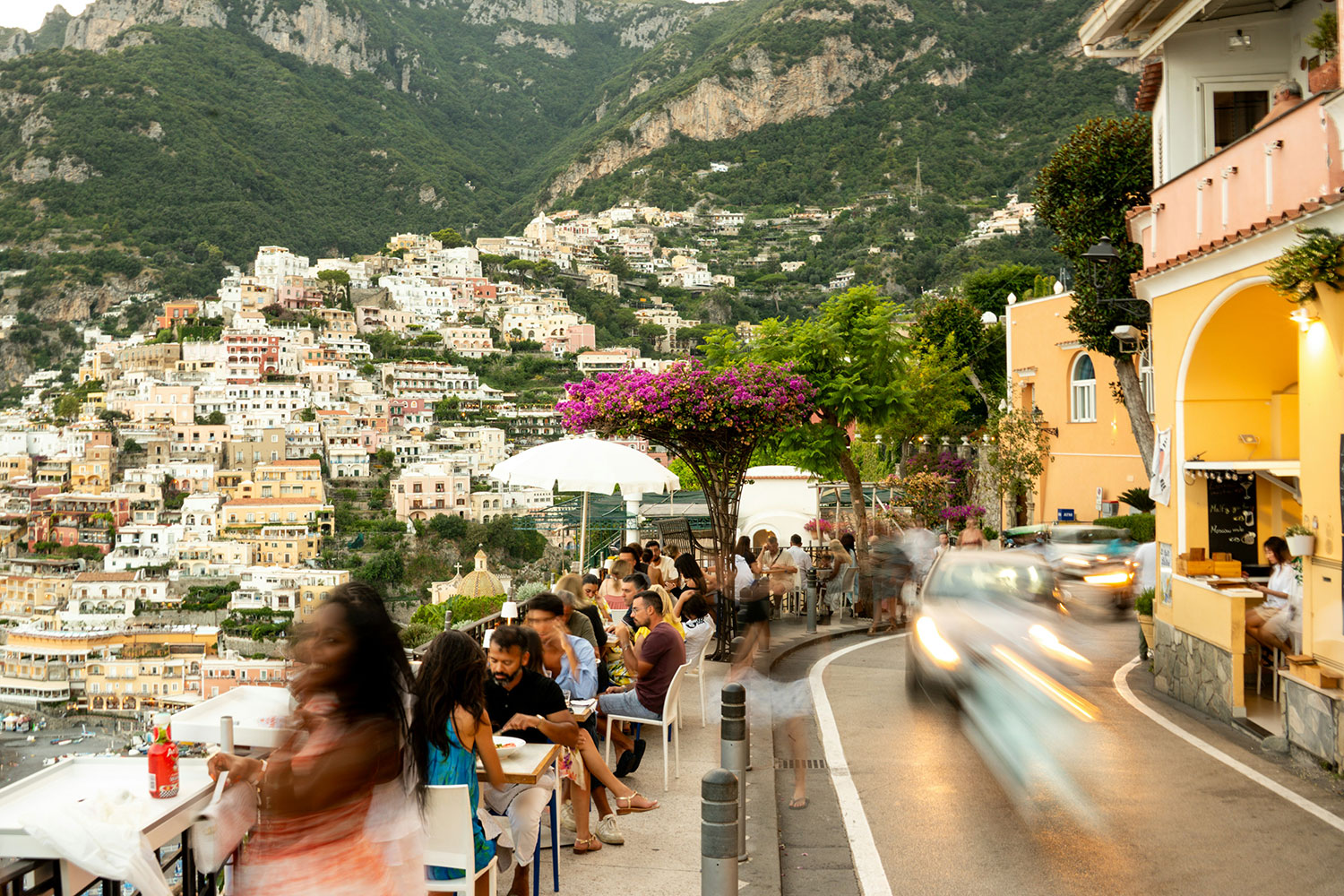
Positano is built into a steep hillside, with one narrow road system squeezed between houses, cliffs and the sea. In some stretches, cars, scooters, pedestrians, delivery vans and even restaurant tables all compete for the same few metres. There is nowhere obvious to widen the road, add another lane or create large parking areas.
In summer, that already tight network has to handle local traffic, rental cars, taxis, hotel transfers, buses and thousands of visitors every day. A few extra vehicles can be enough to slow everything down, especially around the central bends and loading areas.
That is why the ZTL, one-way sections and other restrictions are so strict. They are not there to make Positano difficult to visit; they are there because the town has almost no physical room for traffic mistakes. Once you see cars passing just metres from pedestrians and restaurant tables, the logic behind the rules becomes very clear.
Should you drive into Positano at all?
Yes — if the car makes the rest of your trip easier.
A rental car is useful when you are staying outside the busiest towns, travelling with children, exploring inland villages or combining the coast with places that are awkward to reach by public transport.
But for a simple day trip to Positano, the car can easily become the least useful part of the day.
If your plan is basically:
Amalfi or Sorrento → Positano → lunch → beach → back
then the SITA bus or ferry is often simpler.
The ferry is especially pleasant in season because you arrive straight at the waterfront, skip the parking problem and get one of the best views of Positano before you even step ashore.
The easiest rule is this:
Drive when the car gives you flexibility. Skip it when it only gives you somewhere expensive to park.
300+ places worth knowing, already saved in one map.
Beaches, restaurants, viewpoints, parking, transport and useful stops across the Amalfi Coast — including the places that make travelling by car much easier.
↓ Offline map · Download once. Use it anywhere.
Free for the first 1,000 users · Sent straight to your inbox.
Frequently asked questions
Does a normal rental car need a Positano ZTL permit?
A normal five-seat passenger car is not listed among the vehicle categories subject to payment in the current Positano ZTL guide. Vehicles with six or more registered seats are treated differently.
Is the Positano ZTL the same as the Amalfi Coast odd/even rule?
No. They are two separate traffic systems. The Positano ZTL controls local access, while the seasonal odd/even rule affects the SS163 coastal road.
Can you drive into Positano with a rental car?
Yes, provided your vehicle and route comply with the restrictions in force that day. Check the SS163 plate rule, your vehicle category and the current signs before driving.
Is parking difficult in Positano?
It can be. Most visitors are better off reserving a private garage rather than depending on limited street parking.
Is a small car better for Positano?
Yes. A compact car is noticeably easier on Positano’s narrow roads, tight bends and compact garages.
Positano ZTL at a glance
Everything worth checking before you drive into Positano — vehicle size, the SS163 rule, parking and local access.
The bottom line
For most visitors, Positano’s ZTL is less complicated than it first appears.
If you are driving a normal five-seat rental car, the current municipal guide does not list your vehicle among the categories that must pay and register through the ZTL portal. The bigger things to check are usually the SS163 odd/even plate restriction, your parking plan and any local signs you meet on arrival.
Before driving in, make sure you know four things:
✓ Is your licence plate allowed on the SS163 that day?
✓ Does your vehicle have six or more registered seats?
✓ Where are you parking?
✓ Does your hotel have specific arrival or unloading instructions?
If those are sorted, there is no need to make Positano driving more dramatic than it is.
The roads are narrow, parking is limited and the town is steep — but with a little planning, driving there is completely manageable.
Then park the car and enjoy the part that is actually worth remembering.

I spent 28 years on the Amalfi Coast. I write AmalfiMap to share the beaches, roads, restaurants and small practical details I would tell a friend before they came here. More about Marco →
More for your Amalfi Coast trip
 Driving
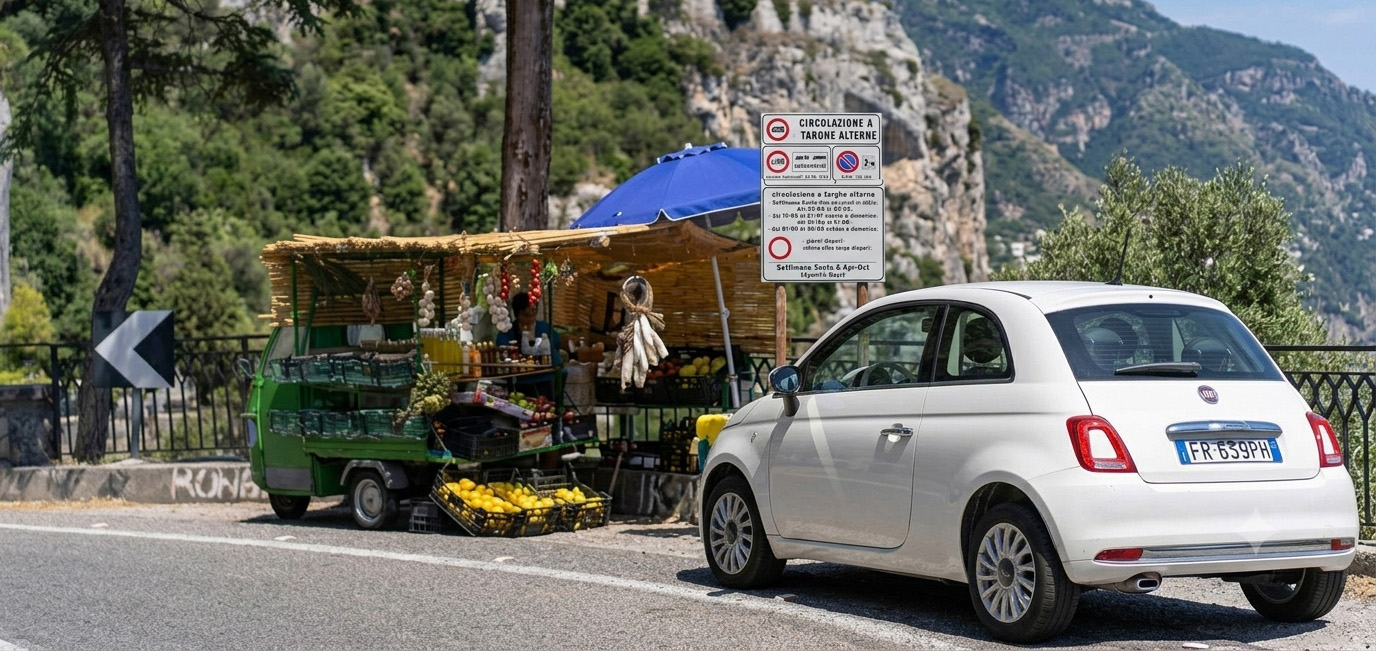
Check the odd/even licence-plate dates, hours and rules before driving the SS163.
 Parking
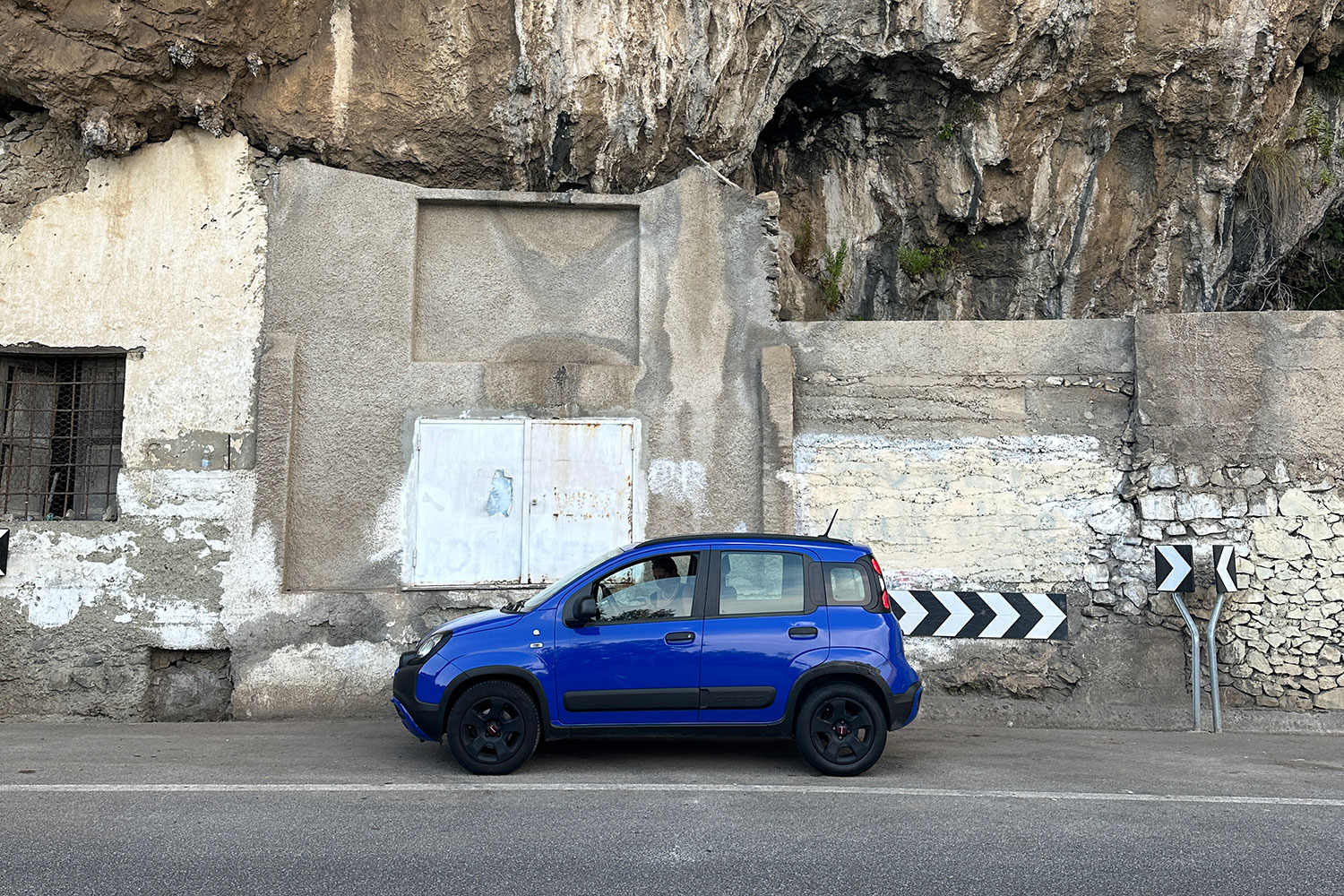
Current prices, garages and practical parking options from Positano to Vietri.
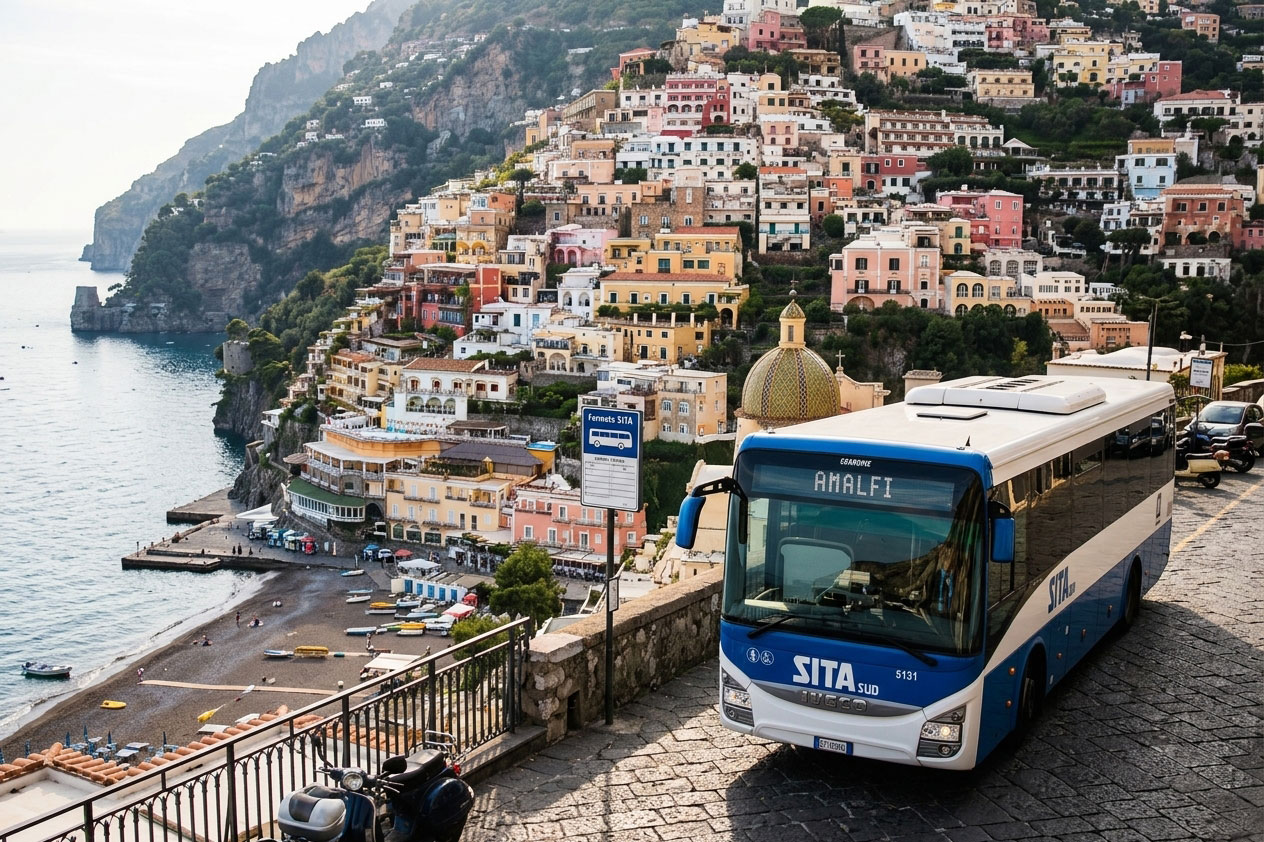 SITA buses
Tickets, routes, stops, luggage and how using the buses actually works.
 Getting around
Compare ferries, buses, trains, taxis, Uber, shuttles and private transfers.