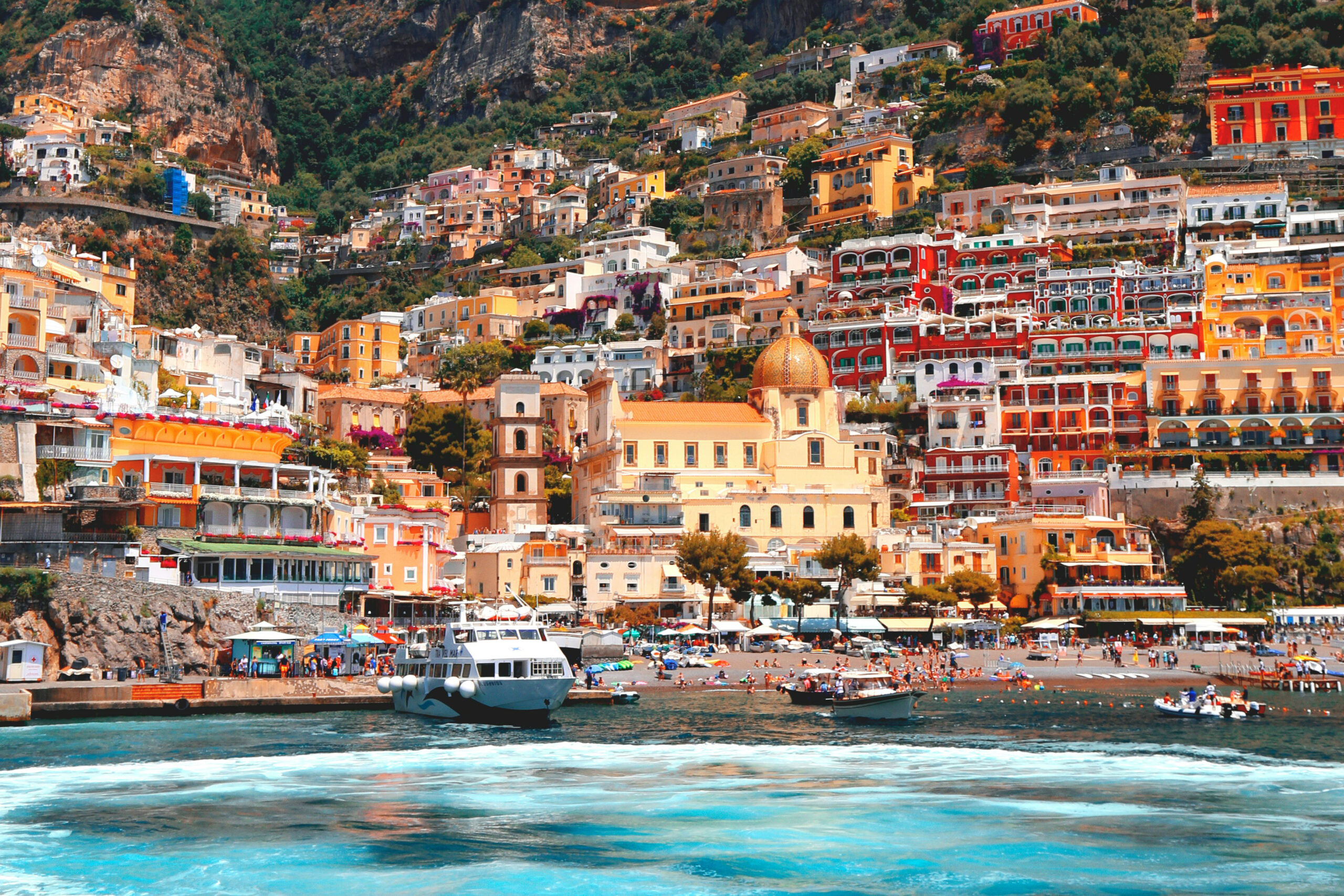
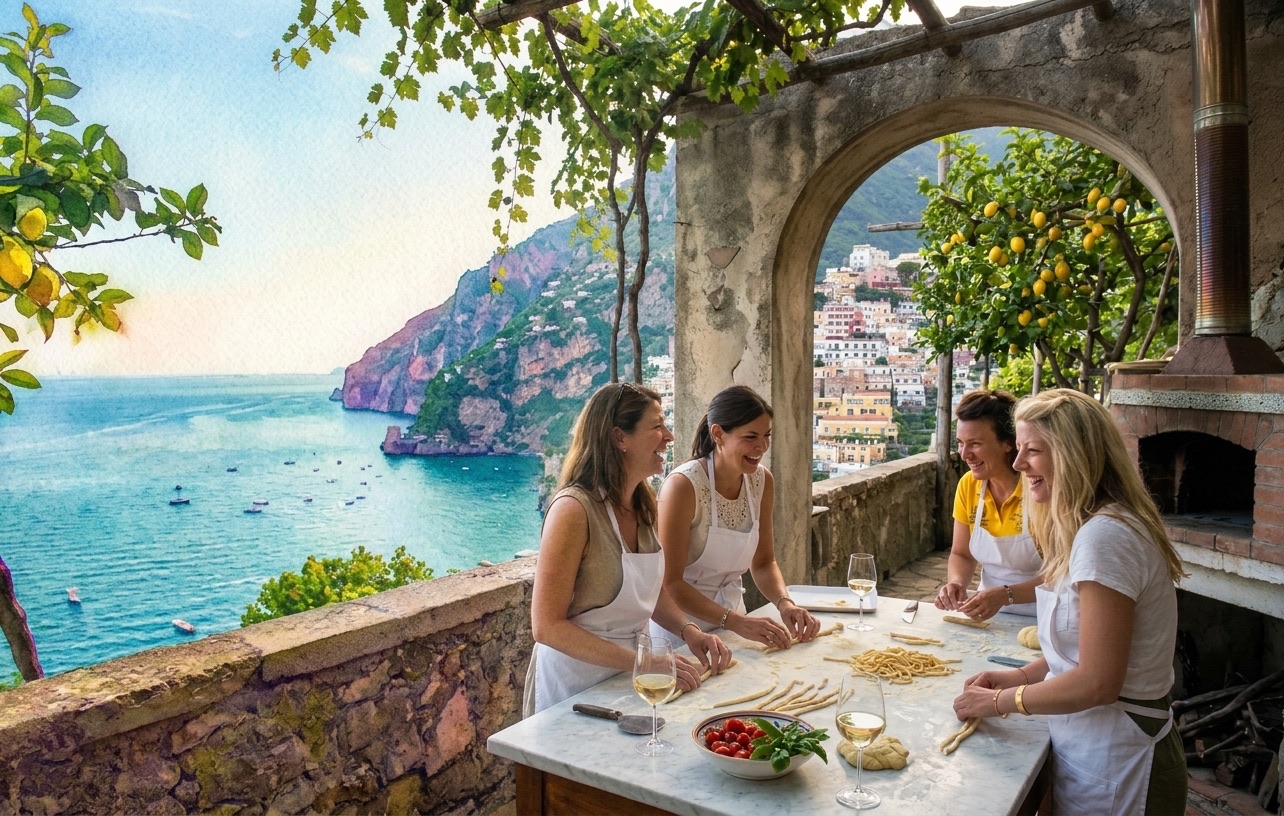
There is something wonderfully satisfying about making fresh pasta on the Amalfi Coast. Flour covers your hands, someone is explaining why your dough is too dry, and a bowl of ripe tomatoes is waiting beside a pile of fresh basil. Beyond the kitchen window, you might see lemon trees, terraced gardens or the sea.
An Amalfi Coast cooking class is one of the few activities where you can spend several hours enjoying the coast without constantly moving between towns. You learn a recipe, eat a proper meal and discover a little about the families and ingredients behind the food.
But cooking classes here are not all the same. Some take place in family kitchens in Positano and Praiano. Others begin with harvesting vegetables in the hills above Amalfi. A few are more about watching an excellent cook demonstrate a recipe than making everything yourself.
Here’s how to choose a cooking class worth your time, what you can expect to cook and a favourite Amalfi Coast lemon pasta recipe you can make when you get home.
Amalfi Coast Cooking Classes at a Glance
Yes, especially for food lovers. Choose a hands-on class rather than paying only for a beautiful view.
Budget around €100–€200 per person for a substantial class, often including the meal.
Amalfi for lemon gardens, Praiano for family kitchens, and Positano or Ravello for memorable settings.
Fresh pasta, gnocchi, eggplant parmigiana, lemon desserts and other seasonal local dishes.
Is an Amalfi Coast cooking class worth it?
Yes, especially if you enjoy food and want a more personal experience than another sightseeing tour.
A good cooking class gives you more than lunch. You learn how to handle pasta dough, why local ingredients taste the way they do and how a relatively simple dish comes together.
Depending on the experience, you may:
🍝 Make fresh pasta such as scialatielli, ravioli or gnocchi.
🍅 Prepare tomato sauce, eggplant parmigiana or stuffed zucchini flowers.
🌿 Pick vegetables and herbs from a terraced garden.
🍋 Learn how to make tiramisù, lemon cake or another traditional dessert.
🍷 Sit down to eat everything you’ve prepared, often with local wine.
Most importantly, cooking offers a slower way to experience somewhere that can otherwise feel very busy.
Choose a class because you like the food and teaching format, not just because the terrace looks beautiful in photographs. Two hours of proper cooking can be more rewarding than a spectacular view with very little participation.
What makes Amalfi Coast cooking different?
The Amalfi Coast has a peculiar geography for a place so famous for its food. There is barely any flat land. Lemon growers work on narrow terraces supported by centuries-old stone walls, while fishing boats return to villages squeezed between the mountains and the sea.
And that geography has produced some very particular dishes.
In Cetara, anchovies are packed in salt and left to ferment, producing colatura di alici, an intensely savoury amber liquid traditionally used to dress spaghetti. In Minori, generations of pasta makers developed ndunderi, large, soft dumplings made with ingredients such as ricotta, flour and eggs. Above Amalfi, farmers cultivate the fragrant Sfusato Amalfitano lemons, whose aromatic peel finds its way into pasta, cakes and limoncello.
Even scialatielli, one of the coast’s best-known pasta shapes, has a surprisingly recent history. It was developed by chef Enrico Cosentino in the 1970s, rather than passed down unchanged for centuries.
These are the details that make a cooking class here interesting. You’re not simply learning to make Italian pasta. You might be working with a lemon grown on the terraces you’ve just walked past, preparing a pasta shape invented in Amalfi, or discovering why a few drops of Cetara’s anchovy sauce can transform an entire plate of spaghetti.
Lemons: the ingredient that shaped the landscape
The large, fragrant Sfusato Amalfitano lemon is much more than a souvenir.
Lemons have been cultivated on the Amalfi Coast for centuries. Historical records discussed in the region’s protected-lemon documentation trace citrus cultivation back to at least the early 12th century.
Growing them was never particularly easy. Farmers built and maintained narrow terraces, supported by stone walls, on steep hillsides where machinery is difficult to use. Even today, much of the work remains manual.
Look above Amalfi or Minori and you’ll see why a lemon can represent a remarkable amount of labour.
In the kitchen, the most valuable part of a good lemon is often its peel. The coloured zest contains intensely fragrant oils that give pasta, cakes, sauces and desserts their unmistakable aroma.
And then there is limoncello, which transforms that scented peel into one of the region’s best-known drinks.
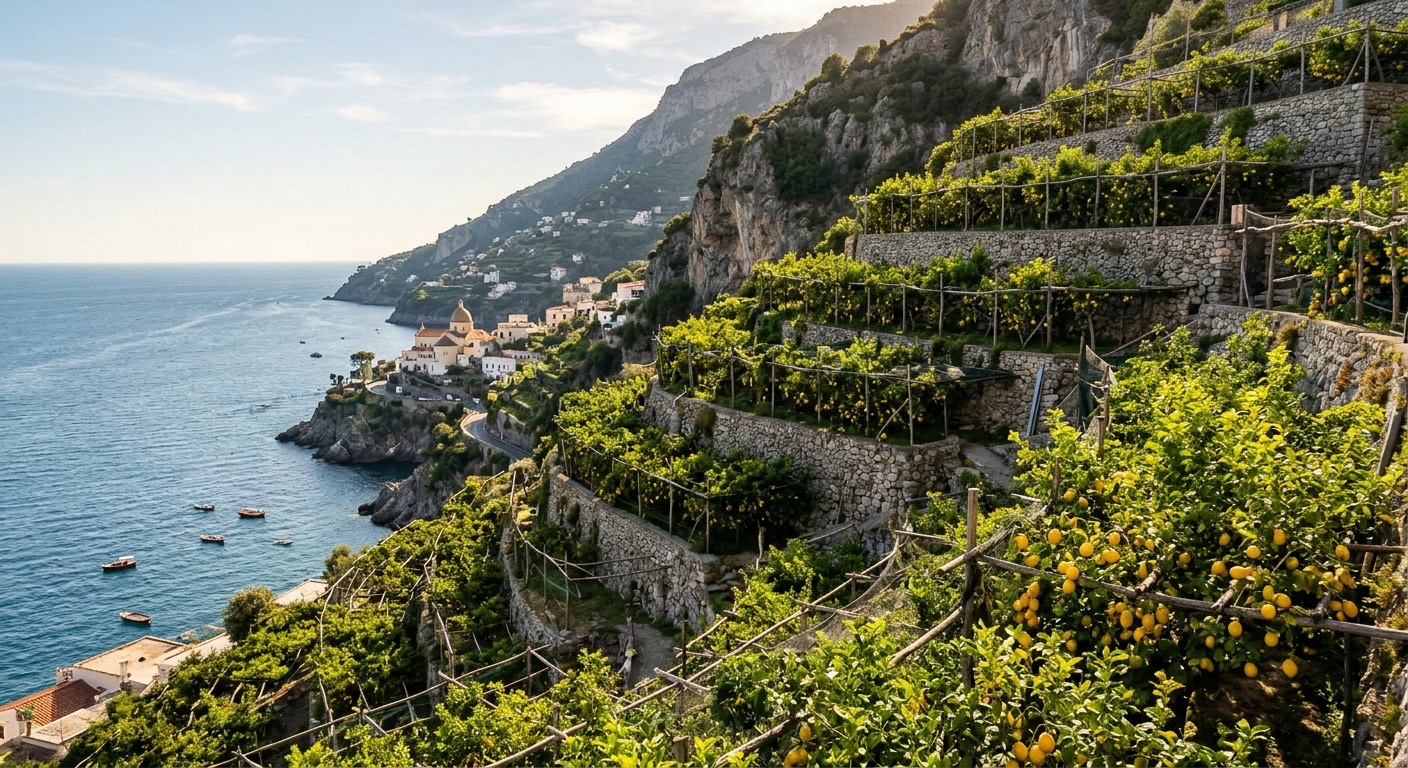
Before you book that cooking class, check these 7 things.
A gorgeous sea view doesn’t tell you what’s really included. Grab my free cheat sheet to spot hidden costs, rushed classes and tricky journeys home before you pay.
Free PDF · Instant access after signup · No payment. By signing up, you agree to receive AmalfiMap marketing emails. Unsubscribe anytime. Privacy policy.
Scialatielli: Amalfi’s surprisingly modern pasta
Not every traditional-looking Italian dish is hundreds of years old.
Scialatielli, the short, thick, slightly irregular ribbons of pasta associated with the Amalfi Coast, were created by chef Enrico Cosentino in the 1970s.
Cosentino first presented an early version in Calabria in 1976. By 1978, at La Caravella restaurant in Amalfi, the pasta was being prepared with seafood and gaining the reputation that helped turn it into a regional speciality.
The shape is wonderfully practical. Its irregular, handmade surface holds sauce beautifully, particularly sauces with shellfish, tomatoes and olive oil.
If you see scialatielli on a cooking-class menu, it’s worth choosing. Learning to make something so closely connected to Amalfi is more memorable than preparing an ordinary pasta shape you can learn almost anywhere.
Cetara’s anchovy sauce: a small ingredient with enormous flavour
In the fishing village of Cetara, another remarkable local ingredient has survived through generations of preservation techniques.
Colatura di alici di Cetara is a deeply savoury amber-coloured liquid made by fermenting anchovies in salt.
It is sometimes compared with ancient Roman garum, although the modern product has its own methods and traditions.
A little goes a long way.
Traditionally, colatura is used to season pasta, often with olive oil, garlic and parsley. It adds a concentrated savoury taste without requiring a complicated sauce.
The product has Protected Designation of Origin (PDO) status, recognising its connection with Cetara and its traditional production.
If you enjoy seafood, ask your cooking instructor whether they use colatura or fresh local anchovies. Either can introduce you to a side of Amalfi Coast food that goes far beyond lemon pasta.
Ndunderi: Minori’s soft, comforting pasta
Minori has its own wonderful speciality: ndunderi.
These are generous, soft dumplings, traditionally made with a mixture that includes flour and fresh dairy ingredients. They are often compared with gnocchi, but their texture and preparation are different.
Local tradition traces their ancestry to much older forms of dumpling-making, sometimes as far back as Roman times. The precise historical lineage is difficult to establish, but their importance in Minori’s food culture is clear.
Ndunderi are particularly associated with the celebrations of Santa Trofimena, the town’s patron saint.
If you have time to visit Minori, make room for a plate. A good version is tender, rich and filling, with a sauce that complements rather than overwhelms the dumplings.
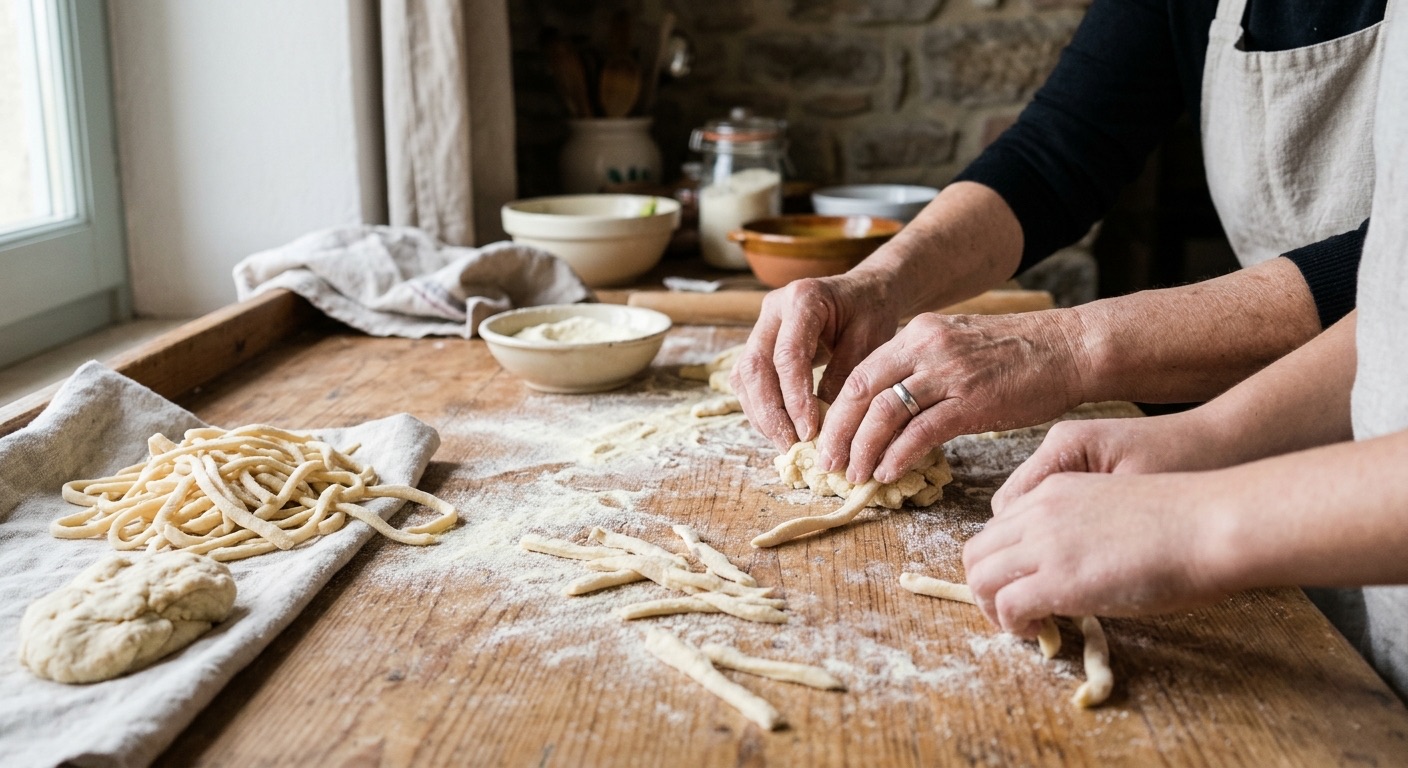
Best Amalfi Coast cooking classes: five different experiences
Rather than ranking every class by popularity, I’ve selected five very different ways to cook on the coast.
The best one depends on where you’re staying, how much you want to participate and whether you prefer a family kitchen, a working garden or a longer dining experience.
1. Amalfi Heaven Gardens — best for a proper farm-to-table class
Location: Amalfi
Best for: Hands-on cooking, fresh ingredients and a garden experience
Duration: Around 4 hours
Published advance-booking prices: Approximately €125–€135 per person, depending on season
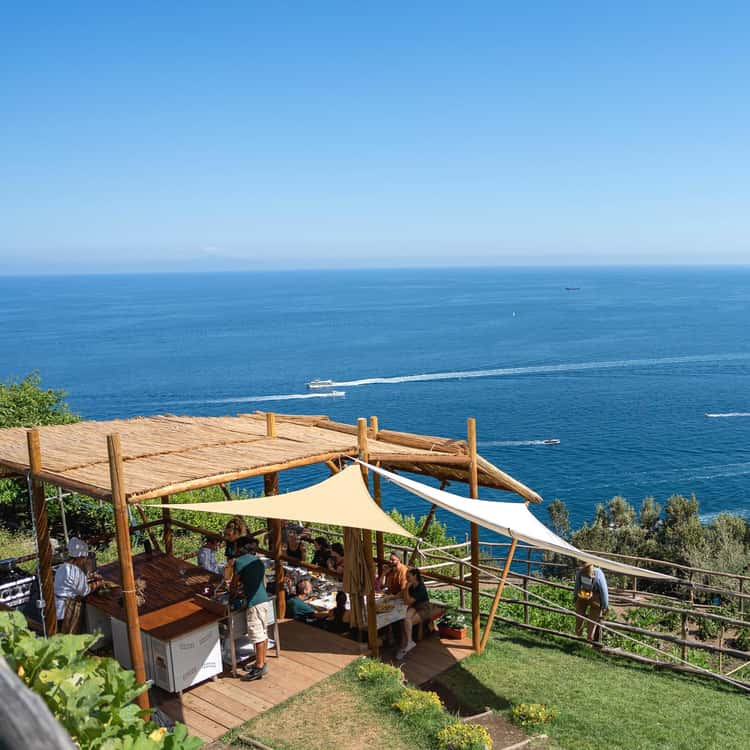
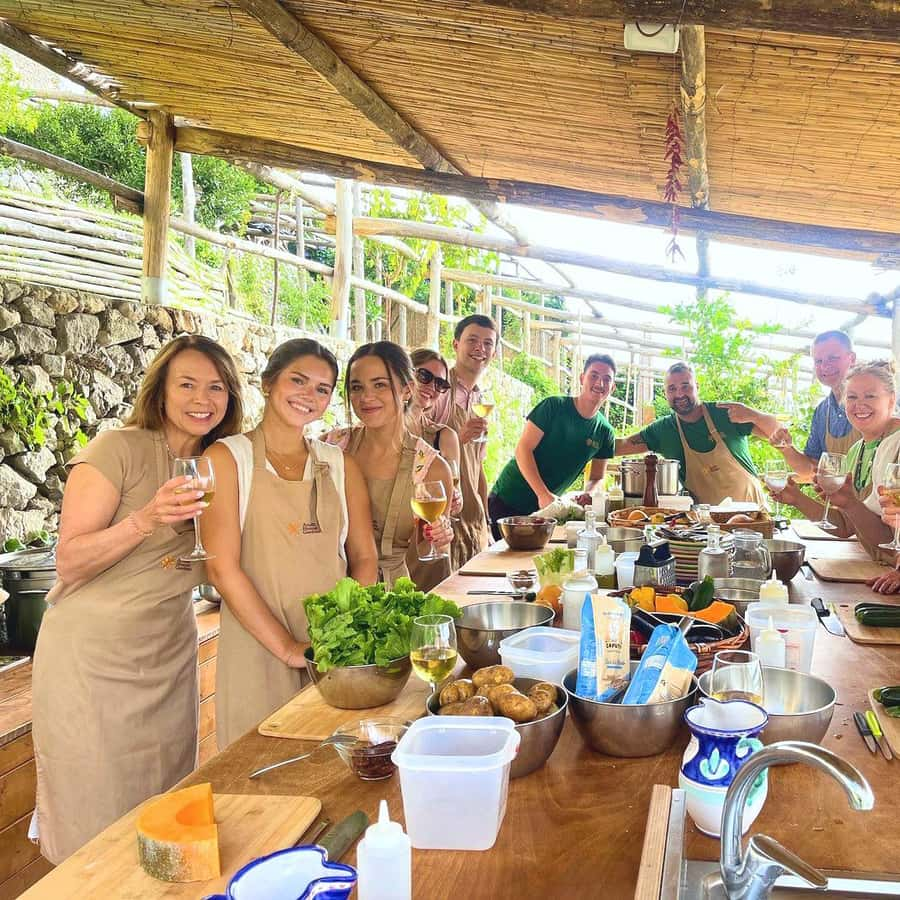


Terraced gardens · Hands-on cooking · Four-course meal with wine
Prices published by the operator for advance bookings. Final booking prices may differ by date and platform.
This is an appealing choice if you want to understand where the ingredients come from before you start cooking.
The experience begins among terraced gardens, including lemon trees, olive groves and vegetable beds. Guests gather seasonal ingredients before moving into the kitchen to prepare a multi-course meal.
The dishes vary, but examples include stuffed zucchini flowers, handmade scialatielli, eggplant preparations, gnocchi and lemon-based recipes.
Afterwards, everyone sits down to eat, accompanied by local drinks.
What I particularly like about this format is that the garden isn’t simply a backdrop. Picking herbs or vegetables before preparing them helps connect the meal to the surrounding landscape.
Good to know: The class is seasonal, generally April–October. The operator warns that steep, uneven surfaces and stairs make it unsuitable for some visitors with limited mobility. It also has restrictions on accommodating certain food intolerances.
2. Giovanni’s Cooking Class — best for handmade pasta, mozzarella and tiramisù
Location: Pianillo, Agerola (in the hills above the Amalfi Coast)
Best for: Hands-on pasta making, fresh mozzarella and traditional family recipes
Duration: 1–3 hours, depending on the option booked
Rating: 5.0/5 from 627 GetYourGuide reviews
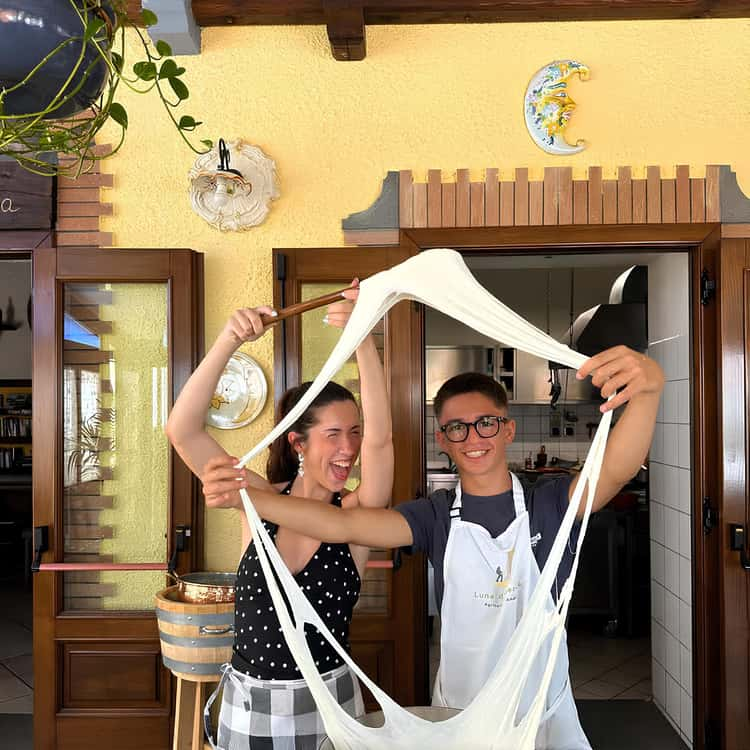

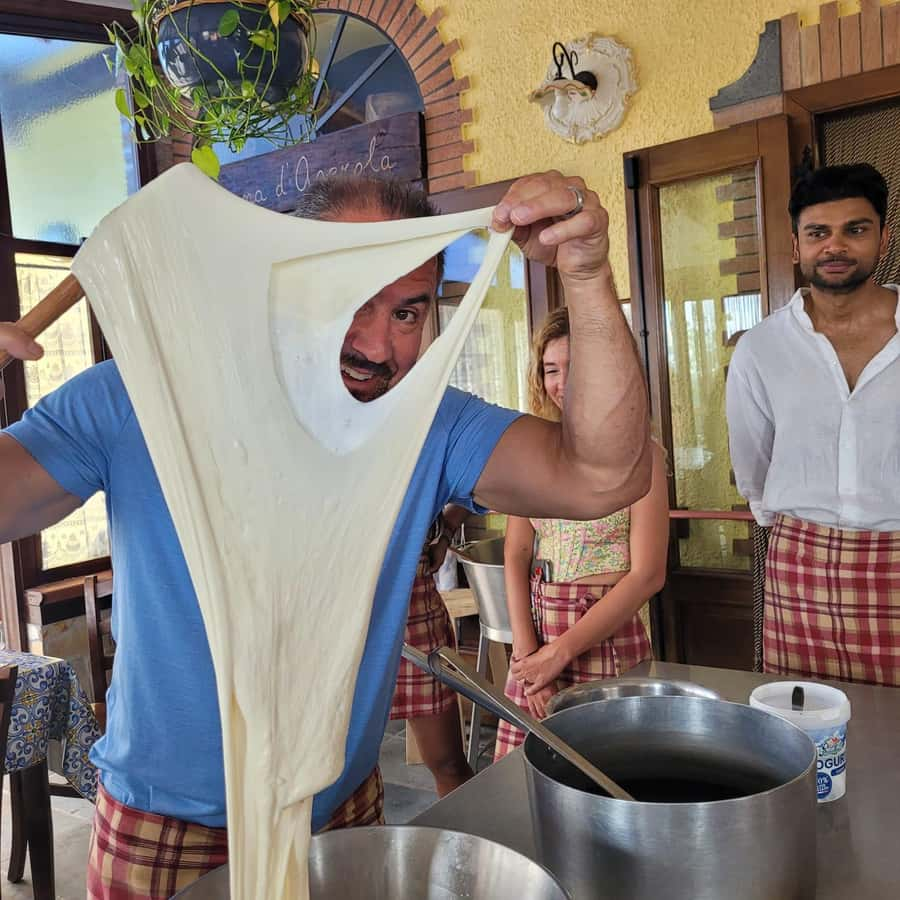

Handmade pasta · Fresh mozzarella · Tiramisù · Farmhouse meal & organic wine
Example published price for the complete three-dish class. The cheaper pasta-only option does not include all three dishes. Final booking prices vary by date and platform.
At the Acampora family’s farmhouse in Agerola, you don’t just watch someone prepare Italian food. You roll up your sleeves, make fresh pasta, work with mozzarella and prepare tiramisù before sitting down to enjoy what you’ve made.
The farmhouse, known as Luna d’Agerola, overlooks the mountains and the Gulf of Salerno. The family introduces guests to traditional recipes, including Nonna Maria’s tiramisù, while the cooking experience also includes a taste of their homemade organic wine.
One of the most interesting parts is learning how mozzarella is made using milk from the farm’s cow. It’s a lovely reminder that the cheese served across southern Italy begins with something much simpler than the finished ball you find in a restaurant.
After cooking, you sit down together to enjoy the dishes you’ve prepared.
Good to know: This class is in Pianillo, not Amalfi town. Arrange your transport before booking, particularly for an evening session. Different booking options offer different activities and durations, so check what’s included in yours.
3. Bè Genuine Home Experience — best for a relaxed family kitchen
Location: Praiano
Best for: Traditional home cooking, family recipes and a relaxed, personal atmosphere
Duration: Around 3 hours
Published prices: From approximately €123 per person through third-party booking sites; confirm the current rate directly
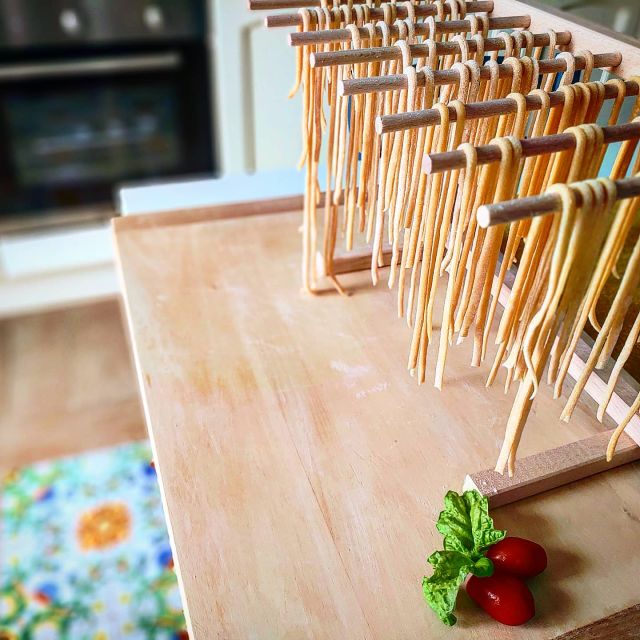
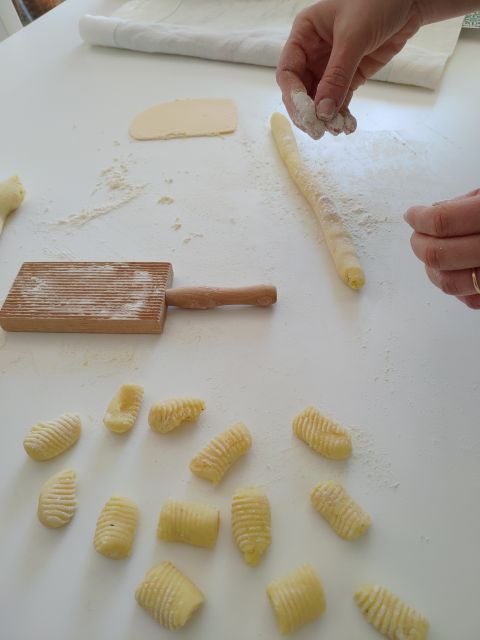
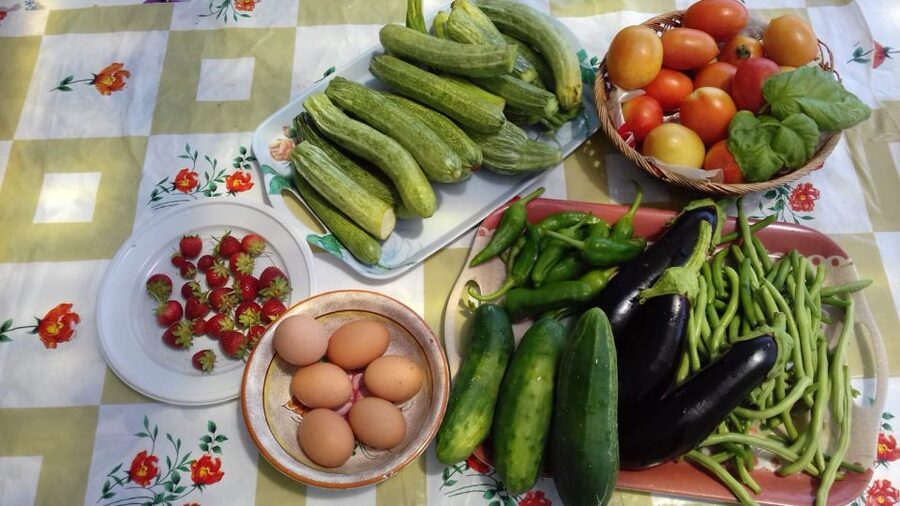
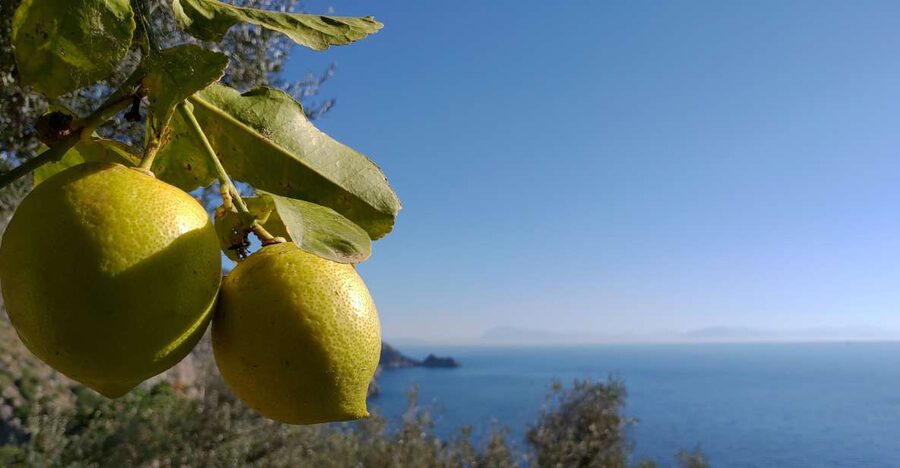
Praiano · Hands-on family cooking · Homemade pasta · Four-course meal with wine · Small group · 3 hours
Approximate euro equivalent of a $190 listing, not a confirmed GetYourGuide euro price. Final prices vary by date and currency. Affiliate link.
Sometimes the best food experience is simply being welcomed into someone’s home.
Bè Genuine is run by Rocco and Carla, with a strong emphasis on family hospitality and recipes connected to local ingredients.
Their cooking class typically includes a homemade aperitivo, an appetizer, fresh pasta, dessert and a homemade digestivo, with wine, water and coffee.
The menu changes with the season, drawing on produce from the garden and, when appropriate, the day’s catch.
This would appeal to travellers who want conversation as much as instruction. It’s an opportunity to ask why a family cooks a particular dish in a certain way, rather than simply follow a printed recipe.
Good to know: Confirm exactly how much of the meal you’ll prepare yourself, especially if you want a highly hands-on lesson. Praiano’s hillside location also makes it sensible to arrange your return transport before the class.
4. La Vigna degli Dei — best for mozzarella-making and a traditional farmhouse lunch
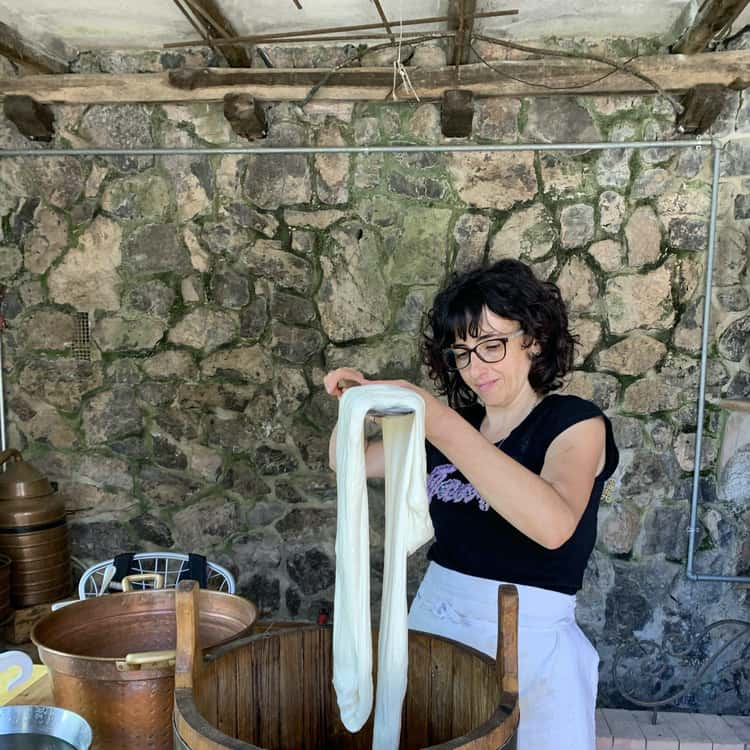


Family farm · Milk a cow · Make mozzarella & gnocchi · Farmhouse meal with wine · 3.5 hours
€58 observed for this experience on another booking platform. Final GetYourGuide prices may vary by date and availability. Transport is not included. Affiliate link.
If you’d like a cooking class that goes beyond the kitchen, La Vigna degli Dei in Agerola is a lovely choice. This family-run farm sits in the hills above the Amalfi Coast, where Pasquale and Rosanna welcome guests to experience traditional cooking from the very beginning.
You’ll meet the farm animals, try milking a cow, and learn how to turn fresh milk into fior di latte mozzarella. There’s also handmade gnocchi, classic or lemon tiramisu, and a tasting of the family’s homemade organic wine. The best part comes afterwards, when everyone sits down to enjoy what they’ve prepared together.
My tip: This is particularly good for families and anyone curious about where Italian food comes from. Just remember that Agerola is up in the hills, not in Amalfi town, and transport isn’t included. Plan your journey before booking.
5. La Gavitella — best for a sea-view cooking class and sunset dinner
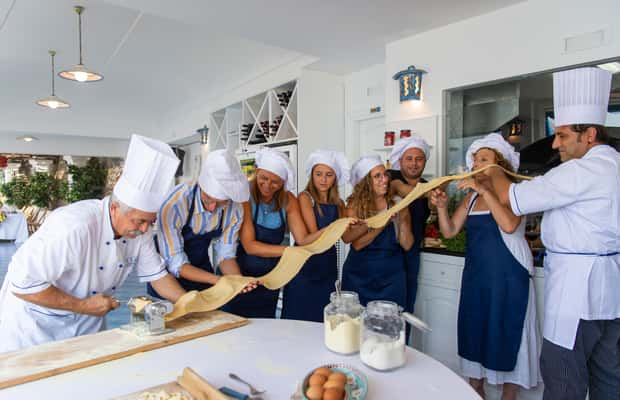
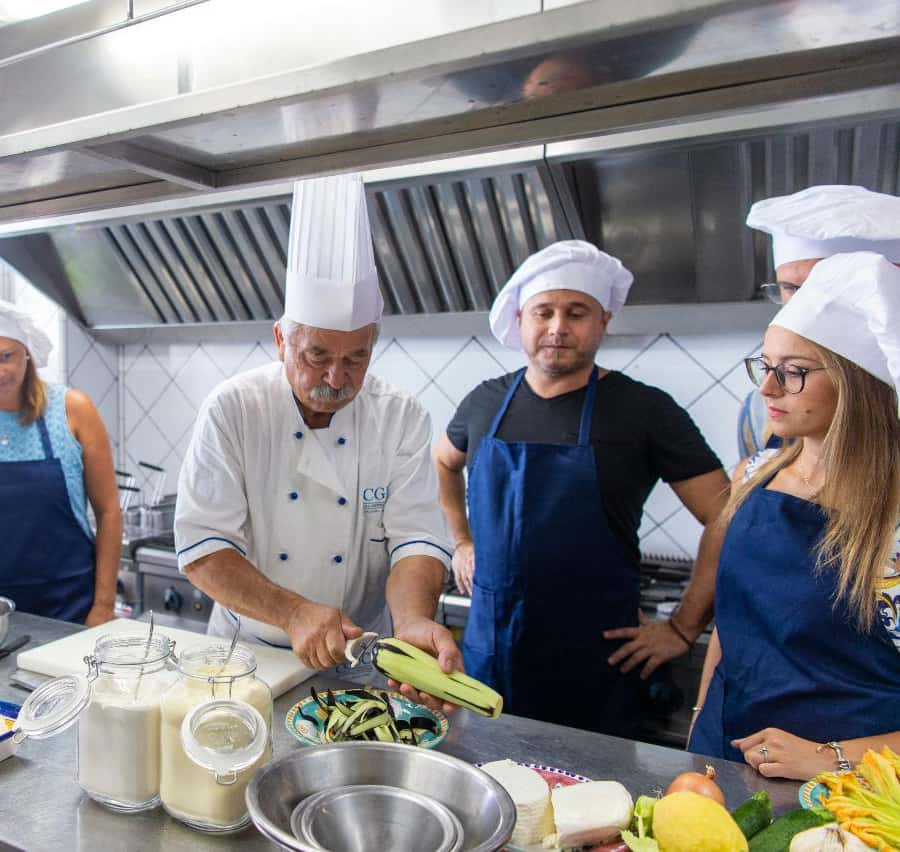


Sea-view cooking · Traditional Italian dishes · Sunset dinner with wine · Return boat transfer from Positano or Marina di Praia · 3.5 hours
Price published by La Gavitella for its dinner cooking class. GetYourGuide prices may differ by date and availability. Boat transfers are weather-dependent. Affiliate link.
If you want your cooking class to feel like a proper Amalfi Coast evening, La Gavitella in Praiano is a wonderful choice. You’ll cook with local chefs in a restaurant overlooking the sea, then sit down to enjoy dinner with views towards Positano and the Li Galli islands.
The class covers Italian favourites including bruschetta, eggplant parmigiana, meatball pasta and tiramisu. There’s wine and limoncello to enjoy, and a small-group atmosphere that keeps things friendly and relaxed. You can even arrive by boat from Positano or Marina di Praia, which makes the experience feel like more than just a cooking lesson.
My tip: I’d choose this one if you’re staying in Positano and want cooking, dinner and beautiful coastal views in one evening. The return boat transfer is included, subject to sea conditions. If you’re arriving on foot, be prepared for steep stairs down to the restaurant. It’s not suitable for travellers with mobility difficulties.
How much does an Amalfi Coast cooking class cost?
Budget roughly €100–€200 per person for a substantial cooking experience, although simpler classes may cost less and private or premium experiences can cost considerably more.
Price alone doesn’t tell you much. A three-hour pasta lesson in a restaurant and a five-hour farm experience with lunch are not equivalent.
Before booking, check exactly what the price covers.
| Type of experience | What to expect |
|---|---|
| Pasta or pizza workshop | A focused lesson, usually followed by eating what you make |
| Farm-to-table class | Garden visit, ingredient gathering, cooking and a meal |
| Family-home experience | Small-group cooking, seasonal recipes and dining with hosts |
| Demonstration class | Watch experienced cooks, learn techniques and enjoy a substantial meal |
| Private cooking class | A more personalised menu and instruction, usually at a higher total cost |
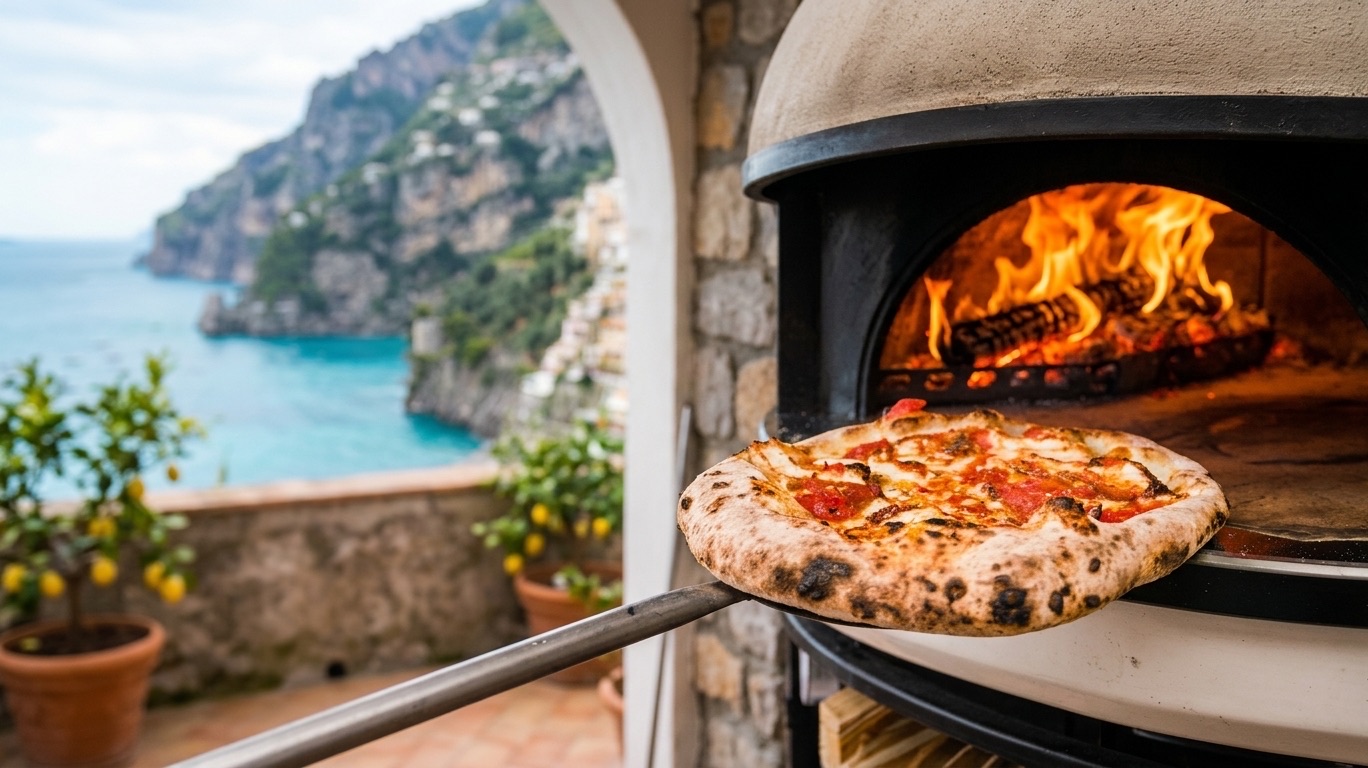
A good cooking class is expensive compared with a simple restaurant lunch. But you’re paying for an experience, not only the ingredients on your plate.
The most important question is whether you want to learn a practical skill, enjoy a beautiful setting or have a special dining experience. Some classes do all three; others are particularly strong in one area.
What should you learn to cook on the Amalfi Coast?
If I had to narrow the menu down, these would be my choices.
🍝 Scialatielli with seafood is a wonderful introduction to the coast’s pasta tradition. You learn to handle fresh dough, cut short ribbons and make a sauce that brings together olive oil, tomatoes and seafood.
🥔 Gnocchi alla Sorrentina is an excellent choice for beginners. Soft potato gnocchi, tomato sauce, basil and melted mozzarella make a deeply comforting combination.
🍆 Eggplant parmigiana is a lesson in patience. The eggplant needs to be prepared properly, the sauce needs balance and the layers must settle so everything holds together without becoming heavy.
🌼 Stuffed zucchini flowers are especially satisfying when prepared with fresh flowers and a light batter. The contrast between crisp coating and delicate filling is part of their appeal.
🍋 For dessert, I would look for lemon cake or delizia al limone if you want something connected to the coast. Tiramisù is delicious too, but its origins are elsewhere in Italy.
🐟 And if a class offers the chance to prepare a seafood or anchovy dish using ingredients from Cetara, that’s worth considering.
My favourite Amalfi Coast recipe: spaghetti al limone
Of all the dishes associated with this coast, spaghetti al limone is the one I’d most happily make again and again at home.
It sounds almost too simple: pasta, lemon, butter, a little olive oil and cheese. But when you get the proportions right, the result is remarkably good.
The pasta becomes glossy and silky, coated in a light sauce with the fragrance of fresh lemon zest. The acidity wakes everything up, while the butter softens the sharp edges without disguising the lemon.
You don’t need cream. In fact, I think cream often makes this dish less interesting.
This is my preferred home-style version, rather than a claim that every Amalfi family prepares it exactly the same way.
Ingredients
- 200 g spaghetti or linguine
- 1 large, fragrant unwaxed lemon, preferably Sfusato Amalfitano
- 40 g unsalted butter
- 1 tablespoon extra virgin olive oil
- 35 g finely grated Parmigiano Reggiano
- Approximately 120–180 ml reserved pasta cooking water
- Salt, to taste
- A few fresh basil leaves, optional
- Freshly ground black pepper, optional
How to make it
1. Start with the lemon.
Wash and dry the lemon. Finely grate only the yellow peel. Avoid the white pith underneath, which can make the dish bitter.
Then squeeze the lemon separately. You’ll add the juice gradually at the end.
2. Cook the pasta.
Bring a pan of water to the boil and salt it moderately. Cook the pasta until about one minute before the package’s recommended al dente time.
Before draining, save at least a cup of the starchy cooking water.
This is important. The water will help turn butter and olive oil into a smooth sauce rather than leaving the pasta greasy.
3. Wake up the lemon zest.
Put the butter and olive oil into a wide frying pan over low heat.
Add the lemon zest and let it warm gently for around 30–60 seconds.
You want the kitchen to smell of lemon, not fried butter. Don’t let the zest brown.
4. Bring everything together.
Add the drained pasta and approximately 90 ml of the reserved pasta water to the pan.
Toss continuously over gentle heat for about a minute, adding a little more water if the pasta begins to look dry.
The sauce should begin to look slightly creamy, even though there is no cream in it.
5. Finish away from the heat.
Turn the heat off.
Add the grated Parmesan gradually, tossing the pasta so that the cheese melts into the warm liquid.
Start with one or two teaspoons of lemon juice, taste and add more if you like. Different lemons vary significantly in acidity.
Add more pasta water in small amounts until the sauce is smooth and coats the spaghetti.
6. Serve immediately.
Twirl the spaghetti into warm bowls, add a little basil if you like, and finish with a very small drizzle of olive oil.
Eat it straight away. This dish is at its best while the sauce is freshly made and the pasta is still silky.
Three small details that make it better
Use the lemon zest generously, but the juice carefully. Much of the wonderful fragrance comes from the zest. Too much juice can make the dish unpleasantly sharp.
Don’t add the cheese over high heat. It can clump instead of becoming part of the sauce. The residual heat from the pasta is usually enough.
Don’t let the finished pasta sit. As it cools, the sauce thickens. This is a dish to prepare when everyone is ready to eat.
My tip: If you can’t find an Amalfi lemon, choose a fresh, fragrant unwaxed lemon with good-quality skin. A beautiful local lemon makes the dish special, but careful cooking matters much more than buying an expensive imported ingredient.
Cooking classes in Positano, Amalfi or Ravello: which is best?
Positano: A good choice if you’re staying in town and want to combine cooking with a memorable lunch or dinner. Just remember that some classes are high above the centre in Montepertuso.
Amalfi: Particularly good for farm and lemon-grove experiences. The combination of agricultural terraces, local ingredients and cooking makes sense here.
Praiano: Worth considering for an intimate family-style experience, especially if you’re already staying in the village.
Ravello: Ideal for travellers who want an unhurried culinary day with gardens, views and traditional recipes. Factor in the journey uphill from Amalfi.
You don’t need to travel to the opposite end of the coast for a cooking class unless there’s a particular experience you’re excited about.
A class that finishes in the evening can become inconvenient if you still have a complicated return journey.
Seven things to check before booking
A few practical questions can help you avoid paying for something that isn’t quite what you expected.
- Is it genuinely hands-on? Some experiences are demonstrations, and others divide cooking tasks between guests.
- What dishes will you make? Check whether the menu is seasonal or fixed.
- Is the meal included? Most substantial classes include it, but don’t assume.
- How many people will be there? A group of six feels very different from a group of twenty.
- Can the host accommodate your dietary needs? Ask in advance, especially for serious allergies or gluten-free requirements.
- How do you reach the kitchen? Some farmhouse and hillside locations involve steps, steep paths or separate transfers.
- What’s the cancellation policy? Outdoor and garden-based experiences may be affected by weather.
One extra consideration: book a substantial cooking class on a day when you don’t already have an enormous restaurant lunch or dinner planned. You’ll want to arrive hungry.
Frequently asked questions
Are cooking classes on the Amalfi Coast suitable for beginners?
Yes. Many are designed for visitors who have little or no experience making pasta. You don’t need professional knife skills or special equipment.
If you’re particularly nervous, choose a small-group workshop and look for descriptions that emphasise step-by-step instruction.
Can you take a cooking class in Positano?
Yes. Positano has cooking experiences in restaurants, private homes and hillside properties. Some are in the centre, while others are in Montepertuso or elsewhere above town.
Check the exact location rather than assuming every class advertised as being in Positano is close to the main beach.
Are Amalfi Coast cooking classes suitable for children?
Some welcome children, but age limits vary. Hot ovens, sharp utensils and outdoor stairs are relevant considerations.
Ask the operator about minimum ages and whether children can participate in making the dishes.
Do cooking classes include wine?
Many include local wine with the meal, but this isn’t universal. Some experiences are specifically focused on food-and-wine pairing, while others concentrate on cooking techniques.
Can vegetarians join?
Often yes, depending on the menu, but make arrangements before booking. Seafood, anchovies, dairy and eggs are common in regional cooking, so dietary restrictions shouldn’t be left until you arrive.
Are cooking classes available in winter?
Some indoor or private classes may operate outside the main tourist season. However, garden-based experiences often have a shorter season, and many businesses reduce their schedules.
For winter trips, contact the host directly before planning your day around a particular activity.
Amalfi Coast cooking class cheat sheet
The bottom line
If you love food, I’d make space for one cooking class during your Amalfi Coast trip.
Choose Amalfi Heaven Gardens if you want to gather ingredients and do plenty of hands-on cooking. Look at Amalfi Lemon Experience if the lemon terraces are part of what fascinates you. Choose Bè Genuine for a personal family atmosphere, Mamma Agata for a long Ravello culinary experience, or La Tagliata for a hearty day above Positano.
The best part isn’t necessarily the recipe you learn. It’s understanding why these dishes exist here, tasting them where the ingredients come from and returning home with something you