Wondering where to stay on the Amalfi Coast? The answer is less about finding one “best” town and more about matching the coast to the way you travel. The right base depends on whether you prioritise beaches, ferry access, nightlife, quiet evenings, walkability, hotel style or easy day trips — and on how comfortable you are with steep streets, stairs and buses.
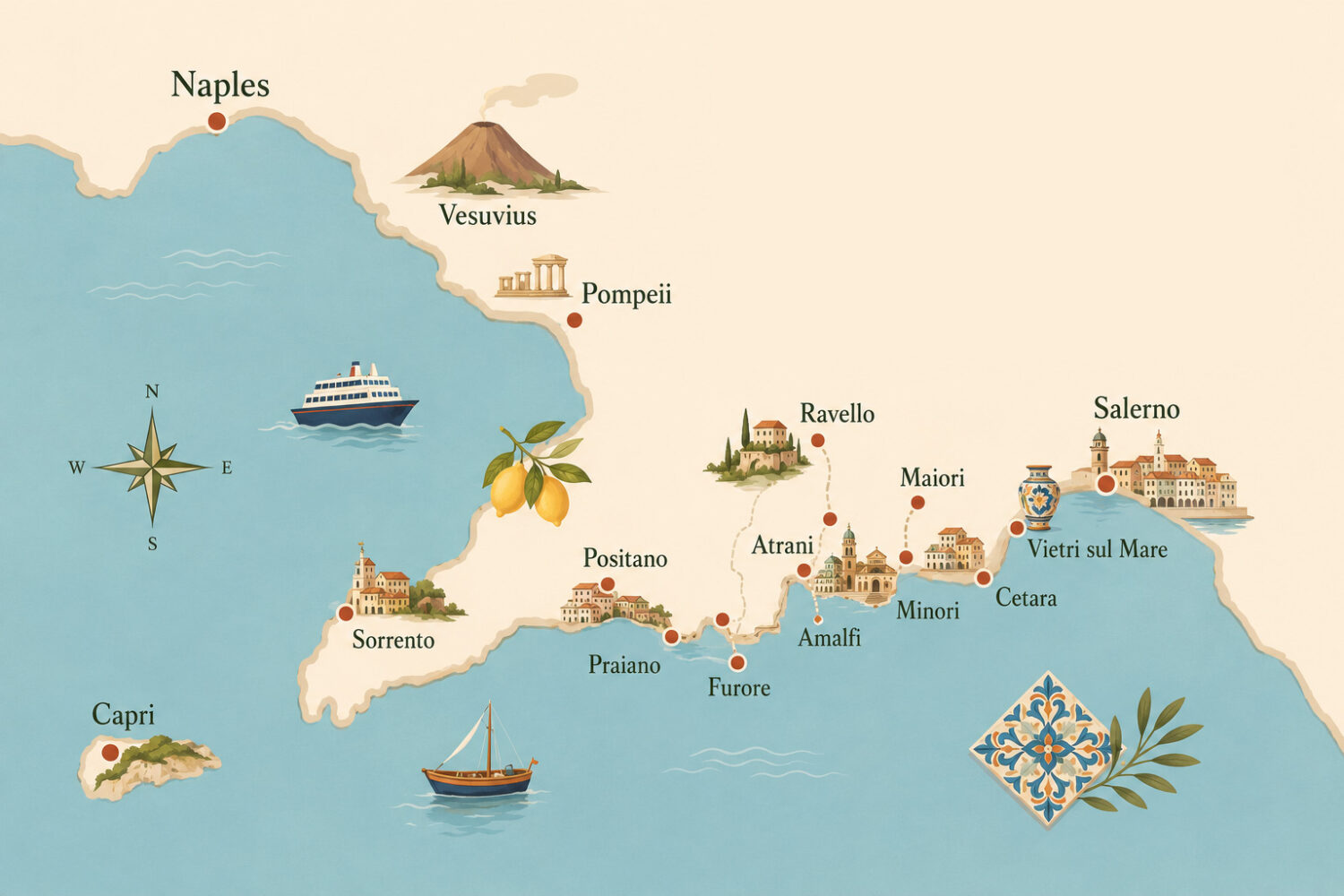
Each town works differently. Positano suits travellers who value dramatic scenery and polished hotels; Praiano is quieter and more spread out; Ravello focuses on gardens, culture and elevated views; Maiori and Minori offer easier terrain and practical beach access; while Cetara and Vietri sul Mare connect naturally with the eastern side of the coast. Amalfi town is one useful option among many, not the automatic choice for every itinerary.
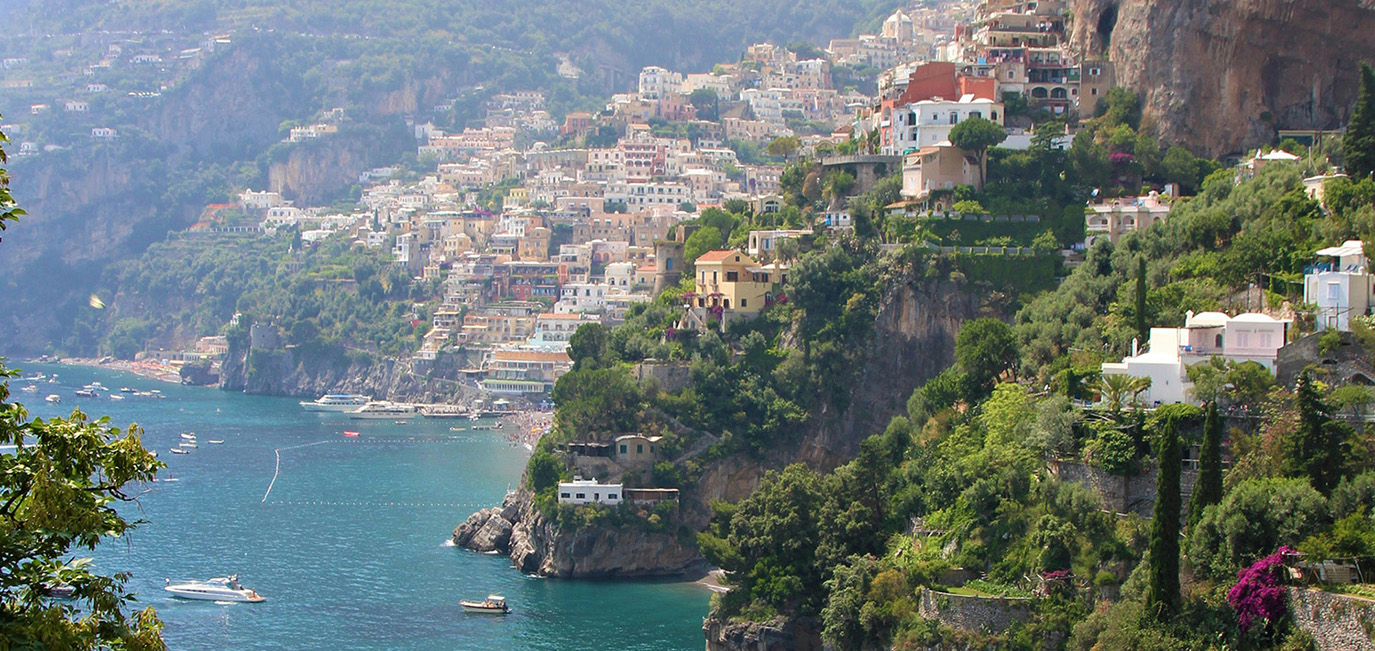
This guide compares 13 Amalfi Coast towns by atmosphere, terrain, transport, beaches and the type of trip they suit. It also considers Salerno and Sorrento as alternative bases outside the core coastline. The wider Amalfi Coast is shaped by steep mountains, terraced landscapes and historic settlements built between the cliffs and the sea.
Looking for the best place to stay on the Amalfi Coast? There is no universal winner. Choose the town that matches your pace, transport plans, terrain tolerance and idea of a great evening.
Best towns to stay on the Amalfi Coast at a glance
There is no single best town for everyone. The right base depends on the terrain you enjoy, how you plan to travel and what you want within walking distance.
| Town | Best for | Terrain | Getting around |
|---|---|---|---|
| Positano | Iconic scenery, hotels and couples | Very steep | Ferry and bus |
| Praiano | Sunsets, couples and quieter stays | Steep and spread out | Mainly bus |
| Furore | Privacy, landscapes and walking | Very steep and dispersed | Bus, transfer or car |
| Conca dei Marini | Private hotels and sea views | Steep and dispersed | Bus, boat or transfer |
| Amalfi | First visits, history and exploring | Manageable central area | Strong ferry and bus links |
| Atrani | Small-town atmosphere near Amalfi | Compact but stepped | Walk to Amalfi |
| Ravello | Gardens, culture and elegant hotels | High above the coast | Bus, taxi or transfer |
| Scala | Hiking and mountain village life | Elevated and rural | Bus or car |
| Minori | Food, families and walkability | Relatively level | Ferry and bus |
| Tramonti | Wine, food and countryside | Inland and dispersed | Car recommended |
| Maiori | Beaches, families and easier movement | Flattest central area | Ferry and bus |
| Cetara | Seafood and fishing-town character | Compact | Ferry and bus |
| Vietri sul Mare | Ceramics and access to Salerno | Mixed terrain | Bus and nearby rail |
Transport options change by season and individual accommodation location.
300+ places. One map. Made by locals.
The Amalfi Coast, already sorted.
Beaches, restaurants, viewpoints, transport and the places actually worth stopping for — all inside the amalfimap.com map.
Free for the first 1,000 users · 400+ already in.
How to choose where to stay on the Amalfi Coast
Decide how much of the coast you want to explore
Start with your itinerary, not the most famous town name. When you plan to visit several places, choose a base that limits backtracking and gives you useful connections in the direction you will travel most.
Amalfi, Minori and Maiori work well for exploring the central and eastern coast. Positano or Sorrento may be more practical when your plans focus on the western side. For longer trips, a split stay can be smarter than crossing the same stretch of coastline every day.
Ferries can make town-hopping much easier, but routes and departure times change throughout the year. Check the official Travelmar timetable before choosing accommodation around a particular ferry connection.
Consider how often you want to visit the beach
Staying on the coast does not always mean the beach is close or easy to reach.
Maiori has the longest and most accessible beachfront among the main towns. Minori, Atrani, Amalfi and Cetara also keep the water relatively close to their centres.
Ravello, Scala and Tramonti offer a different kind of stay, built around gardens, walking routes, vineyards and wide coastal views rather than direct beach access.
Which town works best when the beach is priority number one?
| Town | From the centre | Beach choice | Best for |
|---|---|---|---|
| Maiori | Long main beachfront with several sections | Full beach days, families and easier terrain | |
| Minori | One compact main beachfront | Beach plus food in a small, walkable town | |
| Cetara | Marina beach with additional nearby coves | Small-town character, swimming and seafood | |
| Atrani | One small beach beside the village | A tiny atmospheric base with the sea close by | |
| Amalfi | Central main beach plus smaller boat-access options | Combining beach time with transport connections | |
| Positano | Easy below, stepped above | Two central beaches, both relatively compact | Scenery and atmosphere rather than beach space |
Deciding where to stay for the best beach access? See which towns put you closest to easy swimming spots, quieter coves and the coast’s best beaches in our guide to the best beaches on the Amalfi Coast.
Check the terrain around your accommodation
On the Amalfi Coast, distance on a booking map rarely tells the whole story. A property may appear close to the sea while sitting several staircases or steep bends above it.
Check the real walking route to the beach, ferry pier, bus stop and town centre before booking. Positano, Praiano and Furore usually involve the most vertical movement. Maiori and Minori offer easier central routes, while hillside accommodation in almost any town can add a serious climb to every return home.
Decide whether you actually need a car
A car can be useful for inland villages, rural properties and journeys outside ferry hours. Along the coastal road, however, it also means traffic, parking restrictions and checking whether your accommodation is genuinely accessible by vehicle.
Before booking, confirm reserved parking, luggage access and the final route from the road to the property.
Before booking, check the Amalfi Coast driving restrictions for 2026 — then see where to park, current prices and the best parking option in each town.
Positano: best for iconic scenery and stylish hotels
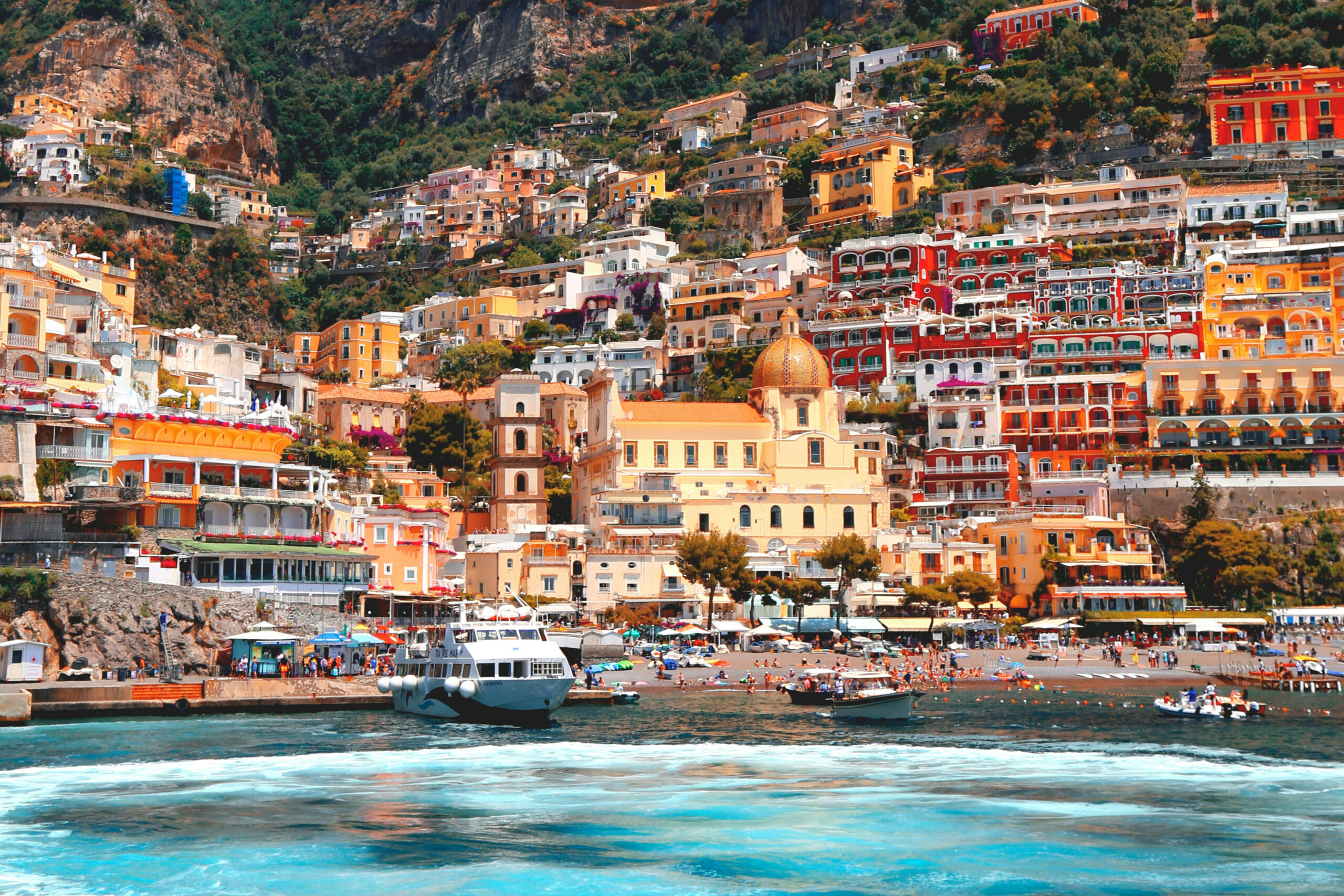
Positano puts you inside the most instantly recognisable side of the Amalfi Coast. Pastel houses climb above the sea, lanes weave between boutiques and restaurants, and many hotels open towards the Li Galli islands. It is dramatic, photogenic and carefully polished — but also one of the coast’s busiest and most expensive places to stay.
The strongest reason to stay in Positano is timing. You can experience the town before day-trippers arrive and after they leave, when the streets feel calmer and the setting becomes far more enjoyable. Positano also has the coast’s largest concentration of luxury hotels, fashion stores, refined restaurants and beach clubs.
Location within the town matters almost as much as the hotel itself. Upper Positano usually offers wider views and better-value rooms, but adds more stairs and longer climbs. Staying closer to Spiaggia Grande or Fornillo makes beach access and evening walks easier, though prices are often higher and the area can feel busier.
The classic hike finishes in Nocelle above town. See how to plan the full Path of the Gods day.
Couples, design-led hotels, beach clubs and atmospheric evenings
Positano itself is one of the main reasons for the trip
You plan to explore the eastern coast every day
Central Positano, Fornillo and Montepertuso
Praiano: best for couples, sunsets and slower evenings
Praiano sits between Positano and Amalfi town, yet feels noticeably calmer and more residential than either. It suits travellers who want to stay on the central coast without placing themselves inside its busiest centres.
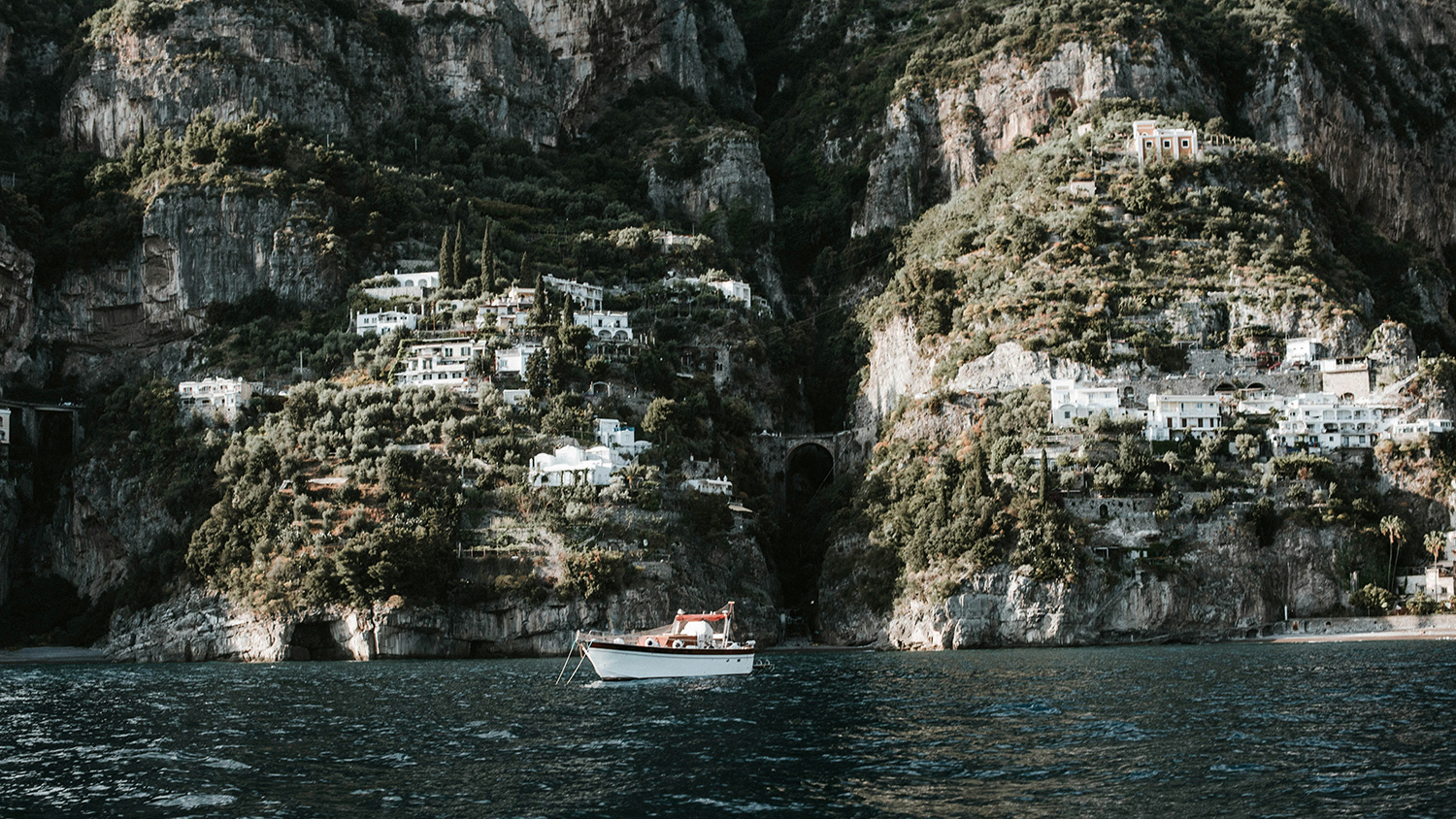
The village stretches across the hillside rather than gathering around one obvious square. Many terraces face west, giving Praiano some of the coast’s strongest sunset views. The trade-off is a more dispersed layout, with stairs, roadside sections and longer walks between accommodation, restaurants and transport stops.
Marina di Praia creates a small waterfront pocket beneath dramatic cliffs, with swimming, restaurants and boat access. Elsewhere in Praiano, the exact location of your accommodation matters greatly. A nearby bus stop, comfortable road access and a few restaurants within walking distance can make the stay feel relaxed rather than inconvenient.
Couples, sunset terraces, sea views and a slower coastal rhythm
You want to remain close to Positano while keeping more space and calmer evenings
You prefer a compact centre with beaches, restaurants and transport outside the door
Vettica Maggiore and lower Praiano near Marina di Praia
Furore: best for privacy, landscapes and walking
Furore is not built around a traditional town centre. It stretches across the mountainside, with properties scattered between the coastal road, terraced hills and higher inland routes.
The famous Fiordo di Furore sits beside the main road, but much of the municipality lies well above the sea. Staying here is usually less about stepping outside into a lively centre and more about the property itself: a private terrace, garden, sea view or access to walking routes often becomes the focus of the stay.
Location matters more in Furore than in most Amalfi Coast towns. Two properties with the same village name can offer completely different access to restaurants, buses and the waterfront. Check the exact elevation, nearest transport stop and realistic walking route before booking.
Privacy, hiking, boutique stays and dramatic mountain scenery
The accommodation, view and sense of seclusion are central to the trip
You want shops, restaurants, beaches and ferries within an easy walk
Elevation, bus access, nearby restaurants and the real route to the coast
Conca dei Marini: best for refined hotels and private sea views
Conca dei Marini occupies a quieter stretch of coast between Furore and Amalfi town, with villas and hotels scattered across terraced slopes above the sea.
Many stays here are built around the property itself. Private terraces, sea-facing restaurants, swimming platforms, boat access and hotel transfers can matter more than having a traditional town centre nearby. It works especially well when the goal is to slow down and spend more time at the hotel.
There is no concentrated shopping district or lively central square, so location and service levels deserve close attention. Check how you will reach restaurants, beaches, buses and nearby towns before booking—particularly when the property sits high above the coastal road.
Privacy, refined hotels, sea views and slow days by the water
You want a self-contained coastal retreat with strong hotel service
Evening walks, shops and a lively centre are an important part of the trip
Hotel transfers, road access, nearby restaurants and the route down to the sea
Amalfi: best all-round base for first-time visitors
Amalfi works best for travellers who want movement built into the stay. It combines a compact historic centre with some of the coast’s strongest ferry and bus connections, making it easier to explore several towns without changing hotels.
The centre gathers around Piazza Duomo and the Cathedral of Sant’Andrea, then unfolds into narrow streets and the valley shaped by Amalfi’s paper-making tradition. Its maritime history gives the town more depth than a simple transport stop, though the waterfront can become busy during peak visiting hours.
For car-free itineraries, Amalfi is one of the coast’s more practical bases. Seasonal ferries connect it with Positano, Salerno and towns further east, while buses provide access to Ravello and settlements along the coastal road. That flexibility is valuable, but it does not automatically make Amalfi the best fit for every trip.
Atrani is within walking distance, giving you two distinct town experiences without arranging another journey. Choose Amalfi when access and variety matter; look elsewhere when your priority is a long beach, secluded hotel or slower residential atmosphere.
Car-free trips, history, transport connections and varied day trips
You want to explore several sections of the coast from one base
A long beach, quiet residential feel or secluded hotel matters more than transport
Piazza Duomo, the waterfront and the eastern side towards Atrani
Atrani: best for small-town atmosphere with Amalfi close by
Atrani sits directly beside Amalfi town, but feels smaller, quieter and more residential. Its centre gathers around Piazza Umberto I, a compact square connected to the beach through a short passage beneath the coastal road.
Behind the square, vaulted lanes and stairways climb through the historic village. Staying here gives you a more intimate setting while keeping Amalfi’s ferries, buses, restaurants and services within walking distance.
Accommodation near the square or lower streets offers the easiest daily routine. Properties higher in Atrani may come with better views, but also significantly more steps. Check the exact route before booking rather than relying only on map distance.
Choose Atrani when you want small-town character without becoming isolated. Look elsewhere when a broad hotel selection, nightlife or extensive shopping matters more than atmosphere.
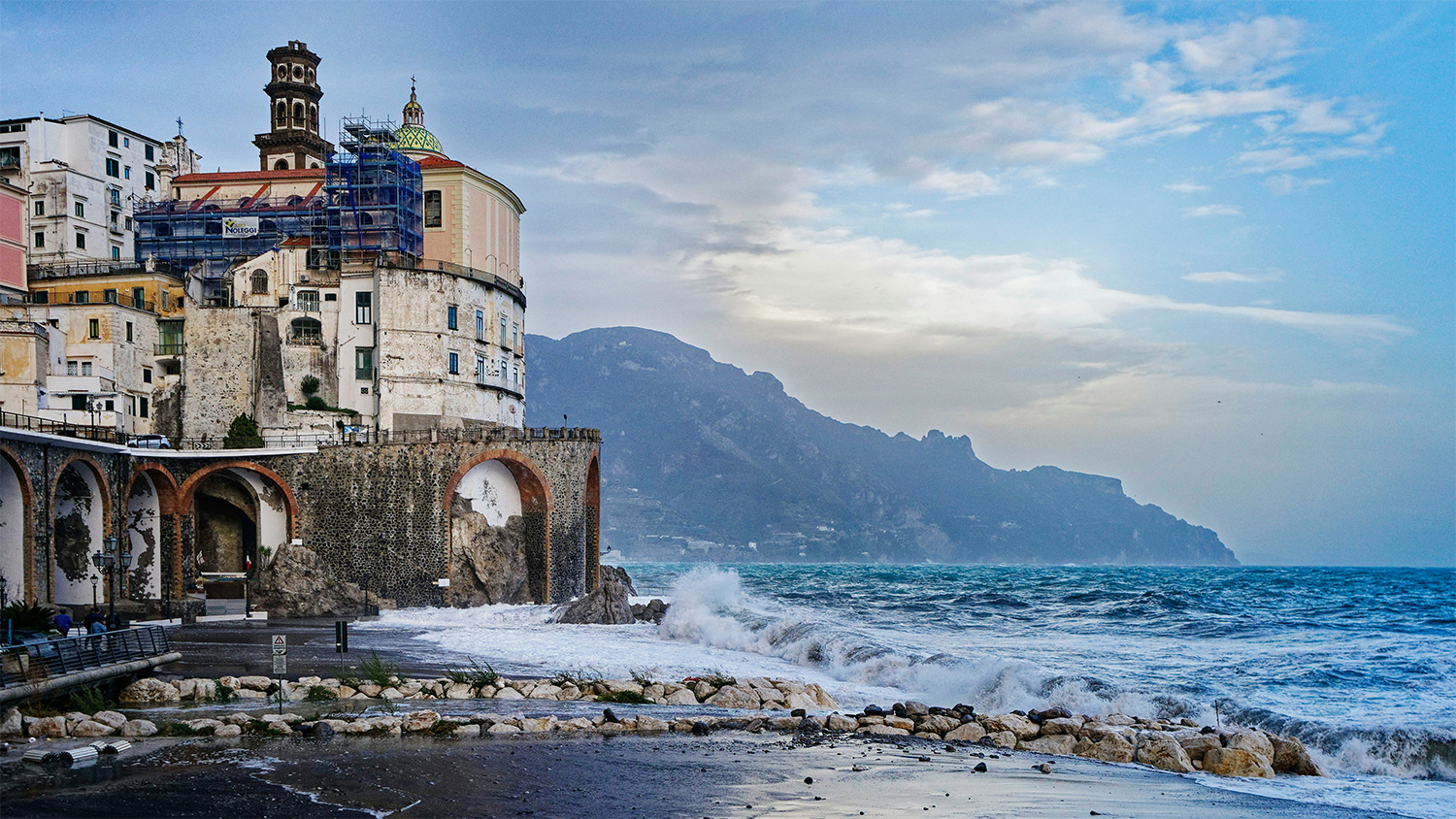
Village atmosphere, slower evenings and easy access to Amalfi
You want a small historic setting without giving up useful transport connections
You prefer a larger choice of hotels, shops and late-evening activity
Piazza Umberto I, the beachfront and lower Atrani near the Amalfi walkway
Ravello: best for gardens, culture and elevated views
Ravello sits high above the coastline and feels more composed than the waterfront towns below. The pace is slower, the views are broader, and the experience is shaped more by gardens, architecture and hotel terraces than by beach life.
Villa Rufolo, Villa Cimbrone and Ravello’s musical tradition place culture at the centre of a stay. Many hotels lean into the setting with historic interiors, landscaped grounds, panoramic dining and a strong sense of retreat.
The trade-off is distance from the water. Ravello has no direct beach or ferry access, so trips to Amalfi, Minori or the coast below require a bus, taxi, transfer or a substantial walk. That separation is also part of the appeal: Ravello feels like a destination in its own right rather than another stop along the coastal road.
Choose Ravello when time in the town and at the hotel is a major part of the trip. Look elsewhere when you want to swim, use ferries frequently or move between coastal towns every day.
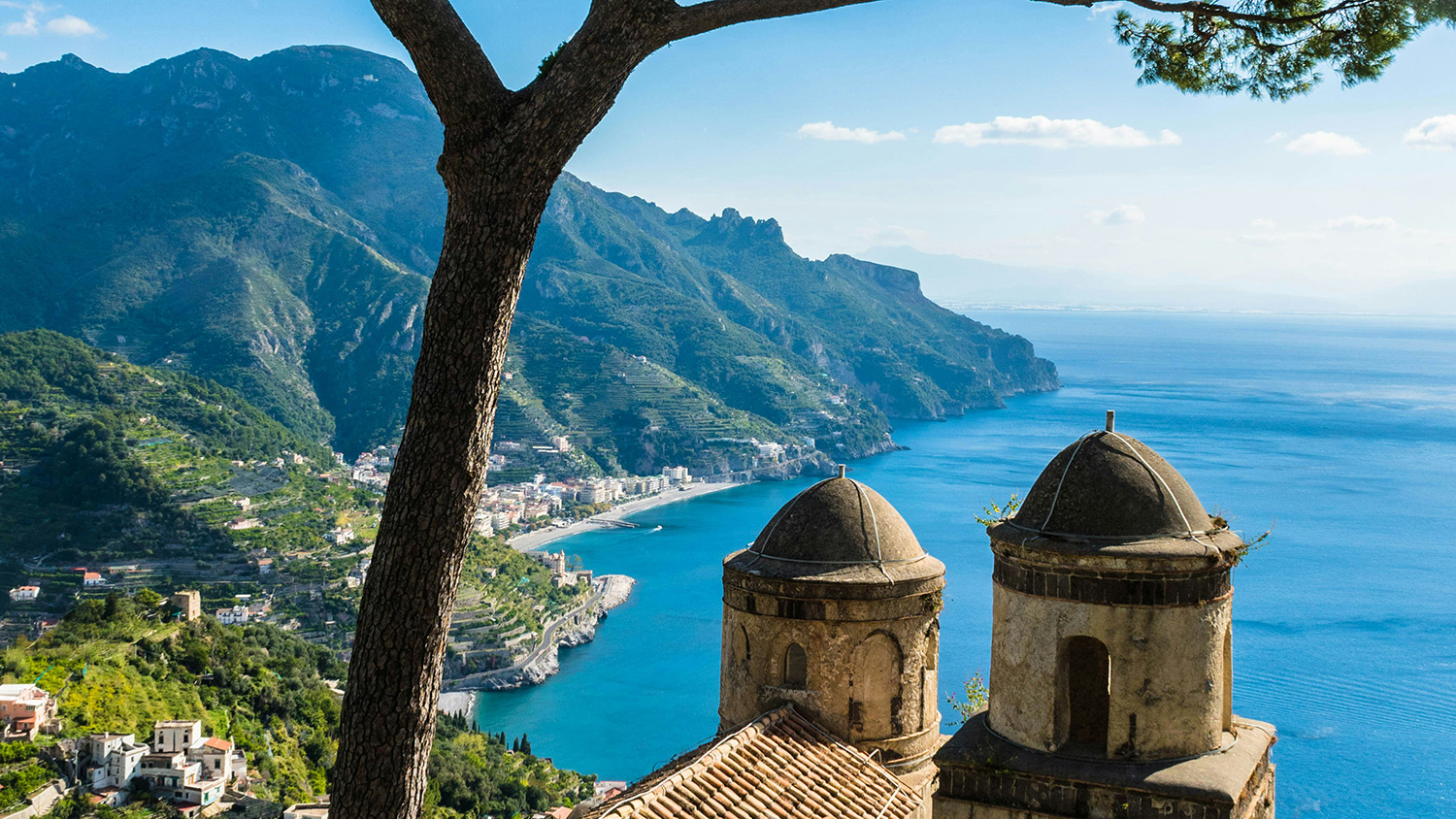
Gardens, culture, weddings, refined hotels and wide coastal views
The town, hotel and slower pace are central to the trip
You want daily beach access, frequent ferries or easy town-hopping
Piazza Duomo and the streets towards Villa Cimbrone
Scala: best for hiking and room to breathe
Scala faces Ravello across the valley, but the atmosphere is noticeably quieter and more residential. It feels less like a polished visitor destination and more like a collection of lived-in mountain villages above the coast.
The municipality includes several settlements, with useful access to walks towards Pontone, the Valle delle Ferriere and the mountain paths above Amalfi. It is a strong base when hiking and landscape matter as much as time by the sea.
Accommodation often offers more space, quieter surroundings and better value than Positano, Amalfi or Ravello. The trade-off is access: buses and taxis connect Scala with the coast, while a car gives you more freedom between villages and trailheads.
Choose Scala when you want to experience the mountain side of the Amalfi Coast. Look elsewhere when beaches, ferries and waterfront evenings need to be part of your everyday routine.
Hiking, mountain air, extra space and quieter village life
Walking routes and landscapes matter as much as beach time
You want direct ferry access, beaches and waterfront evenings
Scala centre for village life and Pontone for walking routes
Minori: best for food, families and walkability
Minori is compact, relatively level and closely tied to everyday local life. The beach, promenade, shops and restaurants sit within a small area, making it one of the easier Amalfi Coast towns to navigate without constantly planning around stairs or transport.
Food is a major part of the appeal. The town is known for pastries, citrus, fresh pasta and traditional coastal cooking, while the Roman Maritime Villa adds a layer of history beyond the beach. The Path of the Lemons also connects Minori with neighbouring Maiori through terraces above the sea.
Minori works especially well for longer stays. It offers a simple daily routine while keeping Maiori, Amalfi and Ravello within easy reach.
Food, walkability, families and relaxed longer stays
You want a compact town with the beach, restaurants and daily essentials close by
Luxury hotels, nightlife or dramatic cliffside scenery are central priorities
The seafront, central Minori and the streets near the Path of the Lemons
Maiori: best for beaches, families and straightforward logistics
Maiori has the longest beach on the Amalfi Coast and one of its broadest, flattest waterfronts. The promenade, apartments, hotels, supermarkets and restaurants are arranged in a way that makes everyday movement noticeably easier than in the steeper towns.
The architecture is more modern and less postcard-perfect than Positano or Atrani, but that comes with practical advantages: more space, easier luggage access and fewer stairs in the central area. For families or travellers planning regular beach days, that trade-off can be well worth it.
Maiori is also connected to Minori by the Path of the Lemons, giving you an easy way to combine beach time with walking and food.
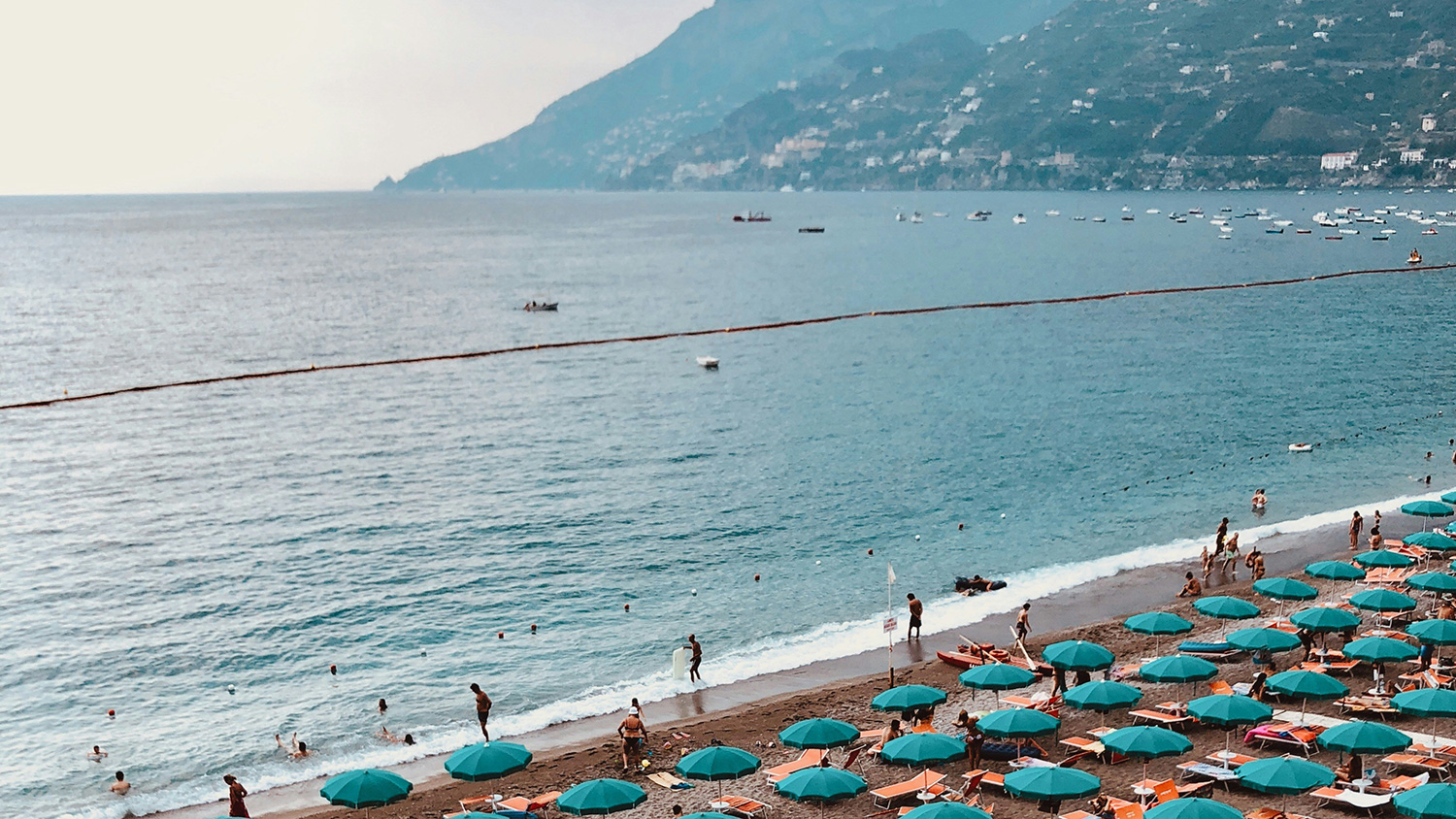
Beaches, families, apartments and straightforward daily logistics
Regular beach time, easier movement and practical accommodation matter most
Medieval lanes, secluded hotels or dramatic cliffside architecture define your trip
The seafront, central Maiori and the western side towards Minori
Cetara: best for seafood and working harbour character
Cetara still feels closely connected to the sea as a working source of food, not simply as a backdrop. Fishing boats share the harbour with passenger vessels, while local cooking revolves around tuna, anchovies and colatura di alici, the town’s distinctive anchovy sauce.
The centre is compact, easy to explore on foot and more understated than the coast’s famous western towns. Its eastern location also makes Vietri sul Mare and Salerno easier to reach.
Cetara suits travellers who choose destinations through food, harbour life and local character rather than luxury hotels or nightlife.
Seafood, harbour life, swimming and strong local character
Restaurants, food culture and a compact working town shape your ideal stay
Most of your itinerary focuses on Positano, Praiano and the western coast
The harbour, central Cetara and the lower streets near the waterfront
Other Amalfi Coast bases worth considering
Tramonti: for wine, countryside and agriturismi
Tramonti lies inland among the Lattari Mountains, spread across several hamlets surrounded by vineyards, woods and agricultural land. Here, the Amalfi Coast is experienced through wine, dairy farming, traditional pizza and cooler mountain evenings rather than beaches and ferries.
Agriturismi and countryside properties often provide more space, quieter surroundings and meals connected to local producers. A car is highly useful, both for moving between the hamlets and reaching the coast.
Choose Tramonti when food, landscape and rural calm matter more than waterfront access.
Vietri sul Mare: for ceramics and access to Salerno
Vietri sul Mare marks the eastern entrance to the Amalfi Coast and has a visual identity shaped by ceramic workshops, tiled façades and colourful domes.
Its proximity to Salerno makes rail travel, airport connections and wider regional trips easier than from towns deeper along the coast. The historic centre sits above Marina di Vietri, so the experience changes depending on where you stay: choose the upper town for ceramics, shops and restaurants, or the marina for easier beach access.
Vietri works best as a bridge between the Amalfi Coast and the wider transport network.
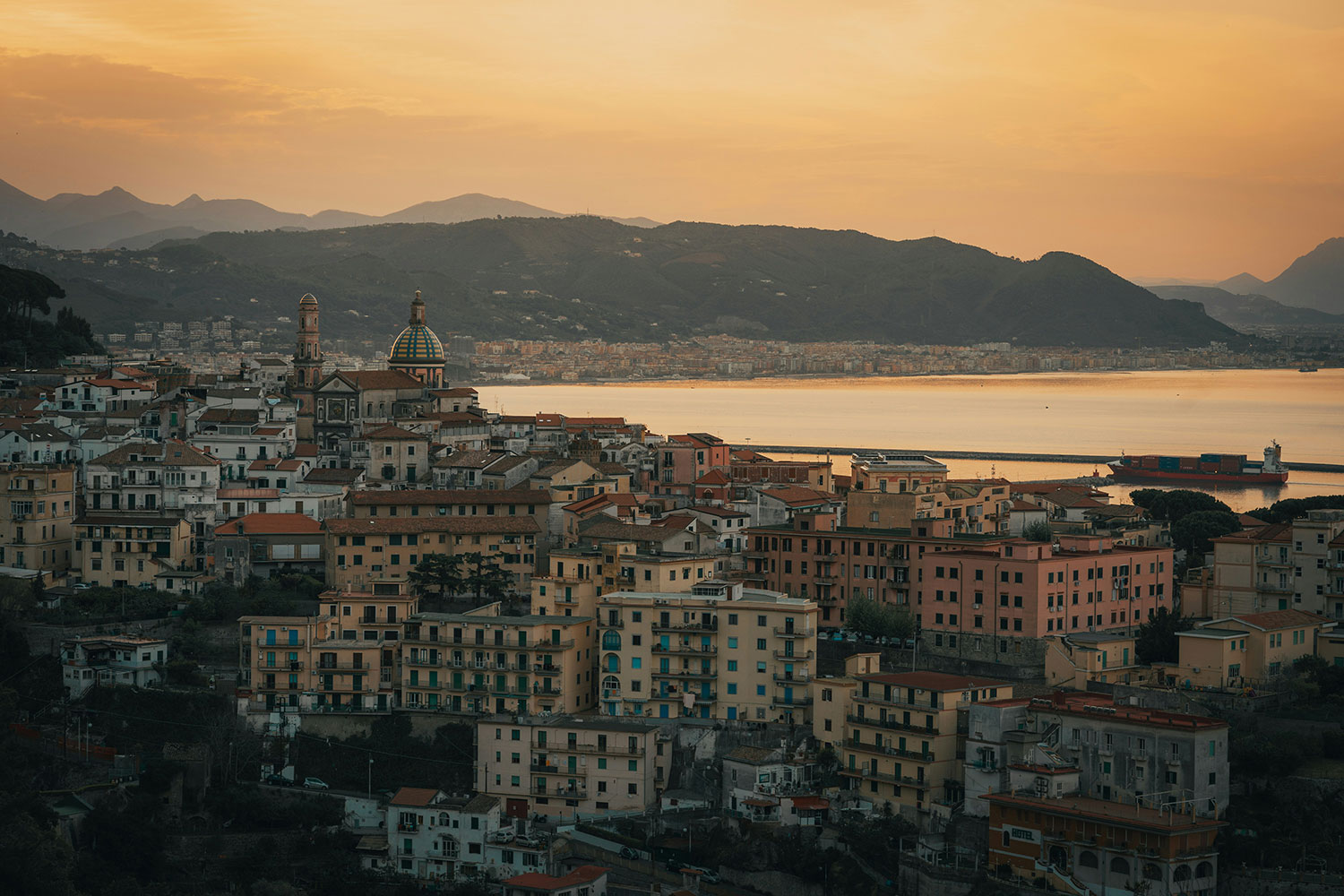
Should you stay in Salerno or Sorrento instead?
Salerno and Sorrento often appear in searches for where to stay near the Amalfi Coast, even though neither is one of the 13 towns traditionally considered part of the coast itself. Both can be smart bases, but they serve a different purpose: they trade the intimacy of a small coastal town for stronger transport links, broader hotel choice and easier regional travel.
Salerno: best for value, trains and the eastern coast
Salerno is a lively seaside city with a mainline railway station, long waterfront, historic centre and seasonal ferry connections towards the Amalfi Coast.
It works particularly well for travellers arriving by train, planning day trips to Paestum or Naples, or looking for more accommodation choices across different budgets. You also gain everyday city convenience: supermarkets, late dining, wider streets and fewer logistical compromises.
Choose Salerno when value and transport efficiency matter more than waking up inside a small coastal village. It is especially practical for exploring the eastern side of the coast, including Vietri sul Mare, Cetara and Maiori.
Sorrento: best for a wider Campania itinerary
Sorrento sits above the Bay of Naples on the opposite side of the peninsula. It is not on the Amalfi Coast, but its rail, ferry and organised tour connections make it one of the region’s most flexible bases.
It is a strong choice when your trip combines the Amalfi Coast with Naples, Pompeii, Capri or the wider Sorrento Peninsula. The town also offers a large hotel market, plenty of restaurants and an easy tourism infrastructure that can simplify a first visit to Campania.
Choose Sorrento when regional variety matters more than staying directly on the Amalfi Coast. It is less suited to travellers who want to feel immersed in the coast’s smaller villages from morning to night.
Best Amalfi Coast towns for different types of trip
| Your priority | Best choice | Also consider |
|---|---|---|
| First visit | Amalfi | Minori |
| Couples | Praiano | Ravello or Positano |
| Families | Maiori | Minori or Amalfi |
| Beaches | Maiori | Positano or Minori |
| Food | Cetara | Minori or Tramonti |
| Without a car | Amalfi | Maiori or Minori |
| Luxury hotels | Positano | Ravello or Conca dei Marini |
| Hiking | Scala | Praiano or Furore |
| Local atmosphere | Atrani | Cetara or Minori |
| Countryside | Tramonti | Scala |
| Regional transport | Salerno | Vietri sul Mare |
| Naples, Pompeii and Capri | Sorrento | Salerno |
Where to stay on the Amalfi Coast without a car
Travelling without a car can make the Amalfi Coast simpler, not harder—provided your accommodation fits the routes you will actually use. Look beyond the town name and check the real walk to the ferry pier, bus stop, beach and restaurants. Elevation matters just as much as distance.
A flexible option for ferries, buses and day trips in several directions, with Atrani also within walking distance.
A compact and relaxed base with the beach, restaurants and connections towards Maiori, Amalfi and Ravello nearby.
One of the easiest choices for luggage, families and beach days thanks to its broader waterfront and flatter central streets.
Useful for the western coast and seasonal ferries, but hotel elevation can completely change the daily experience.
A smaller, quieter town with walking access to Amalfi’s ferry terminal, buses and wider selection of services.
Practical for arrivals through Salerno and itineraries focused on the eastern side of the coast.
Practical Amalfi Coast accommodation details to check before booking
Before reserving a hotel or apartment, check the exact property location, not just the town name. On the Amalfi Coast, a few hundred metres can mean a very different stay.
- Elevation: check the actual walking route from the property to the beach, centre and transport. A short distance can still mean steep roads or hundreds of steps.
- Luggage access: confirm whether a taxi or transfer can reach the entrance, or whether the final part must be done on foot.
- Transport: check the real walking distance to the ferry pier or bus stop you expect to use most.
- Seasonality: if your plans depend on ferries, confirm that the route operates on your actual travel dates.
- Neighbourhood: properties marketed under Positano, Amalfi, Ravello and other towns can sit well outside the central area visitors normally imagine.
The best accommodation is not always the one with the best view. It is the one that makes the parts of the Amalfi Coast you plan to use every day easy to reach.
Frequently asked questions
What is the best town to stay in on the Amalfi Coast for the first time?
There is no universal first-time base. Amalfi suits a broad car-free itinerary, Positano works when scenery and hotels lead the trip, and Maiori is stronger for beaches, families and easier daily movement.
Hotel parking is only part of the equation. Read our Positano ZTL 2026 guide before booking accommodation that depends on driving into town.
Is Positano or Amalfi better for accommodation?
Choose Positano when the setting, boutique hotels and the town itself are central to the trip. Choose Amalfi when transport connections, history and day trips in several directions matter more.
Which Amalfi Coast town has the best beach?
Maiori has the longest and most accessible beachfront among the main towns. Positano offers the most recognisable beach setting, while Minori combines a convenient beach with a compact centre.
Where should families stay on the Amalfi Coast?
Maiori and Minori are among the most practical family bases. Their central areas are relatively manageable, with beaches, restaurants and everyday services close together.
Where should couples stay?
Praiano is strong for sunsets, sea-view terraces and quieter evenings. Ravello suits garden and culture-led stays, while Positano offers a livelier, more polished experience.
Where should I stay without a car?
Amalfi, Minori, Maiori, Positano and Atrani can all work without a car. The best choice depends on the season, your itinerary and the real walking route from your accommodation to transport.
Is Salerno a good base for the Amalfi Coast?
Yes. Salerno offers mainline rail access, seasonal ferries and a broad accommodation market. It is especially useful for the eastern coast and trips that also include Paestum or Naples.
The bottom line
On the Amalfi Coast, where you stay quietly determines how you spend almost every day. A hotel that looks perfectly placed on a map may mean 200 steps before breakfast; a less glamorous town may put the beach, ferry, restaurants and evening walk within five easy minutes.
For most first-time visitors who want to explore without a car, Amalfi is the safest all-round choice. If you want long beach days and an easier daily routine, Maiori is hard to beat; Minori gives you much of that convenience in a smaller, more intimate town. Choose Positano when waking up in Positano is itself part of the holiday. Choose Praiano or Ravello when you are happy to move around less because the view, hotel and slower evenings are the point. And if food, village life or countryside matter more than famous scenery, Cetara, Atrani, Scala or Tramonti may give you a better trip than the names everyone arrives already knowing.
The best place to stay on the Amalfi Coast, then, is not necessarily the prettiest town. It is the one that puts the things you want to do most often closest to your front door.

I’m Marco. I spent 28 years living on the Amalfi Coast, getting to know its villages, paths, beaches and all the little places in between. AmalfiMap is where I share what I’ve learned — the useful things, the beautiful things and the small local details that can make a trip feel effortless, memorable and a little more special.