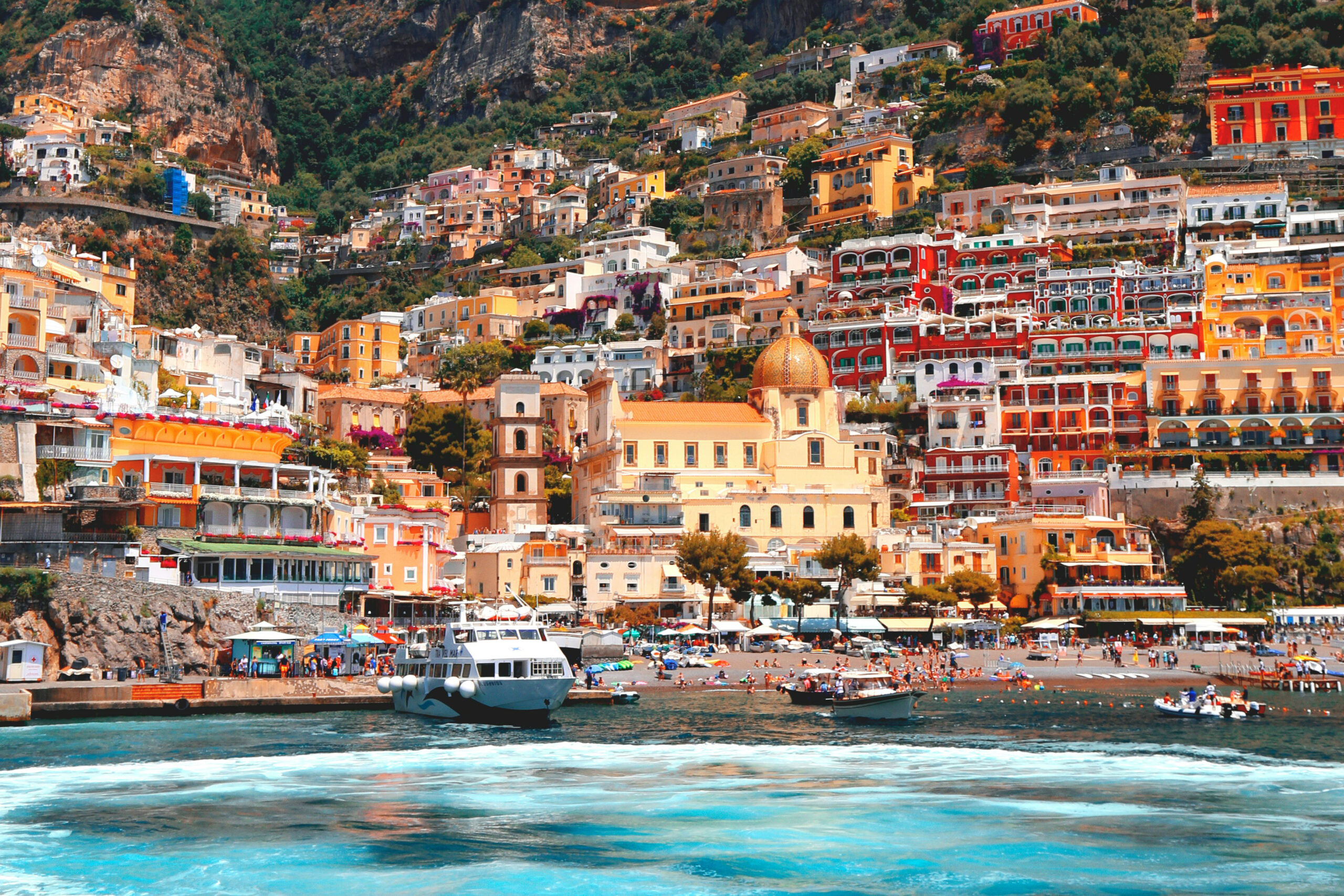
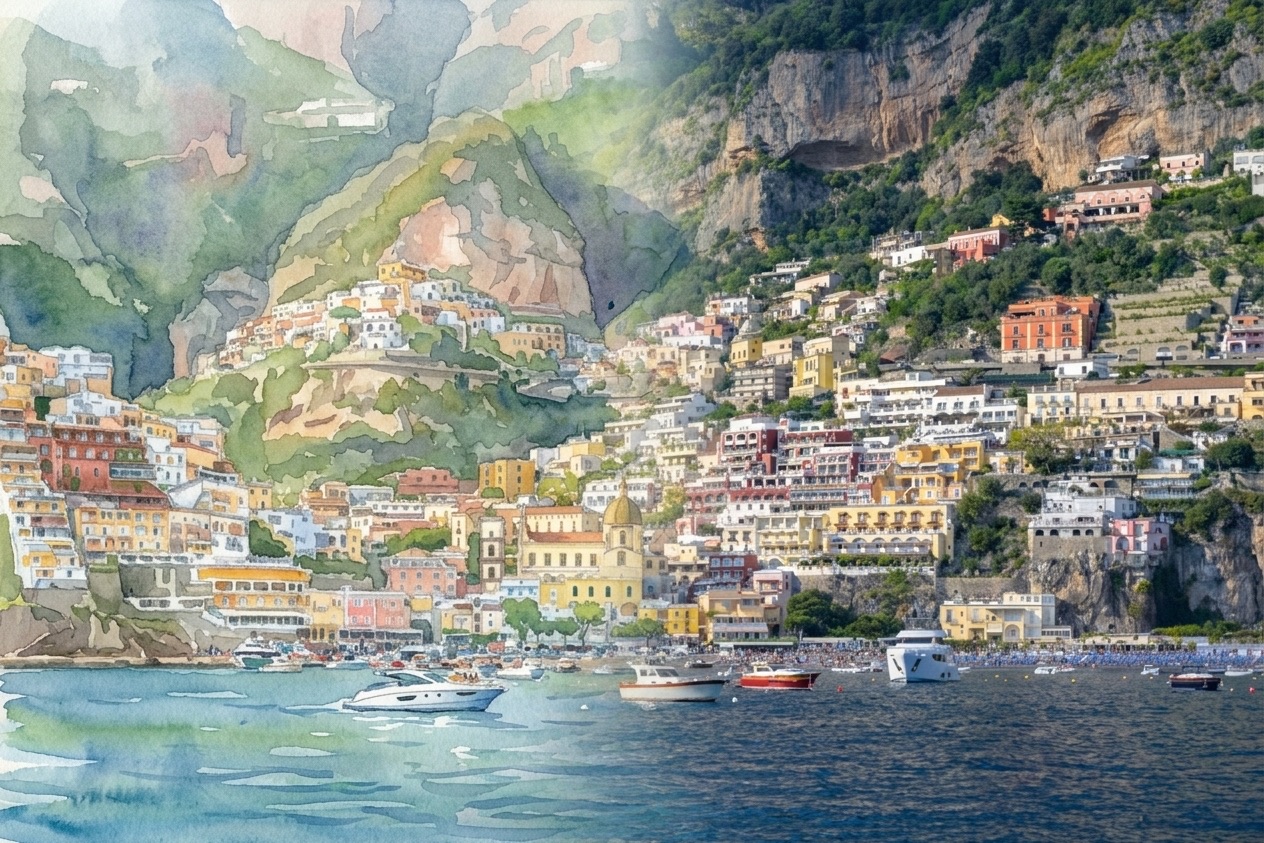
Trying to plan an Amalfi Coast itinerary but not sure how much you can realistically see in one, two or three days?
The towns look close together on a map. Positano, Amalfi and Ravello are only a short distance apart, and it is tempting to fit in every famous viewpoint, beach and village. But the winding coastal road, ferry schedules and steep streets can make a busy itinerary feel much longer than expected.
The good news is that you can have a wonderful time here even with just one day. You simply need to choose the right places and visit them in an order that makes sense.
For a first visit, I would focus on Positano and Amalfi, add Ravello when you have a second day, and save the smaller coastal towns for day three.
Below are three itineraries you can follow without renting a car, along with alternatives for travellers who prefer beaches, hiking or a slower pace.
Your trip at a glance
1, 2 or 3 days on the Amalfi Coast?
Not sure how much you can fit in? Here are three realistic ways to explore the coast, from a quick introduction to a more relaxed three-day escape.
The famous highlights
Two iconic towns and a beautiful coastal ferry ride.
Wander the colourful streets, visit Santa Maria Assunta and see Spiaggia Grande.
Explore the cathedral, historic lanes, cafés and lively waterfront.
Coast, history & gardens
Enjoy Positano on day one, then explore three nearby towns.
Explore the town, enjoy the beach and take your time over lunch with a view.
Visit the cathedral and discover the old town’s small streets and shops.
Walk from Amalfi, see the tiny piazza and stop for a coffee near the beach.
Visit Villa Rufolo or Villa Cimbrone for spectacular gardens and coastal views.
Highlights & local life
See the famous towns, then slow down on the eastern coast.
Discover Positano, Amalfi, Atrani and Ravello using the two-day plan.
Try a local pastry, explore the seaside town and start the Path of Lemons.
Walk between lemon terraces and hillside views towards Maiori. Expect plenty of steps.
Relax on the long beach, stroll the promenade and enjoy a leisurely lunch.
My tip: Three full days is the sweet spot for a first visit, but even one day is worth it. These routes work without a rental car. Use ferries when they’re running, and check bus connections before heading to Ravello.
How many days do you need on the Amalfi Coast?
One day is enough to see Positano and Amalfi, enjoy a ferry journey along the coastline and get a good first impression of the region. You’ll have to be selective, but it is absolutely worth going.
Two days gives you time to explore the main towns properly and add Ravello’s gardens and hilltop views. For a short first trip, this is a very good balance.
Three days is my recommendation if your schedule allows it. You can visit the famous places, enjoy a proper beach afternoon and explore quieter towns without constantly watching the clock.
These plans assume you have full sightseeing days, rather than arriving from Naples or Rome at lunchtime. If your first day includes a long journey, consider that a travel day rather than trying to squeeze everything into the afternoon.
Amalfi Coast 1-day itinerary: Positano and Amalfi
Best for: Day trips and first-time visitors with limited time.
Route: Positano → Amalfi, with Atrani as an optional extra.
Transport: Ferry during the sailing season; bus or private transfer when ferries aren’t operating.
If I had only one full day on the Amalfi Coast, I would choose these two towns. They are very different, both are worth seeing, and the ferry journey between them is part of the experience.
Morning: Explore Positano
Try to arrive in Positano in the morning, ideally before the busiest part of the day.
If you’re coming by ferry, you’ll arrive beside Spiaggia Grande, the main beach. This is one of the nicest ways to approach Positano because you see the colourful houses rising above the water before stepping ashore.
From the beach, follow the narrow streets uphill towards the Church of Santa Maria Assunta.
Take your time looking around the small shops, stopping for coffee and enjoying the views back towards the sea. Positano is one of those places where the walk between two attractions can be more enjoyable than the attractions themselves.
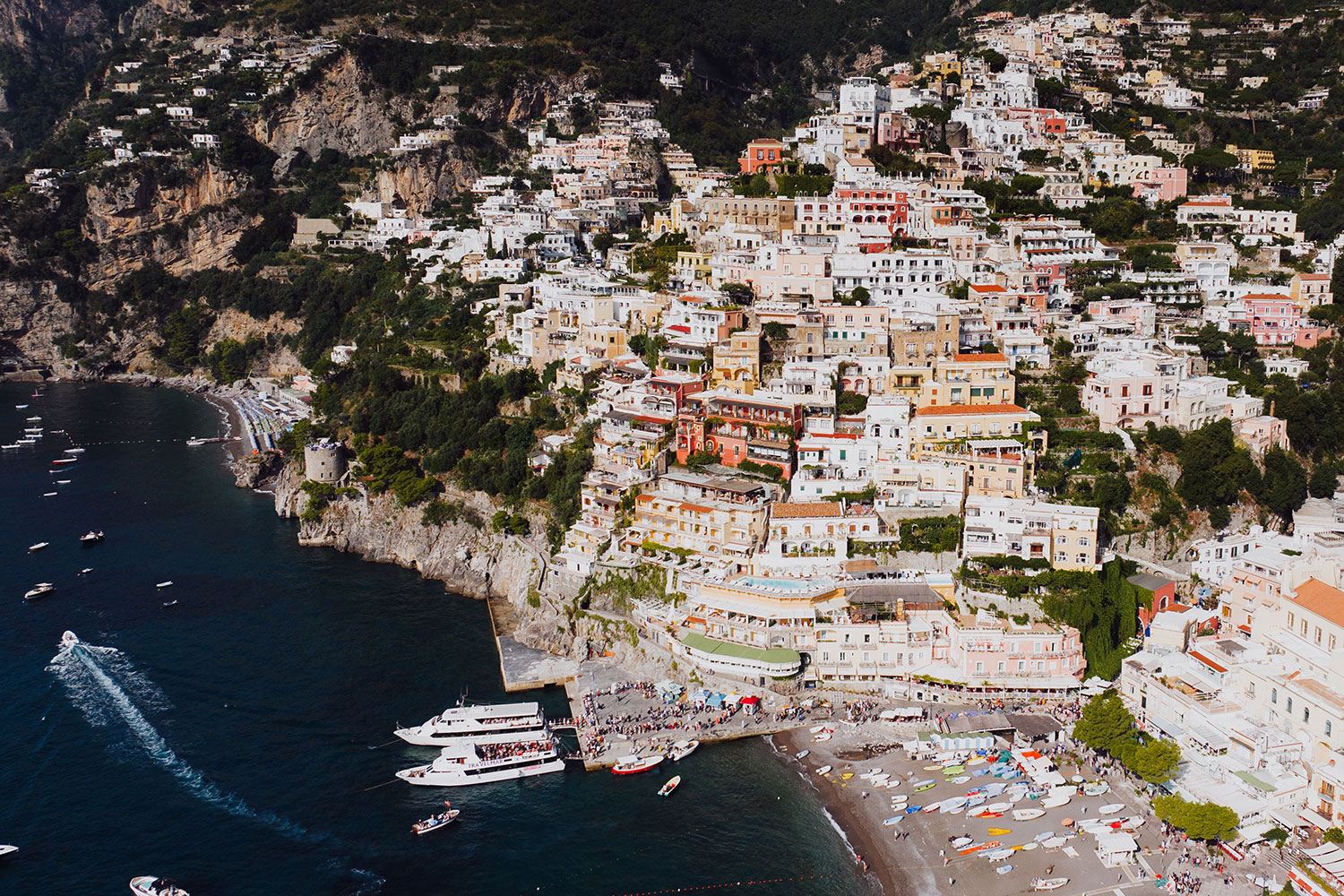
Allow around 2–3 hours for a comfortable first visit.
If you’re travelling in summer and would rather swim, spend some of that time at Spiaggia Grande or follow the coastal walkway towards Fornillo Beach.
Be aware that Positano has plenty of stairs. Even a relatively short walk can be tiring in the afternoon heat.
Lunchtime: Take the ferry to Amalfi
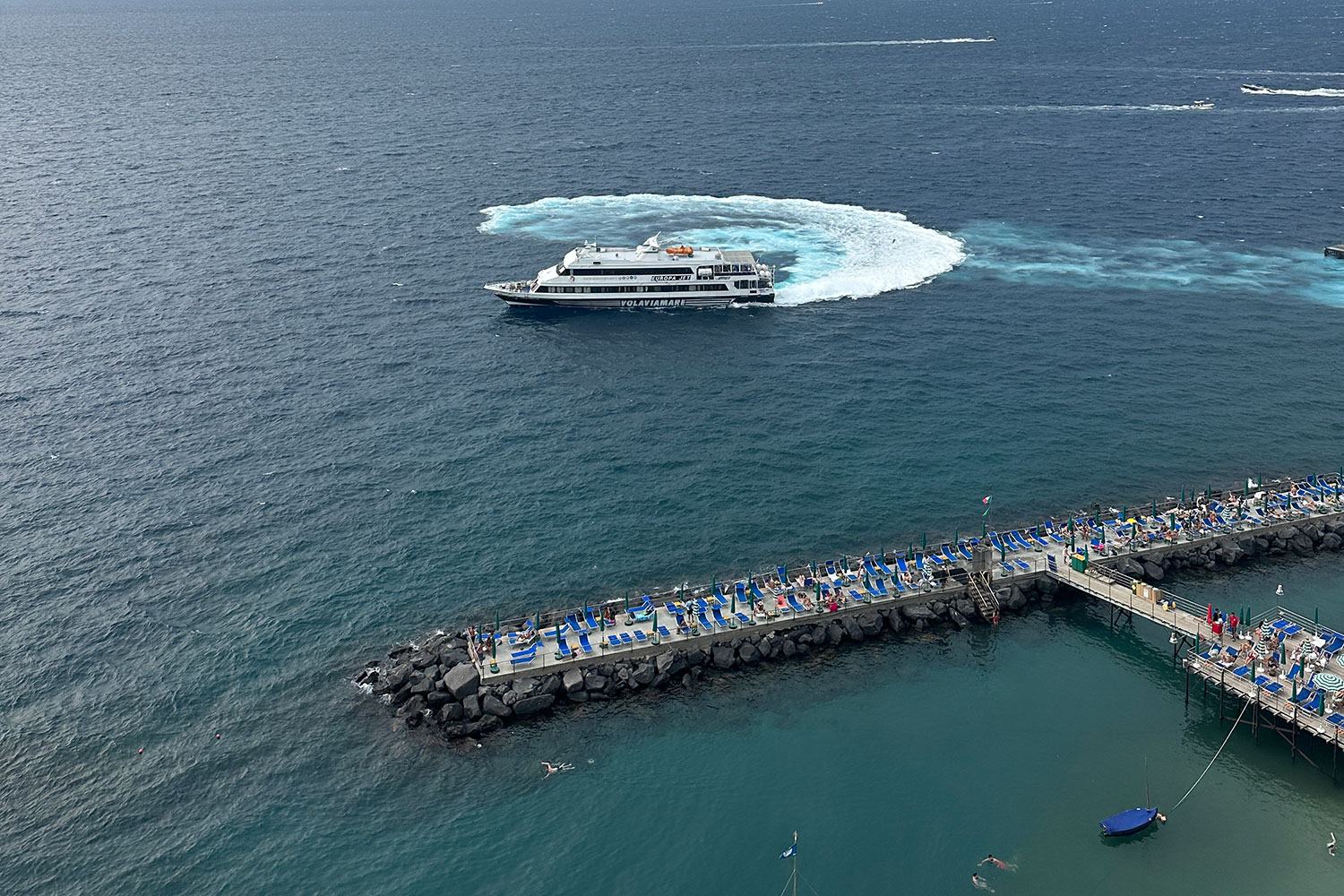
When ferries are operating, I would choose the boat between Positano and Amalfi.
The journey usually takes around 25 minutes, depending on the operator and sailing. You’ll pass the steep coastline, small beaches and villages that are much harder to appreciate from the road.
It also saves you from spending part of your only day sitting in traffic.
Check the sailing times before leaving in the morning, and leave a little flexibility around lunch.
Afternoon: Discover Amalfi town
Amalfi feels quite different from Positano.
Its historic centre is more compact, with a lively main square, narrow shopping streets and the impressive Cathedral of Sant’Andrea rising above Piazza Duomo.
Start at the cathedral, then wander into the streets behind it.
You don’t need a strict sightseeing route here. The interesting part is moving between the small lanes, old buildings, cafés and quieter corners just beyond the busy waterfront.
If you’re interested in the town’s history, you could visit the Paper Museum or spend more time exploring the cathedral complex. Otherwise, enjoy a leisurely lunch, a gelato and some time by the harbour.
Allow around 2–3 hours for Amalfi.
Optional: Walk to Atrani
If you still have energy and enough time before your return journey, walk from Amalfi to neighbouring Atrani.
The two towns are only around 10–15 minutes apart on foot, depending on your starting point, and Atrani feels surprisingly different considering how close it is.
Its small piazza, beach and tightly packed houses make it a lovely place for a short break.
I wouldn’t sacrifice your return transport or rush through Amalfi just to fit it in. Atrani is a bonus, not a requirement.
Is one day enough?
Yes, provided you’re happy to see the highlights rather than everything.
You will get to experience Positano, historic Amalfi and some of the coastline from the sea.
My tip: Don’t add Ravello, Fiordo di Furore or another distant stop to this itinerary. With only one day, two towns are plenty. You’ll enjoy them much more without trying to catch another bus every hour.
If you’re arriving from Salerno, you may find it easier to visit Amalfi first and Positano second. From Sorrento, Positano is the more natural first stop. Always plan around your return connection.
Amalfi Coast 2-day itinerary: Add Ravello and Atrani
Best for: First-time visitors who want the famous scenery, historic towns and beautiful gardens.
Recommended base: Amalfi, although Positano and other connected towns can also work.
With two full days, I would change the plan slightly. Instead of squeezing Positano and Amalfi into one day, give Positano more time and save Amalfi, Atrani and Ravello for the following day.
That way, each day has its own character.
Day 1: Positano, coastal views and beach time
Start with a morning ferry to Positano, or simply walk into town if you’re staying there.
Explore the streets above Spiaggia Grande, browse the shops and stop for coffee with a sea view.
Unlike the one-day itinerary, there is no need to leave around lunchtime.
You can spend the afternoon swimming, relaxing at Fornillo Beach or enjoying a long lunch overlooking the coastline.
If you want to see more of the coast from the water, consider a short boat excursion or a longer ferry journey that fits your schedule.
In the late afternoon, return to your accommodation.
Why give Positano almost a whole day? Because the town is much nicer when you aren’t rushing between photo stops. Once you’ve seen the famous beach, there’s plenty of pleasure in simply wandering and finding somewhere to sit.
Day 2: Amalfi, Atrani and Ravello
This is one of my favourite combinations for a full day because the three towns are close together but offer completely different experiences.
Morning — Amalfi
Start in Amalfi’s historic centre.
Visit the cathedral, wander along the main street and stop for breakfast or coffee before the busiest day-trip crowds arrive.
Give yourself around two hours before continuing towards Atrani.
Late morning — Atrani
Walk from Amalfi to Atrani and spend some time around Piazza Umberto I, the small beach and the lanes behind the seafront.
You don’t need a long visit here. An hour is enough for a relaxed look, although it is a lovely place to stop for lunch.
From Atrani, return towards Amalfi to catch your transport uphill.
Afternoon — Ravello
Take the SITA bus or a taxi from Amalfi to Ravello.
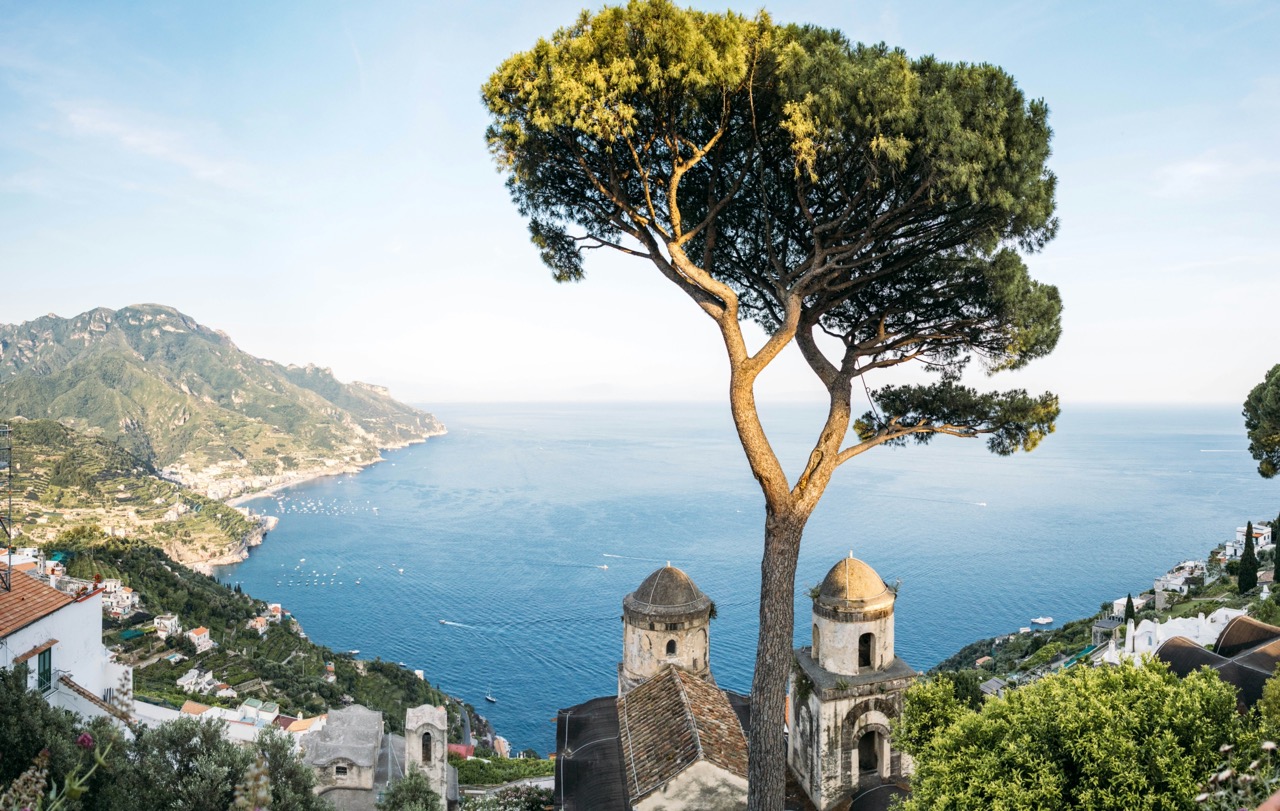
Ravello sits high above the coastline, so you’ll notice the change immediately. The town feels quieter and more spacious, with gardens, stone streets and wonderful views over the sea.
The two best-known places to visit are:
- Villa Rufolo, close to the main square, with historic gardens and beautiful views of the coastline.
- Villa Cimbrone, reached on foot through Ravello, with its famous Terrace of Infinity.
You can visit both if you have enough time, but don’t feel obliged. I’d rather spend longer enjoying one garden than rush through two.
Allow around 2–4 hours for Ravello, depending on your interests.
Return to Amalfi by bus or taxi, checking the evening schedule in advance.
My tip: Ravello is one place I wouldn’t leave until the final hour of the day. The buses are useful, but you don’t want your dinner plans to depend on catching the last convenient service.
Is two days enough?
For many visitors, absolutely.
You’ve seen the two best-known coastal towns, visited Ravello and enjoyed at least one proper beach afternoon.
You will still miss some wonderful smaller villages, but the itinerary feels like a holiday rather than a transport challenge.
Amalfi Coast 3-day itinerary: Add Minori, Maiori and the Lemon Path
Best for: First-time visitors who want the highlights and a taste of the quieter coast.
Recommended base: Amalfi for easy transport connections, or Minori and Maiori for a more relaxed stay.
Three days gives you the opportunity to experience different sides of the Amalfi Coast.
I’d keep the first two days above and add a third day around Minori and Maiori, two seaside towns east of Amalfi.
Day 1: Positano and the western coastline
Spend the day exploring Positano, enjoying a coastal ferry journey and relaxing at Spiaggia Grande or Fornillo Beach.
Don’t rush to add another town unless you genuinely want to.
Day 2: Amalfi, Atrani and Ravello
Explore Amalfi in the morning, walk to Atrani and visit Ravello in the afternoon.
This combines history, quieter streets and some of the most beautiful garden views on the coast.
Day 3: Minori, the Path of Lemons and Maiori
This day has a different rhythm.
Instead of spending the morning in one of the busiest destinations, you’ll explore two smaller towns, enjoy some local food and, if you like walking, follow an old hillside path between them.
Morning — Minori
Take the ferry or bus to Minori.
Minori has a compact centre, a small beach and a strong tradition of pastries and local food. It’s a nice place to begin the day with coffee and something sweet.
Spend a little time walking around town before deciding whether to continue on foot or by transport.
Late morning — Walk the Path of Lemons
The Sentiero dei Limoni, or Path of Lemons, connects Minori and Maiori through hillside terraces, old stone paths and the village of Torre.
It’s a lovely walk, especially when the weather is pleasant.
Allow approximately 1–1.5 hours for the walk, and more if you want to stop for photographs and views.
There are several hundred steps along the route, so this is not a flat seaside stroll. Wear comfortable shoes, carry water and avoid the hottest part of the day in midsummer.
If you don’t enjoy stairs or hiking, simply take the bus or ferry between the towns instead.
You won’t be missing the entire experience of the day.
Afternoon — Maiori
Finish in Maiori.
Unlike Positano, Maiori has a long, relatively flat seafront and one of the largest beaches on the Amalfi Coast.
It’s a comfortable place to spend an afternoon swimming, relaxing or enjoying lunch beside the water.
If you have already spent two days exploring busy towns, Maiori makes a particularly pleasant final stop.
Return to your base in the late afternoon or evening, depending on the transport available.
Is three days enough?
Yes. Three full days is an excellent introduction to the Amalfi Coast.
You’ll have seen Positano, Amalfi and Ravello, spent time beside the water, walked through a smaller village and enjoyed some of the scenery away from the busiest streets.
More time would certainly be welcome, but you don’t need a week to understand why this coastline is special.
Want a different 3-day itinerary? Three good alternatives
The itinerary above is the one I’d choose for a balanced first trip. But it isn’t the only good option.
For hiking: Replace day three with the Path of the Gods
If you enjoy walking, replace Minori and Maiori with the famous Sentiero degli Dei.
The classic route begins in Bomerano, above the coast, and continues towards Nocelle, high above Positano.
Allow roughly 3–4 hours for the hike itself, plus transport to the starting point and onward connections.
This is a more active day with exposed sections, uneven ground and considerable climbing or descending depending on the route you take. The walk from Nocelle down to Positano involves a long staircase unless you arrange onward road transport.
It’s a wonderful experience in suitable weather, but I wouldn’t combine it with a packed sightseeing afternoon.
For islands: Replace day three with Capri
If Capri is one of your priorities, give it a full day.
You can travel there by ferry from several coastal ports during the operating season.
Plan your return sailing before booking the outward journey and remember that Capri itself requires time for local transport, sightseeing and getting between the island’s main areas.
I wouldn’t try to combine Capri with Amalfi, Positano and Ravello on the same day.
Capri is beautiful, but it’s a separate destination rather than another small stop on the coastal road.
For relaxation: Keep day three completely free
Sometimes the best addition to an itinerary is simply a day with nothing booked.
Choose a beach, find a comfortable spot for lunch or take a short boat trip along the coast.
This is particularly appealing in July and August, when heat and crowds can make several days of continuous sightseeing tiring.
If your first two days are busy, you may appreciate a slower third day more than another list of attractions.
Where should you stay for a 1, 2 or 3-day itinerary?
Your base matters, especially when you only have a few days.
Amalfi is my first choice for a practical itinerary without a car. The town has ferry connections along the coast and useful SITA bus services to Positano, Ravello, Minori and Maiori. Staying near the centre makes early departures and evening returns much easier.
Positano is a lovely choice if you want beautiful hotels, views and restaurants close to your accommodation. It’s especially appealing for couples, although steep streets and hotel locations can make daily travel more tiring.
Minori or Maiori are good alternatives if you’d rather stay somewhere more relaxed. Both work particularly well if your trip includes Amalfi, Ravello and the eastern coast.
Salerno makes sense for travellers arriving by train who want a potentially less expensive base with ferry access during the sailing season. Just remember that you’ll spend part of each sightseeing day travelling to and from the coast.
Sorrento is convenient if you also plan to visit Pompeii, Naples or Capri. It’s a sensible western base, but reaching the eastern Amalfi Coast takes longer, so I wouldn’t automatically choose it for an itinerary focused on Amalfi, Ravello and Maiori.
For a trip of two or three days, I would usually stay in one place rather than change hotels. Packing, checking out and moving luggage can easily consume the time you hoped to save.
How to get around on your itinerary
For most visitors travelling between spring and autumn, a mixture of ferries, buses and walking works very well.
Ferries: Best for coastal town-hopping
Ferries are particularly useful between Positano, Amalfi, Minori, Maiori and Salerno when services are running.
You avoid much of the road traffic and enjoy the coastline from the sea.
However, ferry routes and operating dates are seasonal, and individual sailings can be cancelled because of rough seas.
Check the official Travelmar timetable and other relevant operators for your actual travel date.
Buses: Essential for Ravello and useful in winter
SITA buses cover the main coastal roads and connect Amalfi with Ravello.
They are also important when ferry schedules are limited or conditions at sea are poor.
The downside is that buses share narrow roads with other traffic and can become crowded during the summer.
Check the current timetable on the official SITA Sud website.
Rental car: Usually unnecessary for these routes
I wouldn’t rent a car simply to follow the itineraries above.
Parking in the busiest towns can be expensive and difficult to find, especially in summer. Driving restrictions may also affect your plans.
A rental car becomes more useful if you are staying somewhere remote or want to explore inland villages that are poorly served by public transport.
For a straightforward first visit, I would generally choose ferries and buses instead.
Mistakes to avoid when planning a short Amalfi Coast trip
Trying to visit too many towns in one day. A three-hour visit to Positano can disappear quickly between the beach, walking uphill and stopping for lunch. Two enjoyable towns are better than five rushed stops.
Ignoring the return journey. Check how you’ll get back before leaving your hotel, particularly when relying on seasonal ferries or evening buses.
Underestimating the stairs. Positano, Ravello and hillside accommodation can involve plenty of climbing. A short distance on Google Maps doesn’t always mean an easy walk.
Planning every day around the weather being perfect. Wind can affect ferries, heavy rain can spoil hiking plans and July heat can make long afternoon walks uncomfortable. Keep at least one alternative in mind.
Using too many different hotels. With only two or three days, changing accommodation usually creates more trouble than it saves.
Quick read
Amalfi Coast itinerary at a glance
Everything you need to plan 1, 2 or 3 days on the Amalfi Coast — where to go, where to stay and how to get around.
Visit Positano and Amalfi. Explore colourful streets, see the cathedral and enjoy a scenic ferry ride between the towns when operating.
Spend day one in Positano, then visit Amalfi, Atrani and Ravello for historic streets, a quiet piazza and beautiful hilltop gardens.
My recommended option. Add Minori, walk the Path of Lemons and relax on Maiori’s long beach on your final day.
Stay in Amalfi for convenient ferry and bus connections. With only a few days, avoid changing hotels.
Ferries for coastal towns and buses or taxis for Ravello. A rental car isn’t necessary for these itineraries.
May, June and September offer a good balance of sightseeing weather and transport options. Early October can also be lovely.
Expect steep streets in Positano and hundreds of steps along the Path of Lemons. Comfortable walking shoes are essential.
Check your return connections before setting off. Ferries are seasonal and sailings can be cancelled in rough weather.
My tip: Don’t count your arrival day as a full sightseeing day. Three full days is a lovely amount of time for a first visit, but even one well-planned day can be worth the trip.
Frequently asked questions
Can you visit the Amalfi Coast in one day from Naples?
Yes, but expect a long day with travel at both ends.
The route through Salerno by train and onward ferry can work well for the eastern coast during the ferry season. Other routes through Sorrento may be better for Positano.
I would focus on one or two towns rather than trying to explore the whole coastline.
Is two days enough for Positano, Amalfi and Ravello?
Yes. Spend one day in Positano and the second visiting Amalfi and Ravello, with Atrani as a short additional stop.
This is one of the best ways to see the major highlights without spending every hour travelling.
Is three days too short for the Amalfi Coast?
Not at all.
Three full days gives you enough time for the main towns, some beach time and at least one quieter experience.
If you also want Capri, Pompeii and several hikes, you’ll benefit from a longer stay.
Should you visit Capri or Positano with limited time?
For a first visit focused on the Amalfi Coast, I would choose Positano.
Capri deserves its own day, and getting there adds a separate ferry journey. If you have only one or two days, staying on the coast usually makes more sense.
Can you follow these itineraries in winter?
Yes, with some changes.
November through March generally brings fewer tourist ferry services, so buses, taxis and private transfers become more important.
You may also find seasonal beach businesses closed and shorter opening hours at attractions. The quieter atmosphere is lovely, but the summer version of these itineraries should not be followed without checking transport first.
The bottom line: How I’d spend 1, 2 or 3 days
If you only have one day, see Positano and Amalfi. Take the ferry if it’s running, enjoy the views from the water and don’t waste your afternoon trying to squeeze in a third major destination.
With two days, give Positano time of its own, then explore Amalfi, Atrani and Ravello. It’s a lovely mix of seaside scenery, history and hilltop gardens.
And with three days, keep those highlights and add Minori and Maiori, or swap the final day for a hike, a boat trip or simply some time on the beach.
My tip: Choose one base, plan the longest journeys first and leave a little empty space each day. On the Amalfi Coast, that extra hour often becomes the best part of the afternoon — another swim, a longer lunch or a quiet corner you hadn’t planned to find.
If you’re still choosing your stops, the free AmalfiMap interactive map brings together 300+ places, including beaches, viewpoints and useful locations to help you build your own route.
Continue exploring