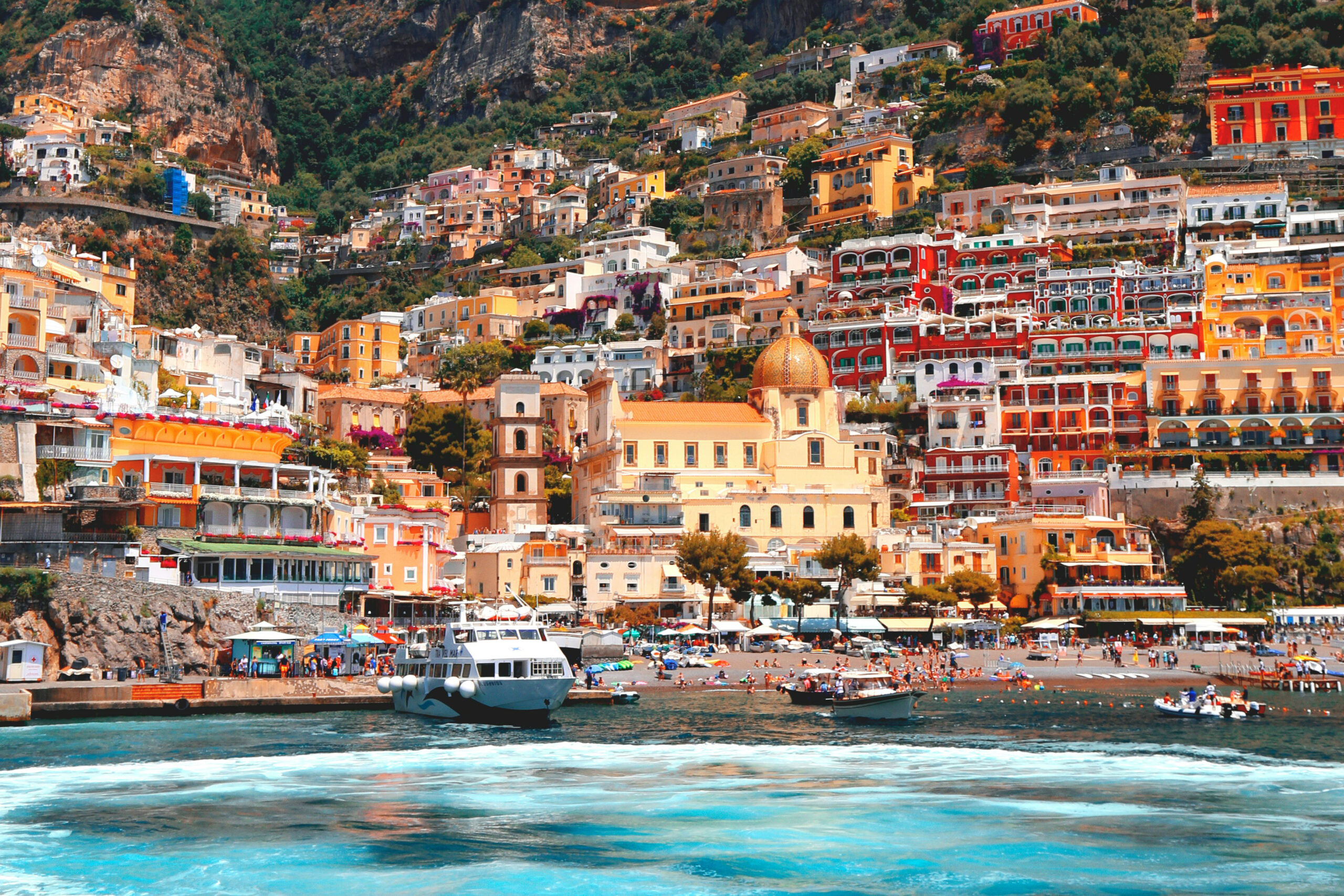
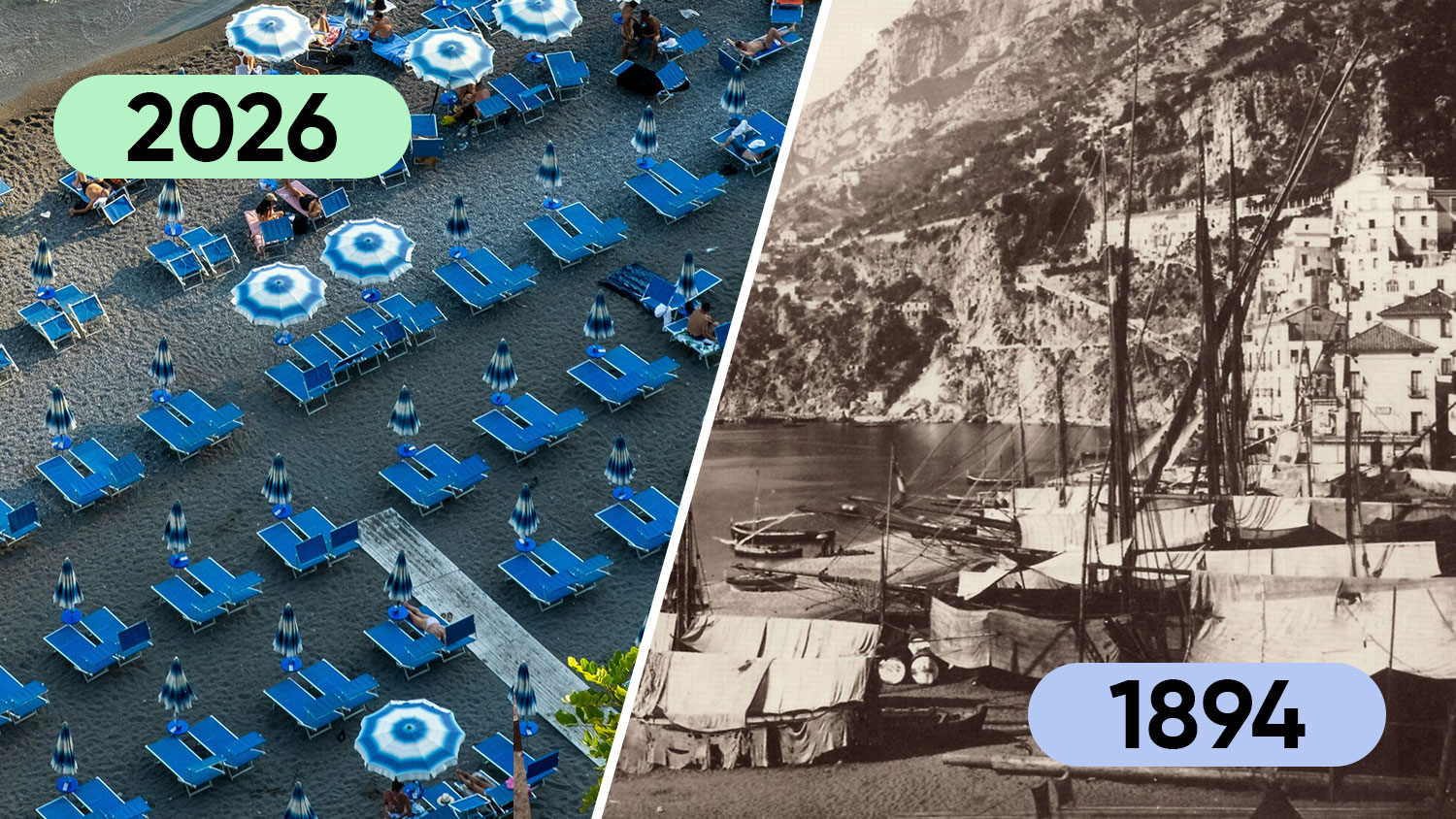
Today, the beach at Positano is a carefully organised patchwork of umbrellas. Ferries arrive every few minutes, waiters carry trays above the water, and people queue for photographs beneath a cliff covered in hotels.
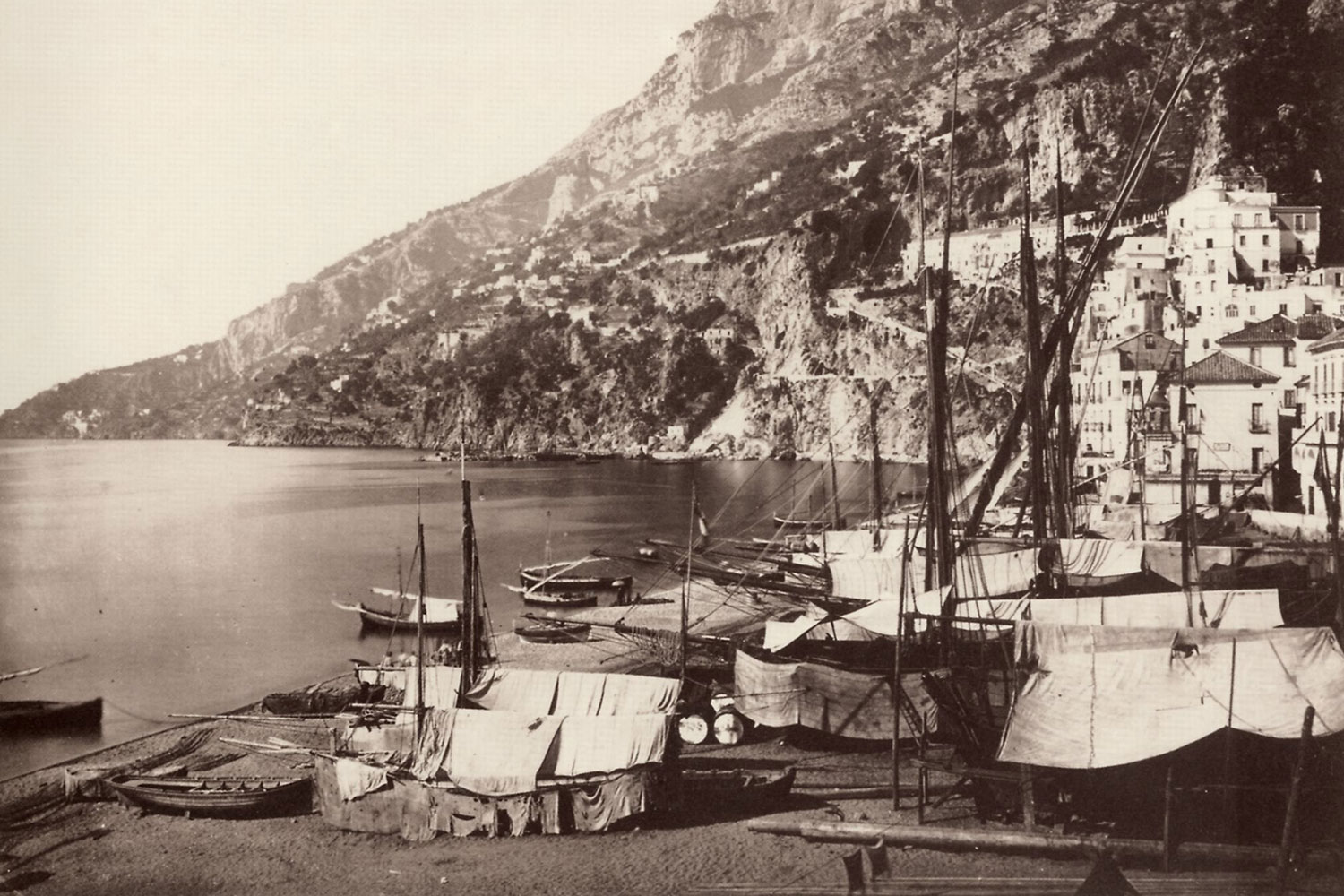
A century ago, the same shore was shaped by work. Fishing boats were pulled onto the beach, nets were repaired beside the water, and the sea connected families with neighbouring towns and markets.
That change runs through the history of the whole Amalfi Coast. Terraces became scenery, mule tracks became walking routes, and fishing beaches became places to swim. The older coast never completely disappeared; much of it is still visible beneath the modern one.
Amalfi Coast history · Key dates
Eight dates that explain the coast
A coast shaped by almost no flat land
The first thing to understand about life on the Amalfi Coast is the land, and there is very little of it.
The Lattari Mountains fall abruptly towards the Tyrrhenian Sea, leaving small valleys, coves and narrow strips of usable ground between cliffs. Towns such as Positano, Praiano, Amalfi and Atrani had to rise vertically because there was nowhere else for them to go, and agriculture adapted to the same problem.
Generations of Amalfi Coast families cut terraces into slopes that were never naturally suited to farming, supporting them with dry-stone walls and planting lemons, vines, olives, vegetables and fruit wherever soil could be held in place.
UNESCO considers this relationship between people and difficult terrain one of the defining reasons the Amalfi Coast is culturally important. The landscape visitors photograph today is not simply natural scenery but, in large part, the result of centuries of human work.
Above Minori, lemon groves climb slopes held together by stone walls. In Praiano, stairways once connected homes with fields, boats and neighbouring settlements. Amalfi and Atrani packed houses and lanes into narrow spaces where every piece of flat land mattered.
The Amalfi Coast was beautiful long before tourism arrived, but everyday life demanded constant work from the landscape.
Before the SS163, the sea was the Amalfi Coast’s main road
For centuries, boats were the practical way to move people, food and goods between the coastal towns, while the mountain paths were slower and far harder work.
Amalfi took that relationship further than any other town on the coast. During the Middle Ages, it became one of the Mediterranean’s important maritime trading powers, with merchants sailing to Byzantine and eastern ports and returning with spices, textiles, perfumes, precious goods and ideas from far beyond southern Italy.
Modern Amalfi may feel compact, but medieval Amalfi belonged to a much larger commercial world. Its merchants travelled across the Mediterranean while the mountains immediately behind the town remained difficult to cross.
When the beaches were places of work
Old photographs of Positano, Minori and Praiano show a coastline that was far busier with work than leisure. Boats were pulled onto the shore, nets were spread out and repaired, and the beach was often the most useful piece of flat ground a town had.
At Spiaggia Grande in Positano, fishing boats once occupied much of the space now given over to umbrellas and beach clubs. In Minori, locally made pasta was dried near the shore. At Marina di Praia, the old monazzeri — shelters used by fishermen to store and protect their boats — still survive around the inlet.
Praiano itself was divided by the work people did. Farming was concentrated higher on the slopes, while fishing and other maritime trades were tied to the lower part of the village.
The beaches people come to relax on today were once part of the working economy of the coast.
Also read · Beaches
Want to see what these old working shores look like today? Our 17 Best Beaches on the Amalfi Coast guide covers the coast from Positano to Vietri sul Mare.
Fishing life in Cetara and Praiano
Cetara remains one of the clearest places to see the fishing history of the Amalfi Coast.
Its harbour is still tied to a working deep-sea fishing fleet, while anchovies and tuna belong to the town’s identity in a way that goes far beyond restaurant menus.
Historically, fishing meant long absences, uncertain catches and physical work governed by weather rather than schedules.
Praiano had its own maritime traditions. Local fishermen went after coral, and municipal historical records describe a trade practised for centuries and passed from father to son. Boats could travel far beyond the Amalfi Coast, sometimes towards Ponza and even Sardinia.
The family economy continued on shore. Women contributed through agricultural work and crafts, and in Praiano they became known for producing fine hair nets, a cottage industry that grew into an important source of income. Fishing nets themselves required constant repair and maintenance.
The fishing village later romanticised by travellers was, for the families living in it, a place organised around work.
How Cetara’s anchovies became a delicacy
Today, colatura di alici di Cetara can arrive at the table in a beautiful bottle beside a carefully plated dish of pasta, but its origins were practical.
Anchovies were preserved under salt, and during that process a deeply flavoured liquid slowly emerged from the fish. In Cetara, that liquid became a seasoning rather than something to discard.
Colatura di alici is still produced by fermenting anchovies with sea salt in wooden containers. For centuries it was essentially a local food associated with Cetara and traditionally used at Christmas, while wider commercial recognition came much later.
Many foods now presented as Amalfi Coast specialties began with basic needs: preserving fish, using what could be grown on steep land, preparing food that would last and making the most of what arrived by sea.
Amalfi Coast cuisine developed from those conditions long before food became part of the tourism industry.
The working history behind Amalfi lemons
Lemons have been grown on the Amalfi Coast for centuries, long before they appeared on ceramics, dresses and shop signs.
Their cultivation expanded alongside Amalfi’s maritime economy. Citrus was valued by sailors, and by the early modern period lemons from towns such as Minori were already being shipped beyond the coast, first across Italy and later to markets in northern Europe and overseas.
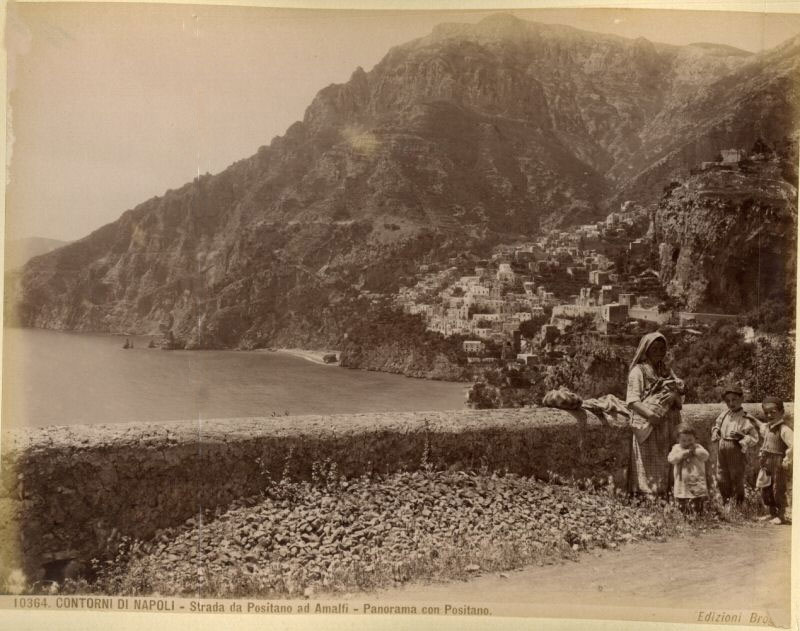
Growing them here was never straightforward. Families built terraces into steep slopes, supported the soil with dry-stone walls and created the giardini di limoni — lemon gardens that still climb above Minori, Maiori and Amalfi.
The work was largely manual. Wooden frames protected the trees, narrow stairways connected one terrace to the next, and fruit had to be carried down slopes where machinery was of little use.
Many of the lemon terraces visible today are still part of that centuries-old agricultural landscape.
Also read · Walking
One of the coast’s old mountain routes survives as its most famous walk. Our Path of the Gods guide explains the route from Bomerano to Nocelle.
The everyday food of the old Amalfi Coast
Traditional food on the Amalfi Coast depended heavily on what could be grown, preserved or brought in by sea.
In the higher villages, chestnuts were an important staple, especially where grain was expensive or difficult to obtain. Terraces were used for vines, olives, vegetables and tomatoes, while cheese offered a practical way to preserve milk.
Minori developed a strong pasta tradition despite not producing much grain itself. Trade made up the difference, and pasta was made locally and dried near the shore. One of the dishes still closely associated with the town is ‘ndunderi, a large, soft pasta traditionally linked to the feast of Santa Trofimena.
Amalfi’s maritime connections also brought outside influences into local kitchens. Merchants and sailors travelled through the eastern Mediterranean, carrying goods, ingredients and ideas in both directions.
Amalfi was once famous for something most visitors never expect
Walk inland from the centre of Amalfi and the noise of Piazza Duomo and the waterfront quickly fades. Buildings become fewer and water comes down from the mountains.
This was once an important industrial valley.
Amalfi became famous for handmade paper, with mills concentrated in the Valle delle Ferriere and Valle dei Mulini, where flowing water could power machinery. Historical accounts place significant paper production in Amalfi by the 13th century.
Old cloth — linen, hemp, cotton and other fibres — could be broken down and transformed into the heavy handmade paper known locally as bambagina.
The surviving Amalfi Paper Museum occupies one of the old mills and still demonstrates traditional production methods.
Paper was only one part of a much broader economy. People cultivated lemons, produced pasta, built boats, traded goods, fished for anchovies and tuna, tended vines and animals, and worked in textiles and other crafts.
The towns had complex working economies long before hotels became dominant.
How Coastal Families Made a Living
It is tempting to divide traditional occupations neatly between fishermen, farmers and artisans, but family economies were rarely that simple.
A household could depend on several forms of work, with men, women and children contributing differently according to season and opportunity.
Praiano offers an unusually vivid example. Historical accounts describe farmers in the upper part of the village and fishermen closer to the sea, while women worked in fields, repaired nets and later produced hair nets. Coral fishing was passed from one generation to another, and other residents salted anchovies or worked flax.
A family needed several ways to earn money because no single livelihood was guaranteed. Bad weather affected fishing, poor harvests affected agriculture, and changing markets could undermine both.
For many families, another option eventually became more important: leaving.
When Amalfi was one of the Mediterranean’s great trading cities
It is easy to underestimate medieval Amalfi from the size of the town today. In 839, Amalfi broke away from the Duchy of Naples and became an independent maritime state, centuries before Italy existed as a country.
Its merchants established communities across the Mediterranean, with houses, warehouses, churches and trading posts in important ports. Amalfi acted as a commercial bridge between Byzantine, Arab and western European worlds.
The trade itself could be remarkably ambitious. Amalfitan ships carried timber to North Africa and exchanged it for gold, then continued towards the eastern Mediterranean to buy spices, precious stones, textiles and luxury goods. Those products were brought back to Italy and sold as far north as Ravenna and Pavia.
Amalfi also had its own shipyard. The Arsenale della Repubblica, documented from 1042, built and repaired war galleys close enough to the harbour for vessels to be launched directly into the sea. Part of the medieval structure still survives in the centre of town.
Its maritime influence went beyond ships and trade. The Tabula de Amalpha, Amalfi’s maritime law code, was used around the Mediterranean for centuries, while the town’s tarì coin circulated widely in southern Italy and Mediterranean commerce.
Then came a long decline. Pisa attacked Amalfi in the 12th century, later wars damaged its trade, and in 1343 a violent storm and submarine landslide devastated harbour structures and submerged parts of the medieval waterfront. By then Amalfi’s great maritime age was already fading.
Modern Amalfi is compact enough to cross on foot in minutes. Its medieval trading network once stretched across much of the Mediterranean.
The road that changed the Amalfi coast
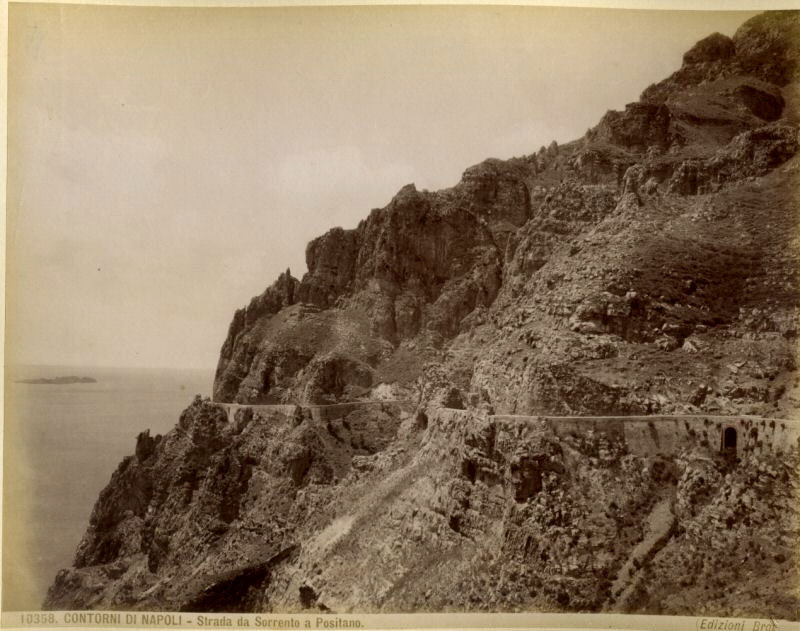
Before the coastal road, moving along the Amalfi Coast meant relying on boats, mule tracks and steep paths. That changed in 1853, when the Vietri–Amalfi section of the road opened and, for the first time, created a continuous carriage route through part of the coast.
It was a major change for a place where the mountains had always made land travel difficult. Goods could move differently, visitors could arrive more easily and, over time, cars and buses followed the same line cut into the cliffs.
The road also created a new way of seeing the coast. Travelling by land meant looking down onto coves, villages and terraces from angles that had once been reached mainly on foot or seen from the water.
Today, the SS163 is part transport route and part attraction in its own right. It carries buses, taxis, scooters and rental cars through towns built long before modern traffic was even imaginable.
That is also where the problem begins. The road opened the Amalfi Coast to the modern world, but the landscape around it never became any wider.
When the Amalfi Coast became a place to visit
Travellers had been coming to the Amalfi Coast for centuries, but for a long time they were a small minority.
Roman families built villas here, and later writers, artists and wealthy travellers were drawn by the scenery and the sense of distance from the rest of Italy.
By the early 20th century, Positano had started attracting artists and intellectuals from across Europe, but it was still far from the busy resort we know today.
The real shift came after the Second World War. Hotels and restaurants opened, beaches became more organised for visitors, and small workshops began making clothes, sandals and other pieces for the growing holiday market.
This was the beginning of Moda Positano — a local style that grew alongside tourism and became part of the town’s identity.
John Steinbeck arrived in 1953, just as Positano was starting to become internationally known. His essay helped introduce the town to a much wider audience.
By the 1960s and 1970s, the change was already clear: Positano was no longer simply a village people passed through or lived in. It had become a destination.
The Amalfi Coast in old photographs
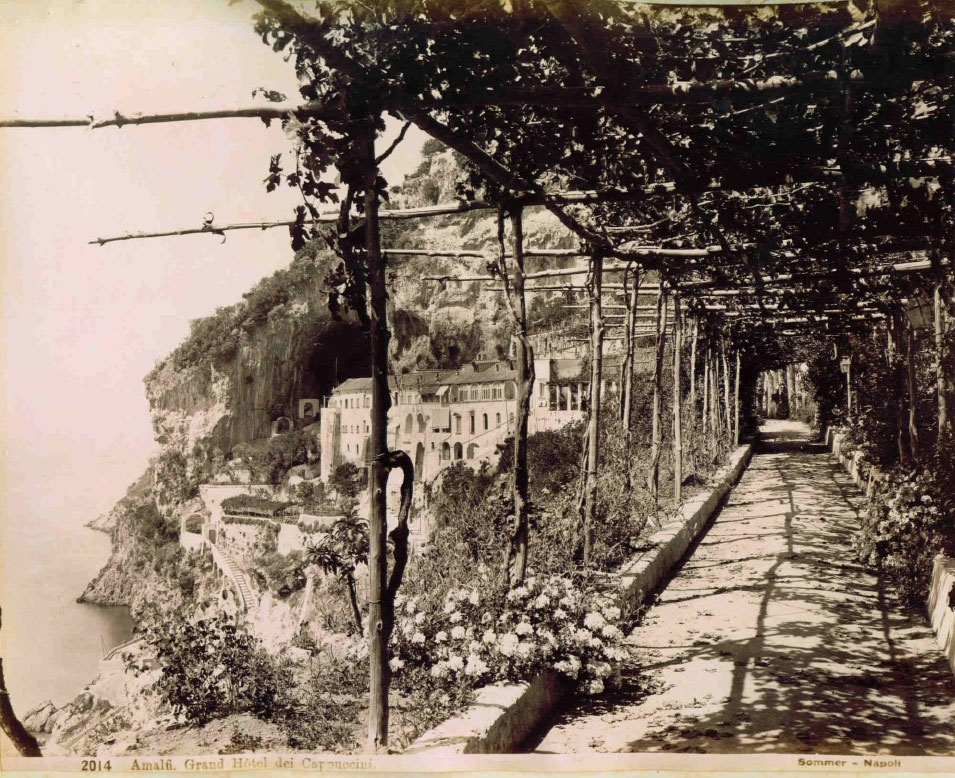
In photographs taken around 1900, Amalfi is easy to recognise. The cathedral is there, the mountains are there, and the town is still pressed tightly between rock and sea. What is missing is much of what now fills the frame.
The slopes are less built-up. The waterfront is rougher. Roads are narrower and quieter, with little of the traffic infrastructure that now feels inseparable from the coast.
The difference is even clearer in old images of Positano and nearby villages. Beaches are lined with boats rather than sun loungers, and stretches of shore now given over to hotels, restaurants and beach clubs still look closely tied to fishing and trade.
The photographs can make the period seem almost peaceful, but daily life was demanding. Terraces had to be maintained by hand, fishing was uncertain, and floods and landslides could damage homes, fields and roads with little warning.
A century ago, the coast was less crowded and less built-up, but most families depended much more directly on the land, the sea and the weather.
Where you can still see the historic Amalfi Coast
Much of the older Amalfi Coast is still visible if you know where to look.
→ Cetara — working fishing boats, anchovy traditions and a harbour that still feels tied to the sea rather than only to tourism.
→ Minori — lemon terraces above the town, old pasta traditions and a layout that still reflects the coast’s agricultural past.
→ Praiano — steep paths, old monazzeri around Marina di Praia and a clear divide between the farming slopes above and the maritime life below.
→ Amalfi — the paper mills, Valle dei Mulini and the surviving arsenal still point to the town’s industrial and maritime past.
→ Atrani — houses packed tightly between mountain and sea, with very little room for the town to expand.
→ Positano — the beach has changed completely, but the stairways, narrow lanes and vertical layout still follow the same geography that shaped the old village.
Also read · Choosing a base Staying in one of these old coastal towns? Our Where to Stay on the Amalfi Coast guide compares 13 bases by transport, terrain, beaches and atmosphere.What tourism helped preserve on the Amalfi Coast?
Commercial demand on the cost gave some older foods, crafts and buildings a new economic purpose.
Amalfi’s handmade paper lost much of its industrial role, but not its place in local identity, and a similar shift happened elsewhere along the coast. Vietri ceramics moved from everyday craft into an international market, while foods once shaped by preservation and necessity became products people now travel specifically to taste.
Old mule paths became hiking routes, historic houses found new lives as hotels, and lemon terraces remained valuable not only for agriculture but also for the character they give the coast. In Cetara, fishing traditions continued in much the same way, even as they also became part of the town’s modern gastronomic appeal.
Tourism changed the purpose of many of these things, but in some cases it also gave them a reason to survive. The Amalfi Coast visible today is neither a preserved relic nor a completely modern creation; it is the result of both histories continuing at once.
The coast beneath the postcard
The Amalfi Coast was shaped long before tourism arrived. The terraces, stairways, fishing harbours, churches and watchtowers were built for people who lived and worked here, not for people passing through in summer.
For most families, the landscape had a practical purpose. Terraces meant lemons, vines and vegetables. The sea meant fishing and transport. Paths connected houses to fields, villages and churches. Very little space was wasted because there was very little space to begin with.
You can still see that older coast almost everywhere. In Minori, dry-stone walls still support the lemon groves. At Marina di Praia, old boat shelters sit beside the beach. In Positano, the stairs are not decoration; they are still part of the way the town works. Amalfi has its old paper mills and arsenal, Cetara still has an active fishing tradition, and Atrani still fits tightly between the mountain and the sea.
Tourism changed what many of these places are used for, but it did not erase their original structure. A farm terrace may now sit below a hotel terrace. An old footpath may be walked for pleasure instead of necessity. A family house may now be rented to visitors.
Even the traffic tells the same story. Modern cars and buses are moving through towns that were built centuries before anyone imagined them.
That is why the older Amalfi Coast is not difficult to find. It is still there, underneath the hotels, restaurants and beach umbrellas, in the shape of the towns themselves.

About the author
Hi, I’m Marco.
I spent 28 years on the Amalfi Coast. I write AmalfiMap to share the beaches, roads, restaurants and small practical details I would tell a friend before they came here. More about Marco →
Useful next reads
Continue planning
Amalfi Coast Transport Guide 2026
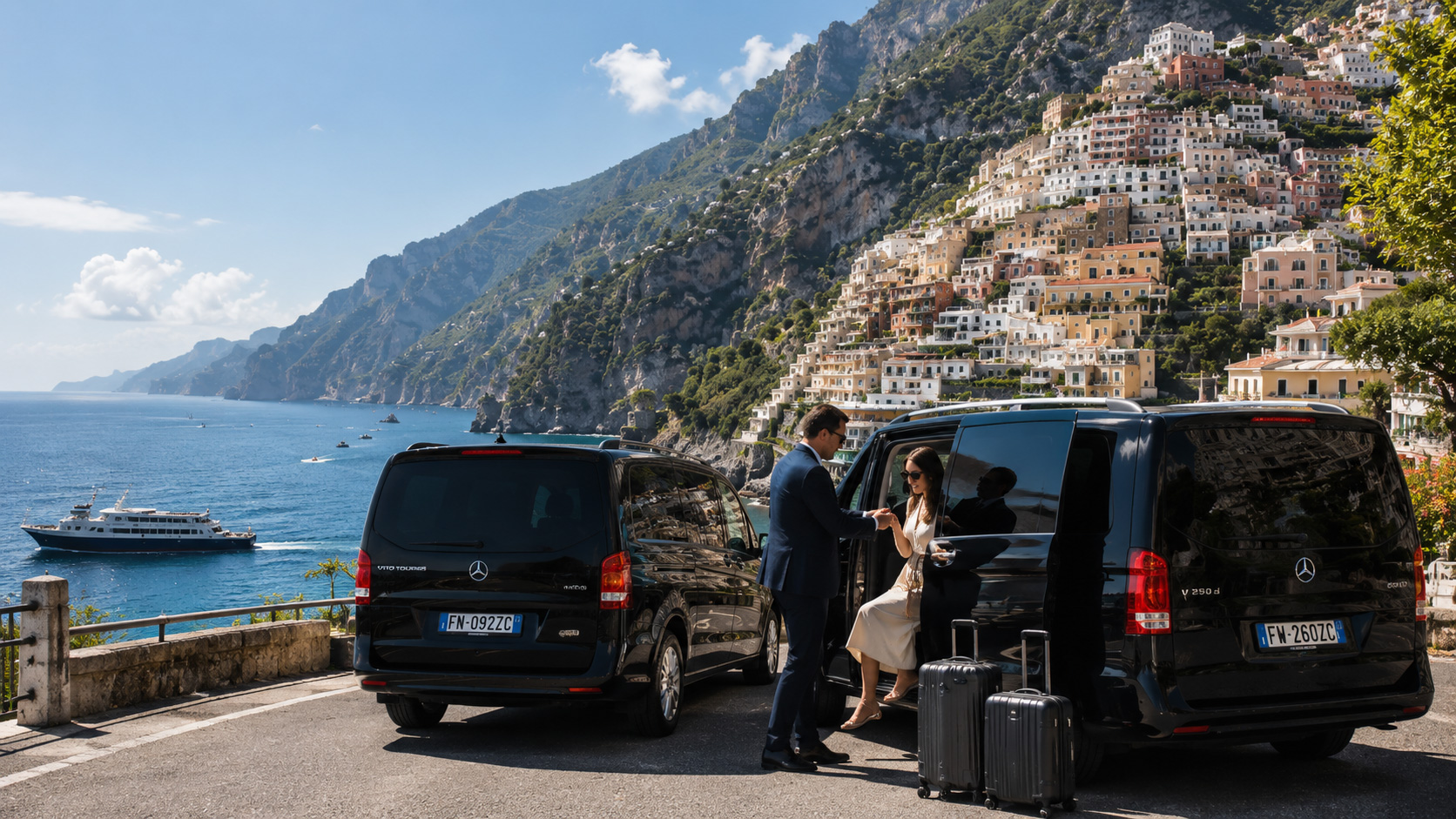
Compare trains, ferries, buses, taxis and private transfers for the journeys visitors actually make.
Open guide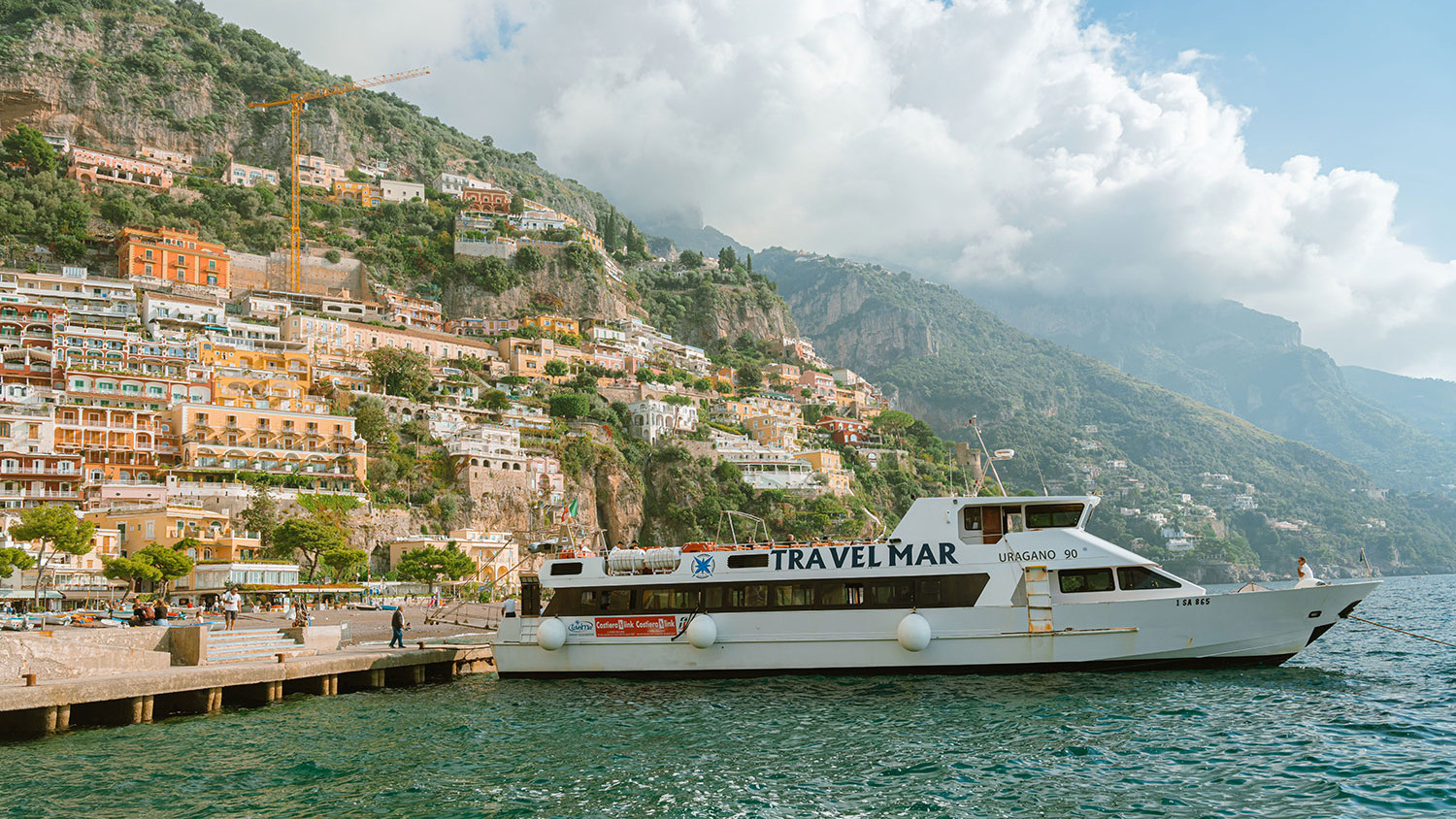
Amalfi Coast Ferry Guide 2026
Routes, operators, tickets and practical 2026 guidance for moving between the coastal towns by sea.
Open guide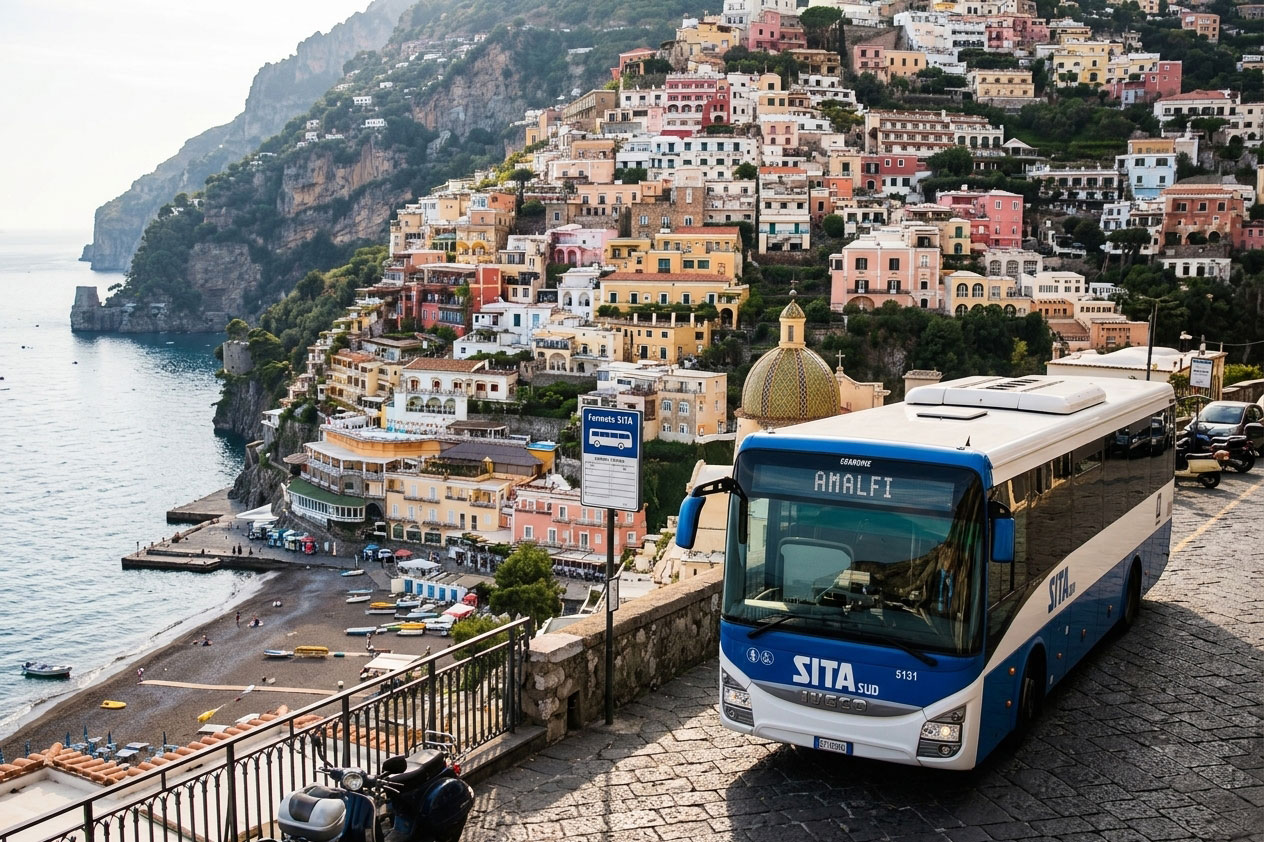
Amalfi Coast SITA Bus Guide 2026
Understand the main coastal routes, tickets, connections and how the buses actually work.
Open guide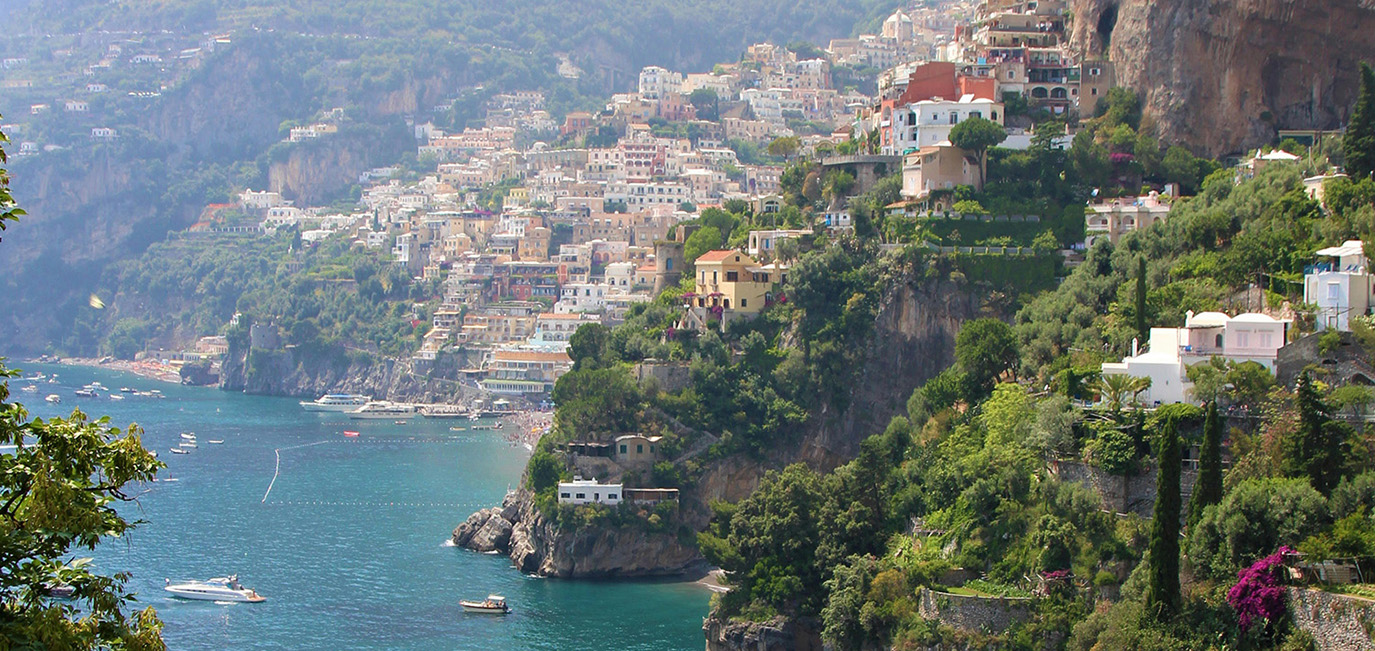
Where to Stay on the Amalfi Coast
Compare 13 towns by transport, terrain, beaches and the kind of trip each base suits.
Open guide