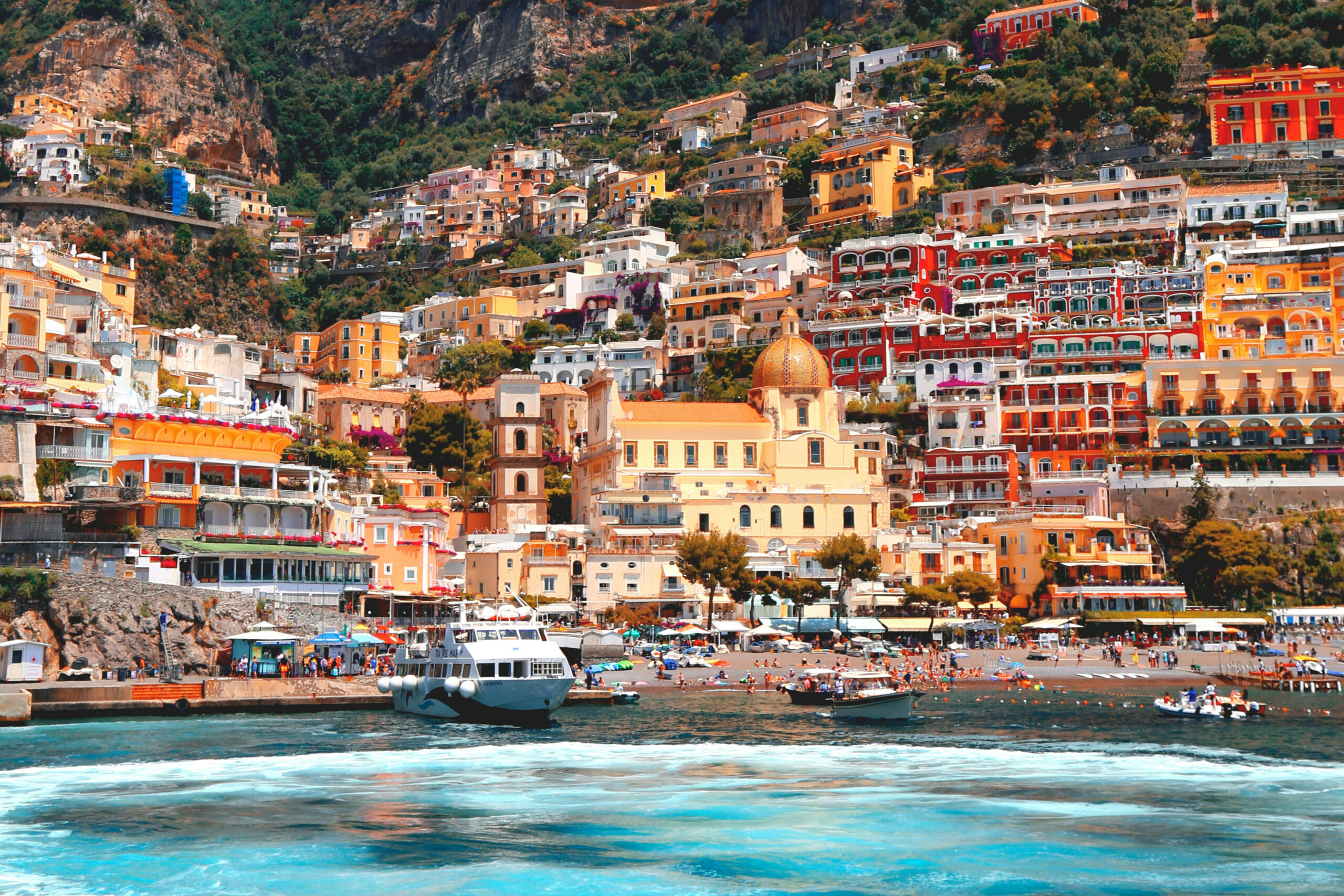
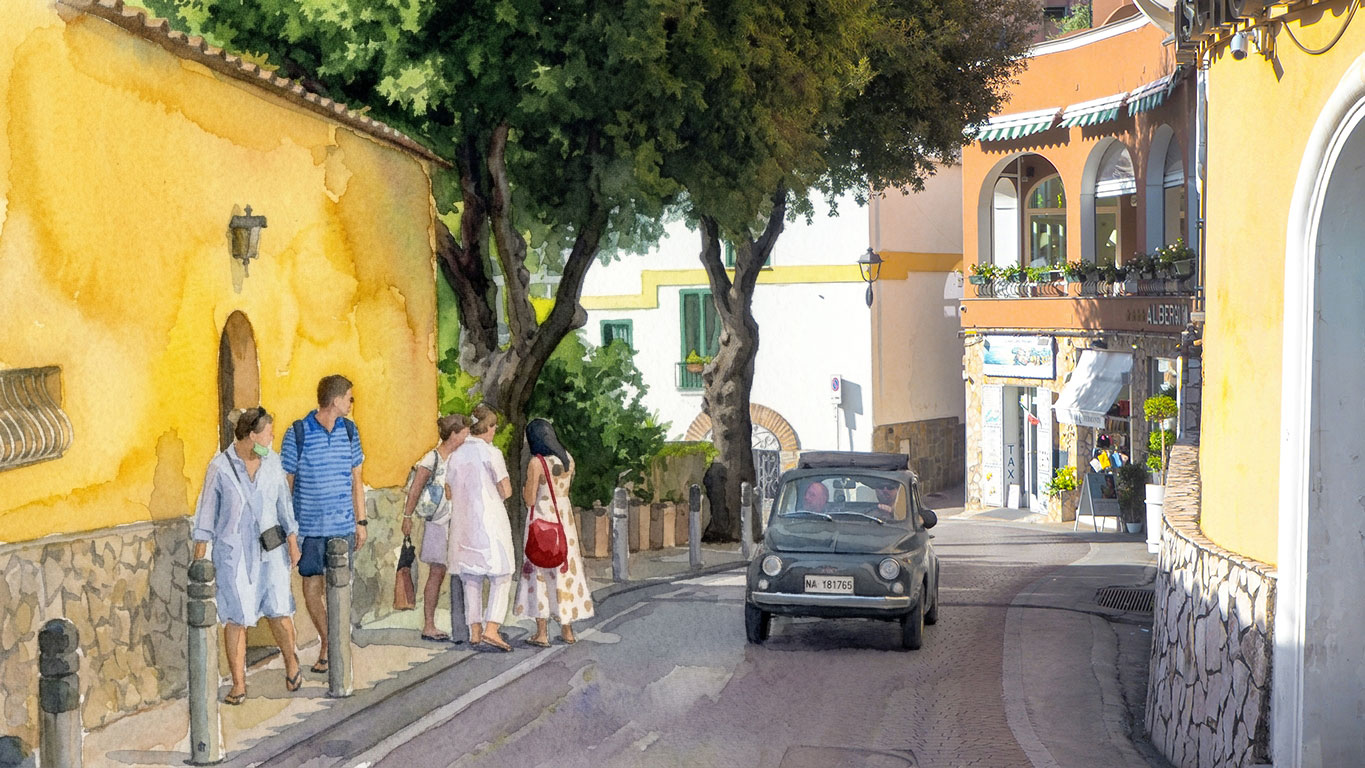
Are you wondering how difficult the Amalfi Coast becomes without a car? From the road, it can look like a place where almost every movement depends on one — narrow bends, hillside towns, scooters everywhere and villages stretched along the SS163.
In practice, most first trips work well without one. Ferries connect the main coastal towns, buses cover the road network, and places such as Ravello or the Path of the Gods are straightforward to reach with a little planning.
A car becomes more useful once your plans move away from those main routes. Rural accommodation, inland villages, late dinners far from your base or quieter places with weak public transport can make taxis or a rental car more valuable.
Summer also changes the equation. Traffic, limited parking and the 2026 alternating license-plate restrictions can make driving less convenient precisely when the coast is busiest.
So going car-free is usually less about giving something up and more about choosing the right base and transport mix. Your hotel location, luggage, season and evening plans will decide how easy the trip actually feels.
Quick answer · 2026
Getting Around the Amalfi Coast Without a Car: What Changes?
Last checked: October 2026
The main coastal towns are already linked by ferry and bus. Positano, Amalfi, Atrani, Minori, Maiori and Cetara all fit naturally into a car-free itinerary.
Your base has a bigger effect than the lack of a car. Amalfi is particularly practical because its ferry port and main SITA bus connections meet in the centre of town.
Transport becomes thinner away from the main coastal routes. Tramonti, higher parts of Furore, rural accommodation and some inland restaurants are the places where a taxi or rental car becomes more useful.
The final part of the journey deserves checking. A hotel can sit close to a ferry port or bus stop on the map while still being hundreds of steps above it.
My tip: build the trip around ferries and buses first, then use a taxi or transfer where the route becomes awkward. That usually gives you more flexibility than choosing one transport method for the entire stay.
Who will actually regret going car-free?
If you are spending four or five nights in Amalfi, Minori or Maiori in June, travelling with a normal suitcase and planning to see Positano, Ravello and perhaps Capri, I would not rent a car.
It solves almost nothing important.
If you are spending January in a villa above Furore, want to visit wineries in Tramonti, have dinner in different villages every night and dislike arranging taxis, I would look at it differently.
The phrase “Amalfi Coast without a car” hides several very different trips.
Here is how I would judge them.
For me, the important distinction is not car versus no car.
It is how much freedom your particular accommodation and itinerary already give you.
Car-free decision guide
Who will actually regret going car-free?
Some trips barely benefit from a rental car. Others become noticeably easier with one. Here is where the difference really appears.
| Your trip | Car-free fit | What to expect | What having a car actually adds |
|---|---|---|---|
| Where you stay | |||
| Amalfi, Minori or Maiori | Excellent | Ferries and buses cover most classic day trips. | Very little. Mostly private space and schedule freedom. |
| Positano | Very good | Easy by sea; hotel elevation matters more than transport. | Limited benefit. Parking can cancel out much of the convenience. |
| Ravello | Good | Simple from Amalfi by bus or taxi. | Door-to-door flexibility, especially with luggage. |
| Praiano, Conca or Furore | Depends | Your exact hotel location can change the answer completely. | Easier final connections to hillside or road-based properties. |
| Tramonti or rural inland stay | Car useful | Places are more spread out and transport is thinner. | Much more freedom for villages, restaurants and rural stops. |
| Season & comfort | |||
| July–August, comfortable in heat | Very good | Ferry coverage is strong and avoids much of the road traffic. | A/C between stops, but also summer traffic and parking. |
| July–August, poor heat tolerance | Think twice | Sun, stairs and exposed waits can make several daily transfers tiring. | Air conditioning + fewer outdoor waits. It still cannot remove stairs or parking walks. |
| November–March | Depends | Fewer useful ferry connections make the coast more road-dependent. | More spontaneous movement when ferry options are limited. |
| What you want to visit | |||
| Naples day trip | Better car-free | Train connections via Salerno are usually more useful than driving into Naples. | Little advantage. You gain privacy but inherit city traffic and parking. |
| Pompeii day trip | Very good | Rail connections make Pompeii practical without keeping a car all week. | Fewer transfers, useful if combining several inland stops in one day. |
| Sorrento day trip | Good | Bus and seasonal ferry options work well from the western coast. | Schedule freedom, but the same SS163 traffic comes with you. |
| Path of the Gods | Better car-free | The hike naturally starts and finishes in different places. | Very little. A parked car can actually create a return-trip problem. |
| Quiet or less-central beaches | Usually good | Many beaches are reached by boat, stairs or local transport anyway. | Useful for some road-access beaches, much less so where parking is scarce or access is by boat. |
| Tramonti wineries & inland villages | Driver useful | Stops are scattered and public transport limits spontaneity. | Major flexibility. For winery visits, a hired driver is often the more sensible option. |
| How you travel | |||
| One base + normal day trips | Excellent | This is where the ferry-and-bus network works best. | Mostly convenience, rather than access to anything essential. |
| Several hotels + large luggage | Less easy | Repeated transfers, stairs and luggage become the tiring part. | Easy luggage movement between hotels — if both properties have road access and parking. |
| Late dinners in different towns | Less easy | Evening public transport is much thinner than daytime service. | Freedom to return late. Taxis give much of the same benefit without parking. |
| Early flight or very late arrival | Plan ahead | Public transport may not line up cleanly with your flight. | Flexible timing, although a private transfer often solves this more cleanly. |
| Travelling with young children | Depends | A stable base works well; repeated transfers are the harder part. | A/C, naps, luggage space and privacy — balanced against parking and child-seat logistics. |
| Limited mobility | Check access | Stairs and hotel access matter more than the transport mode itself. | Useful only with road-access accommodation. A taxi cannot fix a hotel reached by 150 steps either. |
Car-free does not mean bus-only
This is where many guides make the whole idea sound worse than it needs to be.
A car-free trip can include four different ways of moving.
You use each where it works best.
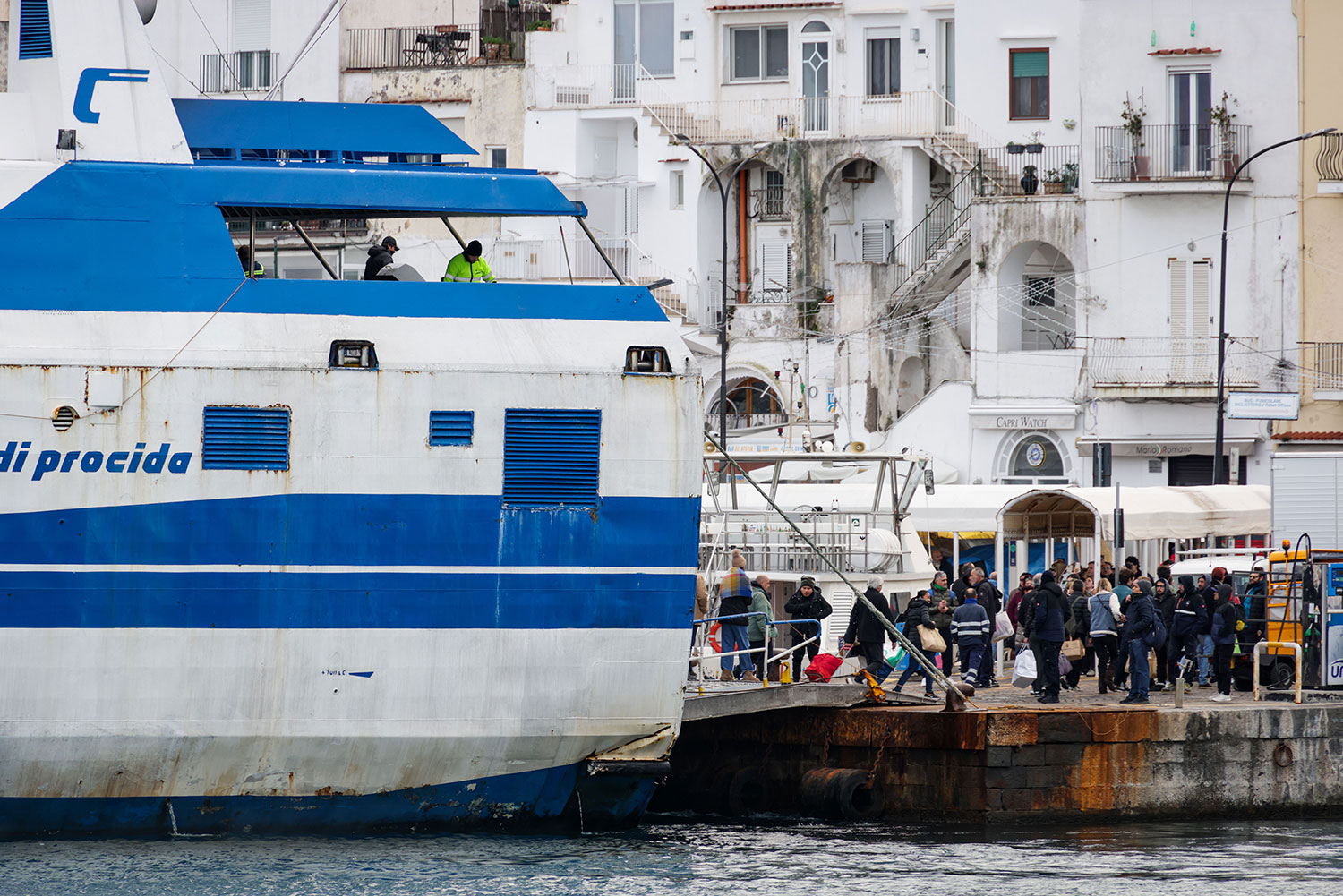
Ferry for the journeys the sea solves better
For travel between the main waterfront towns, the ferry is often the simplest option from spring into autumn.
Amalfi to Positano is a good example. Travelmar runs several departures during the day in the 2026 season, with other operators adding connections towards Sorrento, Capri and Naples. The current Travelmar timetable lists Amalfi–Positano at around 25 minutes.
The convenience is very practical: you leave from the centre of one town and arrive in the centre of another. There is no parking to arrange, and the SS163 traffic becomes irrelevant for that part of the day.
The journey itself is worth something too. From the water, Positano, Amalfi and the smaller settlements make much more geographic sense — each occupies its own opening between the mountains rather than appearing as another stop along the same winding road.
Ferries do need a little flexibility. Sea conditions can affect departures, and seasonal schedules change during the year. For ordinary sightseeing, that is rarely a serious problem because the road network gives you another way back.
For an airport, long-distance train or any connection you really cannot miss, I would leave more margin and avoid relying on the final useful ferry of the day.
The simple rule for a car-free trip: use the sea when it works best, but know your road option before you leave.
Bus for the places the ferry cannot reach
Once you move away from the waterfront, SITA becomes the main public transport option.
The network covers Amalfi–Positano–Sorrento, Amalfi–Maiori–Salerno, Amalfi–Agerola and Scala–Ravello–Amalfi, with timetables changing through the year. Sita Sud
That makes places such as Ravello, Agerola, Praiano and Furore practical without driving. It is also how many travellers reach the Path of the Gods when they are not starting from a coastal ferry stop.
The main limitation is the road itself. Buses share the SS163 with cars, taxis and delivery traffic, so delays build quickly in busy periods. In summer, intermediate stops can also be less predictable when a bus arrives already crowded.
Amalfi is one of the easier places to use the bus network because several routes begin there. Boarding at a terminus usually gives you a better chance of getting on comfortably than waiting at a busy stop further along the route.
Leave some space in the timetable. Ten or fifteen minutes of delay is normal enough on this coast, and a tightly planned connection can turn a simple bus journey into unnecessary stress.
For a car-free trip, buses work best when you treat them as the land connection between ferry towns, hill villages and inland stops, rather than trying to time every leg to the minute.
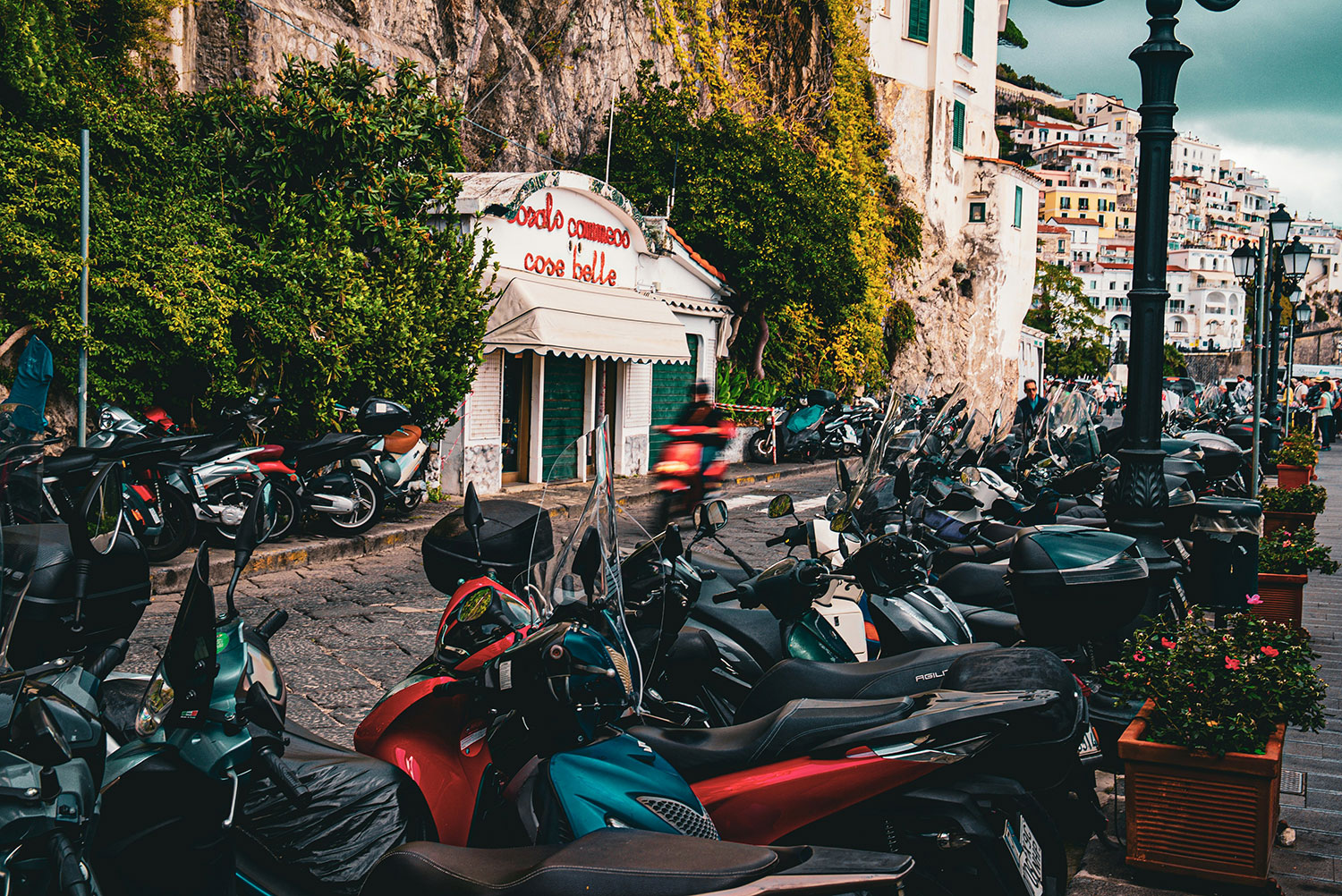
Scooters — probably the most natural way to move around the coast
If you already ride confidently, a scooter is one of the best ways to get around the Amalfi Coast. It gives you much of the freedom of a car, but with easier parking, less hassle on narrow roads and much more flexibility for short stops along the way. That matters here because many of the nicest viewpoints, small beaches, bars and roadside stops are easy to pass when you are following a bus timetable or looking for a car park.
In summer, scooters also make short trips between nearby towns much easier. You can leave when you want, avoid waiting for a crowded bus and stop almost wherever it is practical and legal to do so. Around Positano, Praiano, Amalfi and the smaller villages, this can feel much more natural than moving a car around all day.
There are limits, of course. I would only recommend one if you already feel comfortable riding in traffic. The SS163 has tight bends, buses, tunnels and plenty of impatient local traffic, and rain changes the experience quickly. Two people with luggage will also find a scooter much less practical.
But for a confident rider travelling light, two wheels are probably the closest thing the coast has to true freedom of movement.
Taxi or private transfer for the awkward gaps
A car-free trip does not have to mean using public transport for every single journey.
For many travellers, the easiest setup is a mix: train or ferry for the long stretches, bus for regular local trips, and a taxi when the route becomes inconvenient.
You might arrive from Rome by train and ferry, use the bus for Ravello, then take a taxi back after dinner instead of planning the evening around the last useful connection.
That still counts as a car-free trip.
A taxi or private transfer is especially useful for:
- late airport arrivals;
- early flights or long-distance trains;
- arrival or departure days with larger luggage;
- hillside hotels with an awkward final approach;
- inland restaurants, wineries or rural stops;
- ferry cancellations when timing suddenly matters.
The point is not to avoid taxis completely. It is to use them where they save the most time or effort.
If a connection becomes awkward, a taxi is often the easiest way to keep the day moving.
Walking — where it actually works
Walking distances on the Amalfi Coast can be misleading. A place may look close on the map while sitting far above or below you.
Amalfi and Atrani are the easiest example. They sit next to each other and fit naturally into the same day on foot.
Minori and Maiori can also be linked via the Path of the Lemons, which works well if you want the walk itself to be part of the day rather than simply getting from one town to the other.
Positano needs a closer look. Most of the town is walkable, but elevation matters. A hotel only 400 metres from the beach may still involve a long climb and several hundred steps.
Before booking, check the actual walking route and elevation, not just the distance shown on the map.
Where you stay matters more than going car-free
Your hotel location can make a car-free trip feel simple or surprisingly tiring.
Someone staying beside Amalfi harbour and someone staying high above Furore may both be visiting the Amalfi Coast, but they will use the transport network very differently.
Amalfi — the easiest all-round base
Amalfi gives you the widest choice of transport without needing a car.
The ferry harbour and main SITA bus interchange are both in town. Ravello is reached by bus or taxi, Atrani is next door, Positano is connected by sea and road, and Minori and Maiori sit along the same eastern corridor.
That range of options is useful when plans change. If the sea is rough, you still have the road. If the bus is inconvenient, a ferry may cover the same part of the coast.
For a first car-free trip, Amalfi is one of the easiest bases to organise around.
Minori and Maiori — practical and easier with luggage
Minori and Maiori suit travellers who want good connections with less vertical walking.
Both have bus services and seasonal ferries, while Amalfi is close enough to act as the larger transport hub when needed.
Maiori is particularly easy with luggage because much of the waterfront is broad and relatively flat. Minori is smaller, but still practical for moving around without a car.
For travellers who prefer easier walking between hotel, beach and transport, both can be more comfortable than the steeper western towns.
Positano — check the elevation before booking
Positano works well without a car, but the hotel location matters a lot.
Staying in the lower part of town makes ferry arrivals very convenient. Higher accommodation can mean a long staircase, a local bus or a taxi after you leave the port.
A hotel can look close to the beach on the map while sitting far above it.
Before booking, check the actual walking route from the ferry port and nearest bus stop, not only the distance.
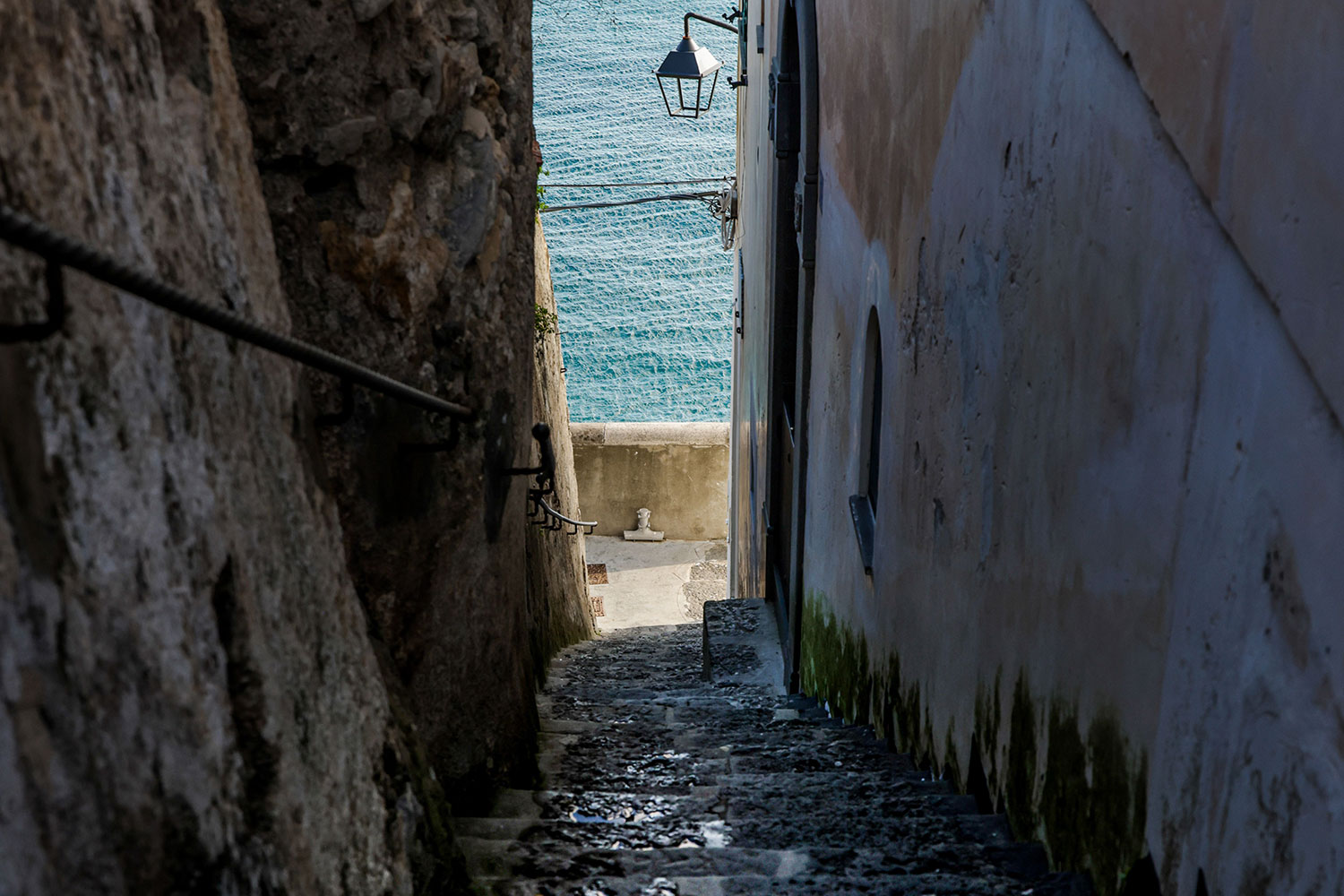
Praiano — the address matters more than the town name
Praiano can be easy without a car, but two hotels in the same town can have very different access.
The settlement stretches along the hillside between Positano and Amalfi, so there is no single transport point that works equally well for every property.
Some hotels sit close to the coastal road and bus stops. Others involve steep walking or an awkward final section with luggage.
Here, checking the exact address is more useful than making a general decision about whether Praiano is “good” without a car.
Ravello — easy to visit, slightly less simple to stay
Ravello is straightforward without a car, but every arrival finishes by road.
The town sits above Amalfi and has no ferry port. From Amalfi, you continue uphill by SITA bus or taxi.
For a day trip, that is simple enough. With several suitcases after a long journey, a taxi or private transfer can make the arrival much easier.
Salerno — easiest if transport matters more than sleeping on the coast
Salerno makes car-free travel especially easy if you are happy to stay outside the small coastal towns.
The main railway station gives you direct long-distance connections, while Travelmar uses Piazza Concordia nearby for ferries towards Vietri, Cetara, Maiori, Minori, Amalfi and Positano. Tra.vel.Mar S.r.l.
That makes routes such as Rome → Salerno → ferry very straightforward.
The trade-off is simply location: you sleep in Salerno rather than inside Amalfi, Positano or one of the smaller coastal towns.
For travellers who value easy arrivals, trains and day trips, that can be a very sensible choice.
The base is the decision I would make first.
Once that is right, the transport tends to fall into place around it.
A free map helps much more when you are travelling without a car
Stops, ports and the relationship between one town and the next become more important when you are not simply typing every destination into a sat-nav.
This is exactly the kind of trip where I like having everything saved before leaving the hotel.
300+ places. One map. Made by locals.
Your Amalfi Coast map.
Ready to explore offline.
Beaches, restaurants, viewpoints and useful stops from Positano to Amalfi and beyond.
Free only for the first 1,000 users
Your email is used to send the map. Privacy policy
When car-free travel starts to get difficult
The main towns are easy enough without a car. It gets harder with remote hotels, late nights, lots of luggage or inland trips.
A ferry from Amalfi to Positano is straightforward. The trip gets harder when your hotel sits well above the road, when you want to stay out after the last useful connection, or when the day includes places outside the main ferry and bus routes.
That is where a taxi, driver or rental car can start to make sense.
Your hotel is close on the map, but high above the road
A short distance on the map can still mean a long climb.
A room may sit only a few hundred metres from Positano beach and still require a long climb. The same applies to hillside accommodation in Praiano, Furore and Ravello.
Before booking, check the actual routes for:
hotel → ferry port
hotel → nearest bus stop
hotel → restaurants
road → hotel entrance
Satellite view and walking directions usually tell you more than the distance shown on the booking page.
For some properties, a taxi solves the problem. For others, especially remote villas with proper road access and parking, having a car can make the whole stay easier.
Travelling with a lot of luggage makes every transfer harder
Moving around with one suitcase is very different from moving around with three.
Ferries and buses can carry luggage, but they do not remove the stairs between the stop and your accommodation.
If you are changing hotels several times, carrying large bags or travelling with young children, repeated transfers can become tiring.
A private transfer on hotel-change days is often enough. If your itinerary involves several different bases, having a car becomes more useful — provided each property has practical road access and somewhere to park.
A packed summer itinerary can favour a car or driver
If you want to see several places in one summer day, buses and ferries can start to feel limiting.
A simple Amalfi → Positano day works well without a car.
Trying to combine Ravello, a mountain stop, a quieter beach and dinner somewhere else is different. Each connection adds waiting, walking and another timetable to watch.
In July and August, the heat matters too. Long stairways, exposed bus stops and repeated walks between transport points can make an ambitious day much harder for anyone who struggles with high temperatures.
A car gives you air conditioning, private space and control over when you leave. A hired driver gives much of the same comfort without the parking problem.
For a relaxed one- or two-stop day, public transport still works well. For a schedule built around several scattered places, road transport starts to make more sense.
Crowded buses are fine until you really dislike crowded buses
Summer buses can arrive at intermediate stops already full.
This matters most on the busiest coastal routes. Boarding at Amalfi or another terminus improves your chances, but it does not guarantee a quiet ride.
Some people barely notice this. Others find standing in the heat, waiting for another bus or travelling in a crowded vehicle one of the least enjoyable parts of the trip.
If you already know that crowded public transport, uncertain seating or waiting in the heat will bother you, factor that into the decision before you arrive.
A car gives you personal space. A taxi or private driver can offer the same advantage for the journeys where it matters most.
Inland and mountain trips are much easier with a car
Once you leave the main coastal towns, having your own transport becomes much more useful.
Tramonti, upper Furore, rural areas around Agerola and some mountain accommodation are more spread out than the ferry towns below.
Public transport still reaches many of these places, but it usually gives you fewer departures and less freedom to stop wherever you want.
A car becomes particularly useful when you plan to:
- stay in rural or mountain accommodation;
- visit several inland villages in one day;
- reach remote restaurants or viewpoints;
- explore areas around Tramonti, Agerola or upper Furore;
- make spontaneous stops away from the main bus route.
For winery visits, I would still prefer a driver rather than a rental car if anyone plans to drink.
Do not rely on the last ferry for an important connection
Leave some margin if you have a flight or long-distance train to catch.
Ferries are seasonal, and rough sea conditions can delay or cancel individual departures. The 2026 network is broad, but schedules can still change when the weather turns. Amalfi Coast Ferry Guide
For a normal day out, this is usually easy to manage. If a ferry is cancelled, you can often switch to a bus or take a taxi.
For flights and long-distance trains, I would be more careful. Do not plan the last useful ferry of the day as if it were a guaranteed rail connection. Leave enough time to reach the station or airport by road if needed.
And bear in mind that early departures can be awkward too. In those cases, booking a private transfer may simply be the easiest option, even if the rest of the trip is completely car-free.
Late evenings need a little more planning
Getting around is easier during the day than after dinner.
Ferries finish, buses become less frequent, and some journeys that are simple in the afternoon need a different plan later on.
Amalfi to Ravello is a good example. During the day, the bus is straightforward. After dinner, a taxi may be the easier way back.
If you like staying out late, keep this in mind when choosing your base. A few taxi rides are easy enough to absorb into the trip. If you plan to have late dinners in different villages most nights, a car or regular driver starts to make more sense.
Winter changes how you move around
From November into early spring, you will rely more on roads than on ferries.
Some ferry services continue beyond summer, but the network becomes much thinner. NLG’s 2026 Naples–Positano service, for example, is published only into early November rather than throughout winter. NLG
Buses and taxis therefore become more important.
One thing to keep in mind is that winter driving is also calmer than summer driving. Traffic is lighter, parking is generally less stressful, and the seasonal road restrictions are no longer the same concern.
For a central stay in Amalfi or Salerno, you can still manage well without a car. For remote accommodation, mountain villages or regular inland trips, winter is one of the times when renting one becomes much easier to justify.
What arriving without a car actually looks like
One thing to keep in mind: you do not need to arrive directly on the Amalfi Coast for a car-free trip to work well.
In many cases, the long-distance part is quite simple. The main choice is usually which side of the coast you want to approach from.
From Naples
From Naples, the best route depends on where you are staying.
For Amalfi, Minori, Maiori, Cetara and Vietri, one option worth checking is:
Naples → Salerno by train → coast by ferry
Salerno station and the Piazza Concordia ferry departure point are close to each other, so the change is fairly straightforward.
For Positano and Praiano, the western approach through Sorrento can also work well, especially when ferry schedules are limited.
If you are arriving through Naples, check the full route before booking separate tickets. Our Naples to Amalfi Coast guide compares the main options town by town.
From Rome
From Rome, Salerno is often the simplest rail gateway to the coast.
Take a high-speed train to Salerno, then continue by ferry during the main sailing season.
It may look like several steps when written down, but the journey is quite logical: the train covers the long distance, then the ferry takes you along the coast.
One thing to keep in mind is the timing of the connection. If your train arrives late in the day, check the ferry timetable before choosing this route.
From Salerno Costa d’Amalfi Airport
Salerno Airport can be a very practical arrival point for the eastern and central coast.
SITA’s 2026 network lists route 5131 from Salerno Airport towards Vietri, Cetara, Maiori, Minori, Amalfi, Conca dei Marini, Furore and Agerola. Sita Sud
Whether it works well for your trip depends on your flight time, the current bus timetable and where your hotel is located.
Still, it is worth checking before you automatically book a rental car. For some towns, the airport-to-coast connection is already good enough to continue by bus, ferry or taxi.
The strange part: having a car can reduce your flexibility
This sounds counterintuitive until you see the 2026 driving rules.
On selected high-traffic dates, the SS163 uses an odd/even license-plate restriction between 10:00 and 18:00. During August and September 2026 the system applies daily; June, July and October have selected weekends and holidays. Hotel guests have an exemption for the journeys necessary to arrive on check-in day and leave on check-out day, but that does not give them unrestricted sightseeing access throughout the stay. Comune di Praiano
With a rental car, you usually do not know the final digit of the registration plate until you receive the vehicle.
That is not the sort of freedom most people imagine when they click “rent a Fiat”.
Parking is the second problem. It is limited, often expensive, and in the busiest towns it can become part of the day itself.
Positano, Amalfi and the other compact coastal towns have very little space for cars. Paid garages and parking areas exist, but prices can add up quickly, especially if you are moving between towns several times during the day.
In practice, you may drive somewhere only to spend time looking for a space, pay a high hourly rate, then still walk or climb from the parking area into the centre.
For a beach-and-towns itinerary between May and September, I would need a concrete reason before adding a car.
When I would actually want a car
A car makes most sense when your trip moves away from the main coastal towns.
Staying inland
Tramonti is the clearest example.
Its villages, wineries and restaurants are spread through the hills, so having your own car gives you much more freedom than relying on buses.
The same can apply to remote stays around Scala, Agerola and upper Furore.
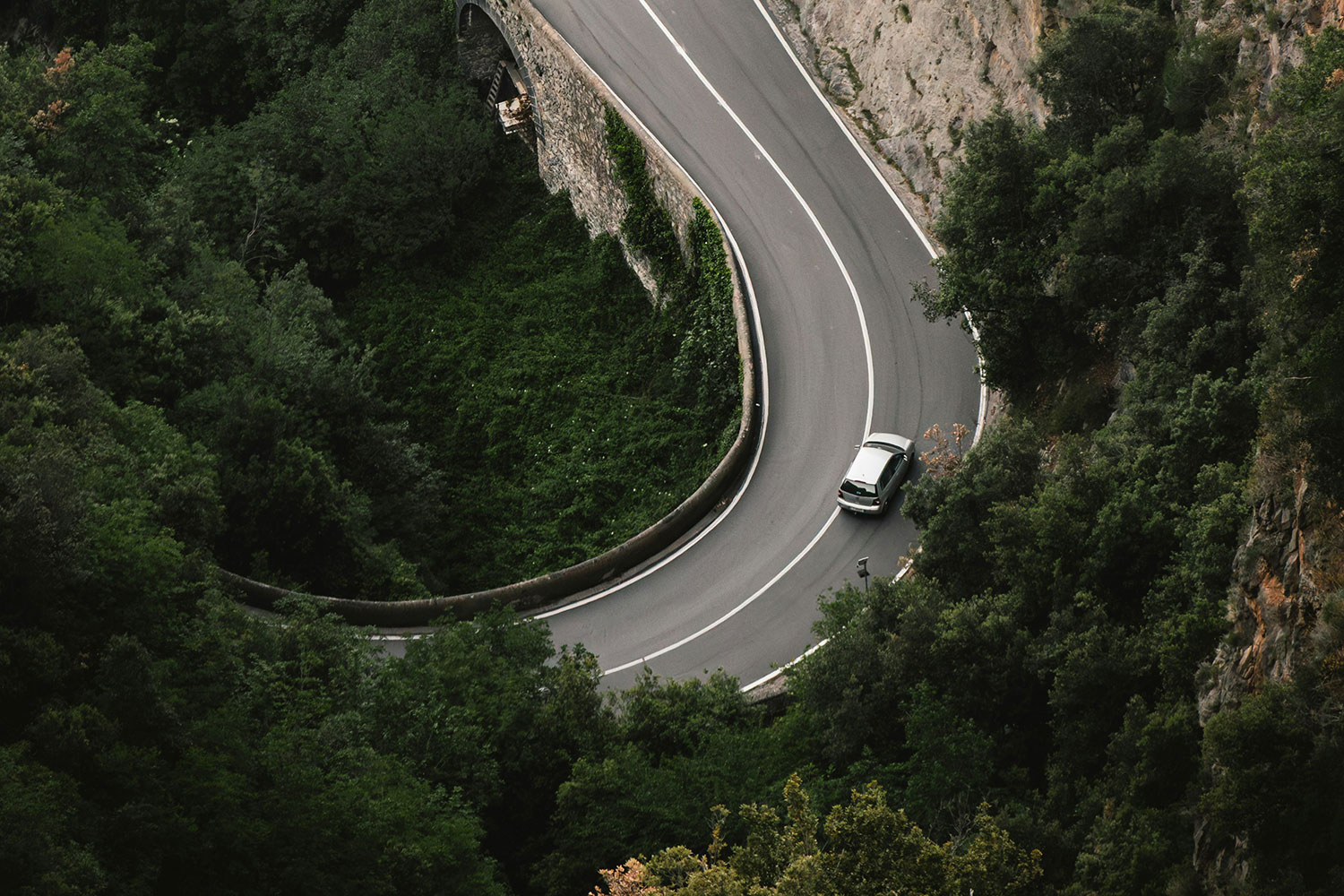
Travelling in late autumn or winter
Outside the main ferry season, driving becomes easier to justify.
Roads are quieter, parking is less pressured, and the summer odd/even restrictions are no longer the same issue.
If your hotel has guaranteed parking, winter is one of the better times to rent a car.
Staying somewhere remote
Some hotels and villas are simply easier with a car.
If the nearest restaurant, shop or bus stop is a long walk away, your own transport can make the stay much more practical.
Before booking, check road access and parking. Those two details matter more than the town name.
Doing a wider road trip
If the Amalfi Coast is only one stop on a longer driving trip, keeping the car can make sense.
This is especially true if you are already travelling through Puglia, Basilicata or inland Campania.
In that case, I would think less about driving every day and more about where the car will stay while you are on the coast.
A hotel with guaranteed parking can make the whole plan much easier.
Places that look difficult without a car — but aren’t
One nice surprise is how far you can get without renting a car at all.
From Amalfi, buses take you up to Ravello and Scala, while the Amalfi–Agerola route reaches Bomerano and the Path of the Gods. From Maiori, you can continue inland towards Tramonti, with its vineyards and small mountain villages. SITA’s 2026 network still covers these inland routes. Sita Sud
You can also go much farther than the coast itself.
Sorrento is directly connected with Amalfi by SITA, so it works as a day trip without driving. Sita Sud
Pompeii is also very doable by public transport. Depending on your base, you can reach it through Salerno or the Sorrento/Castellammare side and continue by rail. It may take a little more planning than a ferry day, but you certainly do not need a car just to visit the ruins.
Naples is another place where I would usually prefer public transport. From the eastern coast, ferry or bus to Salerno followed by train is often more practical than driving into the city and looking for parking.
And if you are staying around Amalfi or Agerola, even Castellammare di Stabia and connections towards Naples sit within the wider SITA network.
So car-free does not have to mean Amalfi, Positano, ferry, repeat. With a little planning, you can include mountain villages, hiking starts, Sorrento, Pompeii and Naples without touching a steering wheel.
A few things I would tell a friend
→ Check the hotel before you judge the town.
Positano can be very easy without a car, but a hotel high above the road changes the whole experience.
→ Leave some room around the last ferry.
If missing it creates a problem, do not plan the day too tightly around that departure.
→ Take popular buses earlier when you can.
This matters most in summer and at busy intermediate stops around Positano and Praiano.
→ Use a taxi when the alternative is simply inconvenient.
If a connection becomes awkward, a taxi is often the easiest way to keep the day moving.
→ Pack lighter if you are changing hotels.
The stairs are usually what make luggage annoying, not the ferry or bus itself.
→ One good base is often enough.
Moving hotels every couple of nights can add more effort than value, especially when most towns are already easy to visit during the day.
→ Check tomorrow’s transport the night before.
Ferry timetable, SITA schedule and weather are usually enough. After that, there is little benefit in planning every hour.
Frequently asked questions
Can you really visit the Amalfi Coast without a car?
Yes. For most first-time trips, especially from spring through autumn, ferries, SITA buses, trains and occasional taxis are enough.
The key is choosing accommodation that works with those connections.
What is the best Amalfi Coast town without a car?
For pure transport flexibility, Amalfi is one of the strongest choices because it combines a ferry port with an important bus hub.
Minori and Maiori are also very practical.
Positano works well, but hotel elevation deserves extra attention.
Is Sorrento a good base without a car?
Yes, particularly if you also want Naples, Pompeii and Capri.
Sorrento has rail access towards Naples and seasonal ferries towards the Amalfi Coast and islands.
Remember that Sorrento itself is on the Sorrentine Peninsula rather than the official Amalfi Coast.
Is Salerno better than Sorrento without a car?
They suit different itineraries.
Choose Salerno for Amalfi, Minori, Maiori, Cetara, Vietri and easy mainline rail access.
Choose Sorrento when Positano, Capri, Pompeii and Naples are a larger part of the trip.
Can you reach Ravello without a car?
Yes.
Travel to Amalfi, then take the SITA bus or a taxi uphill to Ravello.
For sightseeing this is simple. For a hotel check-in with heavy luggage, a direct transfer may be more comfortable.
Do Amalfi Coast ferries run all year?
Do not assume they do.
The dense network visitors use for town-hopping is seasonal, and operating dates differ by company and route. Some 2026 services extend into early November, while winter options are much thinner. amalfimap.com
What happens if the ferry is cancelled?
Check the land route immediately.
Between coastal towns, that usually means SITA bus, taxi or private transfer.
Between Naples and Sorrento, rail also gives you a strong fallback.
For Capri, there is obviously no land alternative.
Is public transport reliable on the Amalfi Coast?
It is useful, extensive and imperfect.
Buses can run late because they share the SS163 with normal traffic. Ferries can be affected by weather.
Build a little margin into the day and the system works far better than it does inside a minute-by-minute itinerary.
Can I take luggage on Amalfi Coast buses and ferries?
Yes, subject to the individual operator’s size and fee rules.
The more important question is what happens after you get off.
Check the final walk to your accommodation before arriving with a large suitcase.
Should I rent a car for just one day?
Only if that day genuinely benefits from driving — perhaps inland villages, rural wineries or a route poorly connected by public transport.
I would not rent one simply to drive Amalfi → Positano → Amalfi in summer.
You are adding parking and traffic to a journey ferries already handle very well.
So, will you regret visiting the Amalfi Coast without a car?
For most first trips, probably not.
If you stay in a well-connected town and travel during the main ferry season, buses, ferries and the occasional taxi cover a lot more than people expect.
A car becomes more useful when your plans are different: rural accommodation, winter travel, frequent inland stops, late dinners in different towns, heavy luggage or days packed with several places.
That is really where the decision sits.
Do not rent a car simply because the coast looks difficult on a map. Check your base, your hotel access and the places you actually want to visit first.
In many cases, you may find that one or two taxi rides solve the only parts of the trip that public transport does not handle well.
And if you do decide to rent, make sure the car is giving you something useful in return for the traffic, parking costs and driving restrictions.
For a normal coastal itinerary, I would still start by planning the trip without one.
Benefits of having a car
A car can make the trip more comfortable even when public transport would technically work.
✓ Leave whenever you want without checking the next ferry or bus.
✓ Carry beach gear, shopping and luggage more easily, especially between hotels.
✓ Stop at viewpoints and inland places that are awkward to reach by public transport.
✓ Change plans at the last minute if the weather shifts or you simply want to go somewhere else.
✓ Keep air conditioning and personal space, which can matter a lot in July and August.
✓ Travel more comfortably with children or with people who dislike crowded buses.
Amalfi Coast without a car
Will you actually need one?
- Amalfi, Positano, Minori, Maiori or Salerno in ferry season
- Trips to Ravello, Sorrento, Pompeii, Naples or the Path of the Gods
- One base + normal coastal day trips
- July–August if you dislike heat, queues or crowded buses
- Praiano, Furore or hillside hotels with lots of stairs
- Several hotel changes with luggage
- Winter trips with fewer ferry connections
- Air conditioning between stops in hot summer weather
- No waiting for buses and no risk of a full one passing your stop
- More personal space and freedom to leave when you want
- Several scattered stops in one day
- Tramonti, mountain villages or rural accommodation
- Late dinners, inland trips, luggage or beach gear

About the author
Hi, I’m Marco.
I spent 28 years on the Amalfi Coast. I write AmalfiMap to share the beaches, roads, restaurants and small practical details I would tell a friend before they came here.
More about Marco →