At first glance, choosing between Sorrento and the Amalfi Coast seems like a small logistical decision. They sit on the same peninsula, appear in many of the same itineraries and are often spoken about as though they were variations of the same place.
They are not.
Choose Sorrento and the wider region opens around you: Naples in one direction, Pompeii along the railway, Capri across the water and the Amalfi Coast within reach by road or sea.
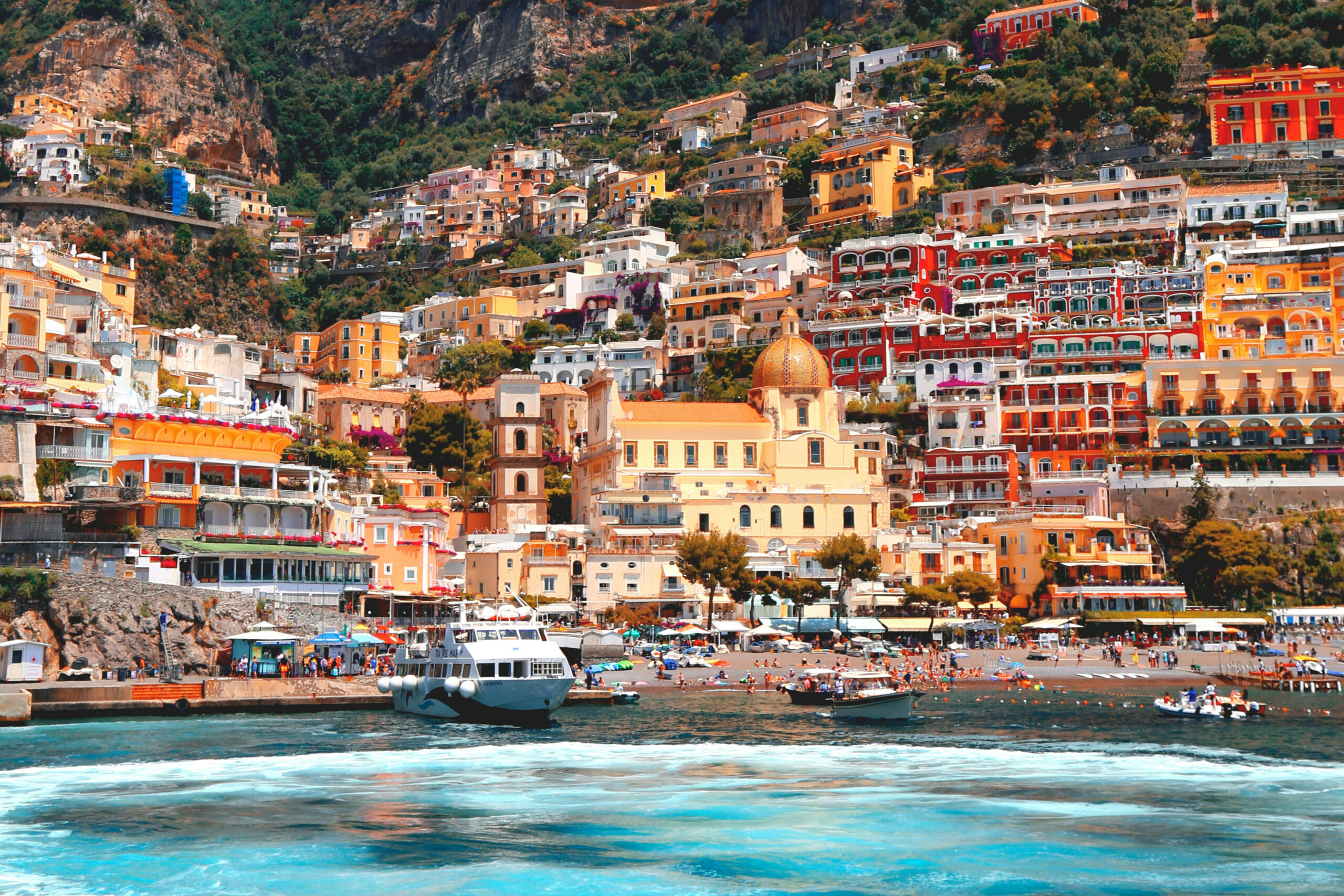
Choose the Amalfi Coast and the geography becomes more intimate. Instead of travelling towards the landscape each morning, you are already inside it — waking above the water, walking down for coffee, watching the ferries arrive and staying after many of the day visitors have gone.
Neither makes the better holiday by default. They simply create different rhythms.
The useful question is not whether Sorrento or the Amalfi Coast is more beautiful. It is where you want the centre of gravity of your trip to be.
Choose according to the trip you want to wake up inside.
When Naples, Pompeii and Capri matter as much as the Amalfi Coast and you want one practical base for a wider Campania trip.
When the coast itself is the reason you are coming and you want mornings, swims, dinners and evenings to happen there — not after travelling there.
Still divided? A split stay often makes more sense than forcing one base to do everything.
First: Sorrento is not on the Amalfi Coast
This is worth clearing up because travel itineraries, hotel listings and even casual conversations often blur the distinction.
Sorrento is not on the Amalfi Coast.
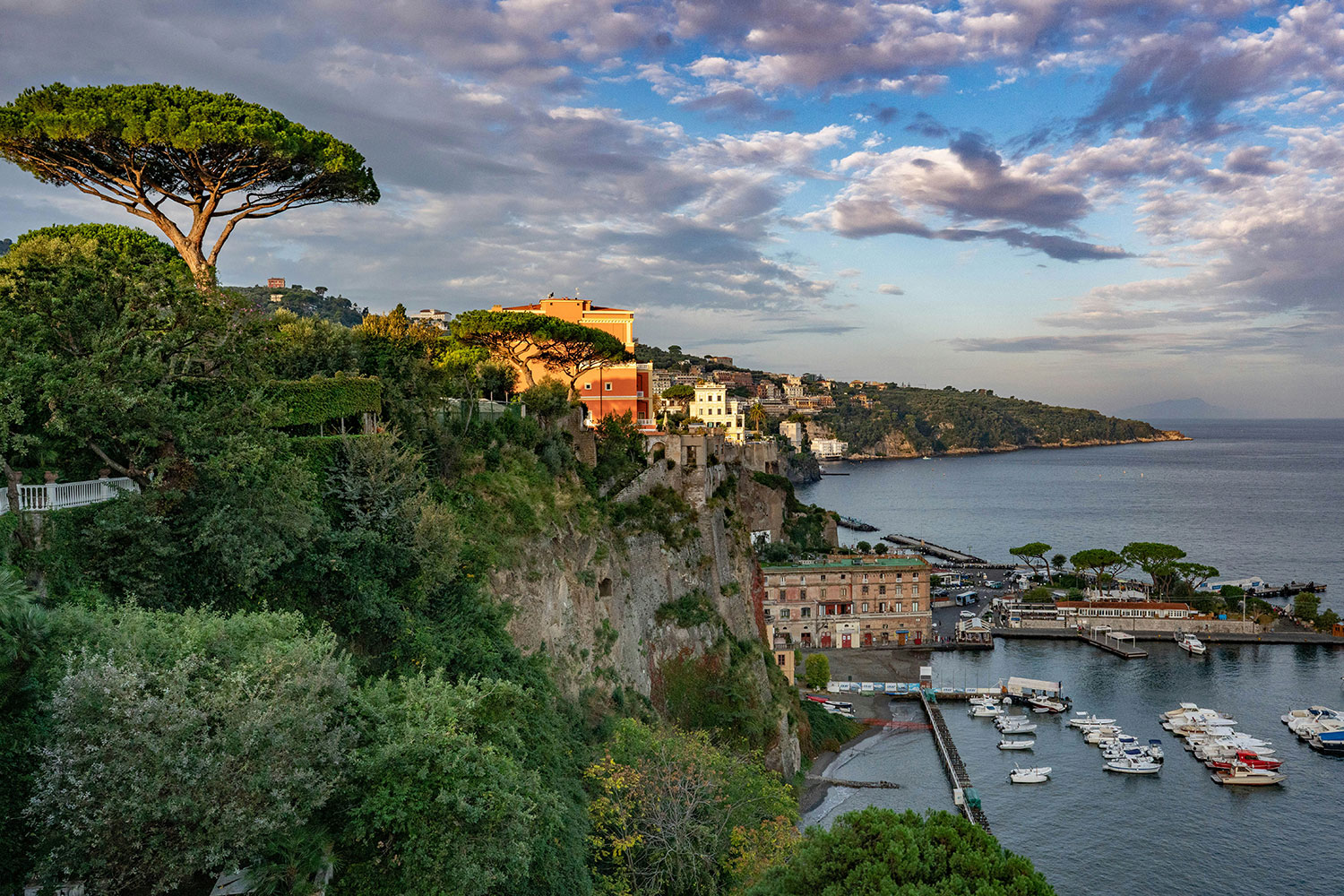
It sits on the northern side of the Sorrentine Peninsula, looking across the Bay of Naples towards Vesuvius. The Amalfi Coast unfolds along the peninsula’s southern edge, through towns including Positano, Praiano, Amalfi, Ravello, Minori, Maiori, Cetara and Vietri sul Mare.
Sorrento is close to the coast and has long functioned as one of its main gateways. That proximity is precisely why Sorrento and the Amalfi Coast are so often bundled together.
But the distinction matters when you are deciding where to stay near the Amalfi Coast.
A night in Sorrento means returning to Sorrento after your day on the coast. A night in Positano, Amalfi or Minori means being there when the excursion boats have left, the streets begin to soften and tomorrow morning requires no journey at all.
On a map, the difference looks modest. Over several days, it can define the trip.
Sorrento vs Amalfi Coast: the simplest way to choose
Begin with your itinerary rather than the reputation of either place.
If your trip moves widely through Campania — perhaps Naples, Pompeii, Capri and the Amalfi Coast — Sorrento places several very different destinations within relatively easy reach.
If most of the places circled on your map lie between Positano and Vietri sul Mare, staying outside the coast and travelling into it repeatedly begins to make less sense.
There is also a less measurable difference.
Sorrento behaves like a base. It is exceptionally good at helping you go somewhere else.
The Amalfi Coast can be the destination itself.
A morning may amount to little more than coffee, a staircase down towards the sea, a swim and deciding where lunch should be. The landscape does not need to be fitted between departure times because it is already around you.
That distinction is at the heart of Sorrento vs Amalfi Coast.
Choose Sorrento when your trip is bigger than the Amalfi Coast
Sorrento’s greatest practical strength is how much of Campania it places within reach without requiring a car.
The railway connects Sorrento with Pompeii and Naples. Ferries cross the bay towards Capri and, during the main travel season, connect Sorrento with destinations along the Amalfi Coast. Road connections reach Naples Airport and the wider Sorrentine Peninsula.
It gives you options, and options are valuable in Campania.
A morning can begin towards Pompeii and end back beside the sea. Capri can occupy another day. Naples another. The coast can be approached separately rather than carrying the burden of every other excursion you want to make.
For travellers deciding where to stay for Naples, Pompeii, Capri and the Amalfi Coast, that flexibility is one of Sorrento’s strongest advantages.
Pompeii from Sorrento is easier
This is one of Sorrento’s clearest advantages.
From central Sorrento, visiting Pompeii from Sorrento begins with a walk to the railway station and a direct journey towards Pompei Scavi.
From most Amalfi Coast towns, Pompeii introduces another stage: a bus, ferry, transfer or road journey before the archaeological site is even reached.
The distance shown by a map tells only part of the story here. What matters more is how many connections stand between your breakfast table and where you actually want to go.
When Pompeii is central to the itinerary, Sorrento makes a persuasive case for itself.
Naples from Sorrento is easier too
Naples follows much the same logic.
Sorrento gives you both rail and seasonal sea connections towards the city. From the Amalfi Coast, the journey generally requires more coordination, particularly if your accommodation is in one of the smaller towns.
Of course, none of this makes visiting Naples from the Amalfi Coast impossible. It simply means giving more of the day to getting there and back.
If Naples is not merely an airport but somewhere you genuinely want to explore — the markets, museums, churches, neighbourhoods and long lunches that deserve considerably more than a hurried afternoon — the difference begins to matter.
Capri from Sorrento or the Amalfi Coast: both work
Capri is different.
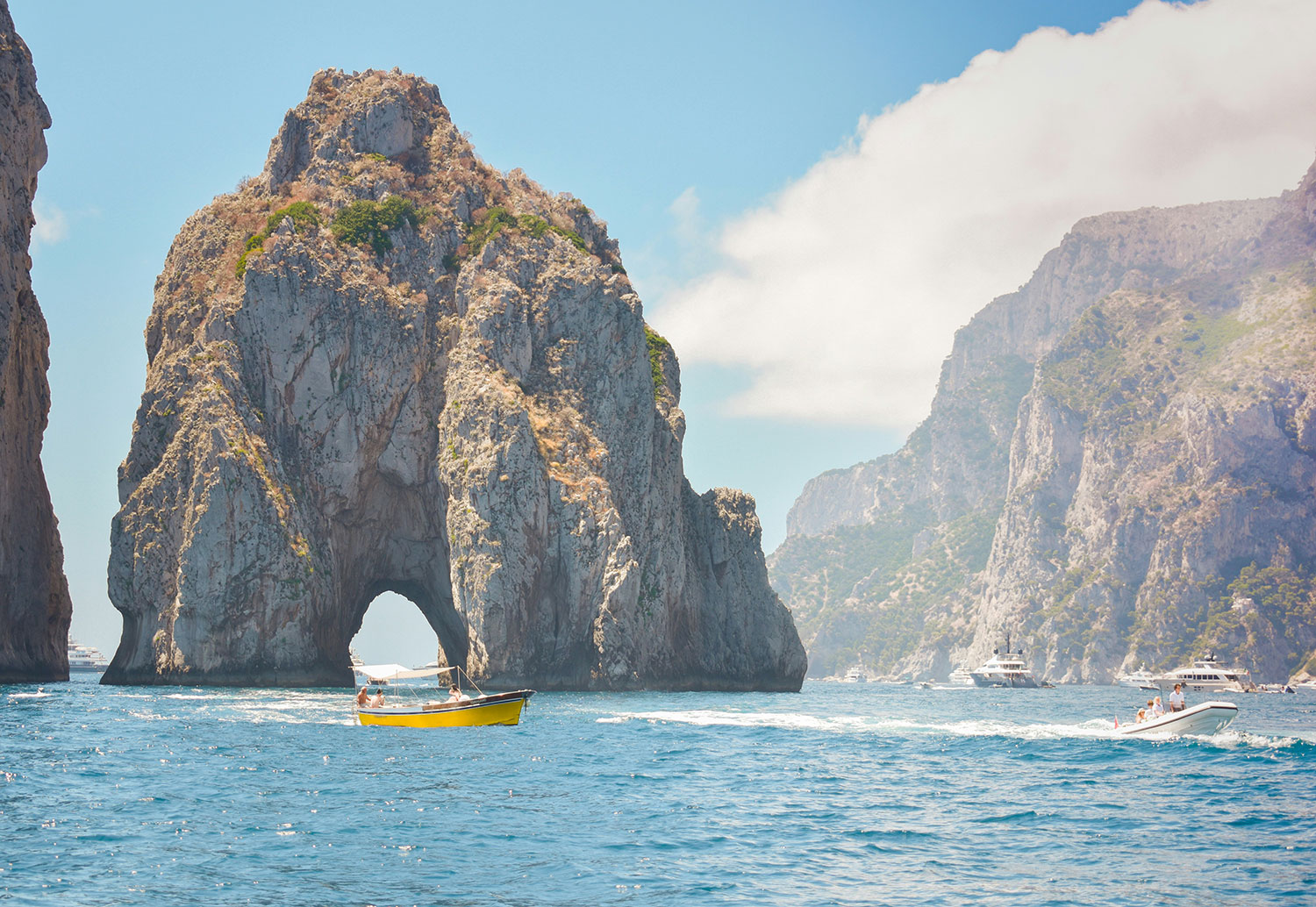
Sorrento is exceptionally convenient for Capri, with the water crossing forming one of the peninsula’s most established routes. Yet in the main season, Capri is also connected directly with several Amalfi Coast ports.
So if Capri is one day within an otherwise coast-focused holiday, it is rarely a compelling reason to abandon the Amalfi Coast as your base.
Choose Sorrento for the combination of destinations, not simply for Capri.
Stay on the Amalfi Coast when the coast is the trip
There is a curious habit in Amalfi Coast planning: travellers sometimes choose Sorrento for convenience and then spend three or four days travelling away from it.
Positano one day. Amalfi and Ravello the next. Another ferry west the morning after that.
Eventually, the practical base stops being particularly practical.
If the Amalfi Coast is the main reason for your trip, staying on the coast removes one repeated journey from almost every day. More importantly, it changes which hours of the coast you get to experience.
A town such as Positano has a public face during the middle of the day. Ferries arrive, beach clubs fill, restaurant terraces turn tables quickly and narrow streets absorb a remarkable number of people.
Then the departures begin.
By early evening, the light shifts across the buildings, swimmers make their final crossings back to shore and dinner becomes less about fitting something into an itinerary. The town belongs more convincingly to the people staying there.
Amalfi changes too. So do Minori, Maiori and the smaller towns further east.
These hours are not dramatic attractions that appear on a list of things to do. They are simply the pleasure of being somewhere without needing to leave it.
That is the strongest argument for staying on the Amalfi Coast rather than visiting it from Sorrento.
Sorrento gives you flexibility. The Amalfi Coast gives you atmosphere.
Sorrento has a large hotel market, a deep choice of restaurants and enough transport infrastructure to accommodate many different kinds of day.
You can arrive without having perfected every detail of the itinerary and still have room to change your mind. That flexibility is one of Sorrento’s greatest strengths.
The Amalfi Coast is less uniform.
A hotel in Positano creates a fundamentally different holiday from a room in Ravello, Maiori, Praiano or Amalfi. Terrain changes. Beaches change. Transport changes. The hours of the day change with them.
Price changes too.
If Positano is beyond your budget, it does not follow that staying on the Amalfi Coast is beyond your budget.
Minori, Maiori, Cetara and Vietri sul Mare belong to the same coastline without sharing Positano’s hotel market. Even within individual towns, moving away from the most obvious waterfront streets can alter the price considerably.
The Amalfi Coast is not one accommodation market. It is a sequence of places, each making a slightly different proposition.
Sorrento is easier with luggage
This sounds like the sort of detail that belongs near the bottom of a planning spreadsheet. It becomes considerably more interesting while standing in the afternoon sun with two suitcases and a staircase that did not appear on Booking.com.
Sorrento is generally easier with luggage. The railway station sits within the town, taxis circulate easily and much of the centre can be covered without negotiating serious elevation.
The Amalfi Coast asks you to inspect the exact accommodation rather than the town name alone.
Positano is the obvious example. A property can look almost beside the sea on a map while sitting dozens — or hundreds — of steps above it. Praiano and many hillside properties elsewhere can create the same surprise.
This does not make Sorrento automatically better for travellers with luggage, children or limited mobility. It makes accommodation-level research more important on the Amalfi Coast.
Check the actual walking route between your hotel and the ferry pier, bus stop or road. Ask whether a taxi can reach the entrance. Look at elevation, not merely horizontal distance.
A five-minute walk in Campania can contain a great deal of vertical information.
Sorrento vs Amalfi Coast beaches: the difference is more complicated than it looks
If your mental picture involves long stretches of pale sand, neither destination fits neatly.
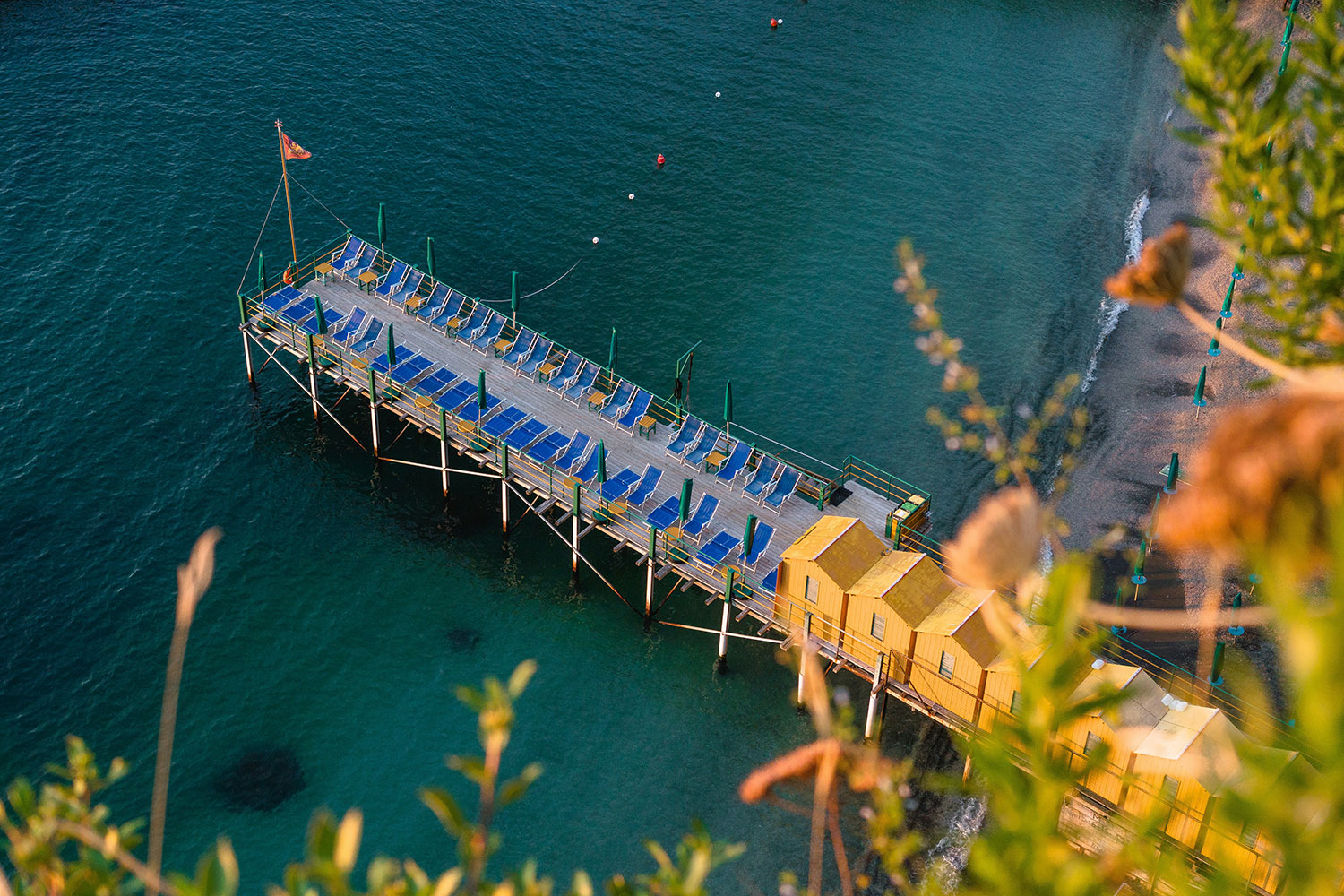
Sorrento rises dramatically above the Bay of Naples. Much of its summer relationship with the sea happens through bathing platforms, compact beaches and clubs beneath the cliffs.
The Amalfi Coast gives you a broader range of possibilities, though here too the beaches tend to be smaller than first-time visitors expect.
Positano has its famous beachfront, but it can become intensely busy. Maiori has one of the Amalfi Coast’s longest and easiest urban beaches. Minori places a smaller beach directly against a compact, walkable town. Elsewhere, swimming may mean a cove, a staircase, a boat or a small platform cut into the edge of the coast.
So if water matters greatly to your holiday, the useful comparison is not simply Sorrento beach vs Amalfi Coast beach.
It is Sorrento versus the exact Amalfi Coast town you are considering.
A summer week in Maiori can be wonderfully beach-centred. A week high above Praiano may involve a much more deliberate relationship with the sea.
Renting a car does not automatically make Sorrento the better base
A rental car can create the impression that all this geography will suddenly become simple.
It rarely does.
Driving introduces a different set of calculations: narrow roads, summer traffic, parking, local ZTLs, hotel access and seasonal driving restrictions. Along parts of the coast, finding somewhere to leave the car can consume more energy than the drive itself.
A car can still be excellent when you are staying in the hills, visiting rural accommodation or exploring places poorly served by ferries and buses.
But do not choose Sorrento simply because you plan to rent a car. Driving the Amalfi Coast does not automatically make it the easiest way to get around.
Quite often, it is not.
Sorrento vs Amalfi Coast: arrival and departure days
There is one moment when even travellers firmly set on the Amalfi Coast may appreciate Sorrento’s practicality: the edges of the trip.
Arriving late into Naples and continuing immediately towards a small coastal village can turn the first evening into a chain of connections. An early flight home can produce the same problem in reverse.
This is where a split stay between Sorrento and the Amalfi Coast becomes useful.
Spend the first night in Sorrento, perhaps. Or the last. Let the practical part of the peninsula do what it does well, then spend the meaningful middle of the trip where you actually want to be.
There is no prize for making one hotel solve every logistical problem.
Restaurants and evenings
Sorrento has quantity on its side.
Its centre contains an enormous concentration of restaurants, bars, hotels and shops within an area that is relatively easy to walk. There is comfort in simply leaving the hotel at eight in the evening and knowing that dozens of possibilities lie nearby.
On the Amalfi Coast, the answer depends almost entirely on the town.
Amalfi has an active centre and remains lively into the evening. Positano has restaurants ranging from simple terraces to elaborate hotel dining, although prices rise with the setting. Minori and Maiori feel more relaxed and everyday. Ravello becomes quieter once day visitors descend towards the sea. Praiano stretches over a larger area, so a restaurant that appears close may involve more effort than expected.
Again, there is no single Amalfi Coast evening experience.
The right town is the one whose ordinary evening sounds appealing to you.
Not merely the one whose photograph looked best at midday.
300+ places. One map.
The Amalfi Coast, already sorted.
Beaches, restaurants, viewpoints, transport and the places actually worth stopping for — all inside the amalfimap.com map, ready now.
Free for the first 1,000 users · 400+ already in. Add your email and we’ll send the map straight to your inbox.
Sorrento vs Positano: convenience vs atmosphere
Many people searching for Sorrento vs Amalfi Coast are, in practice, trying to choose between Sorrento and Positano.
That comparison is much sharper.
Sorrento is easier to move around, better connected by regional transport and generally less demanding. Positano is vertical, expensive, busy in high season and capable of turning a 300-metre distance into a memorable number of stairs.
Yet practicality is only half the comparison.
There is something particular about waking in Positano before the town becomes fully awake: the water below, boats beginning to move, shutters opening along the slope and the first light reaching buildings stacked almost implausibly above one another.
Sorrento cannot replicate that because it is offering something else.
If convenience carries the decision, Sorrento is difficult to beat.
If waking up in the place itself carries more weight, Positano can make inconvenience feel like a reasonable price.
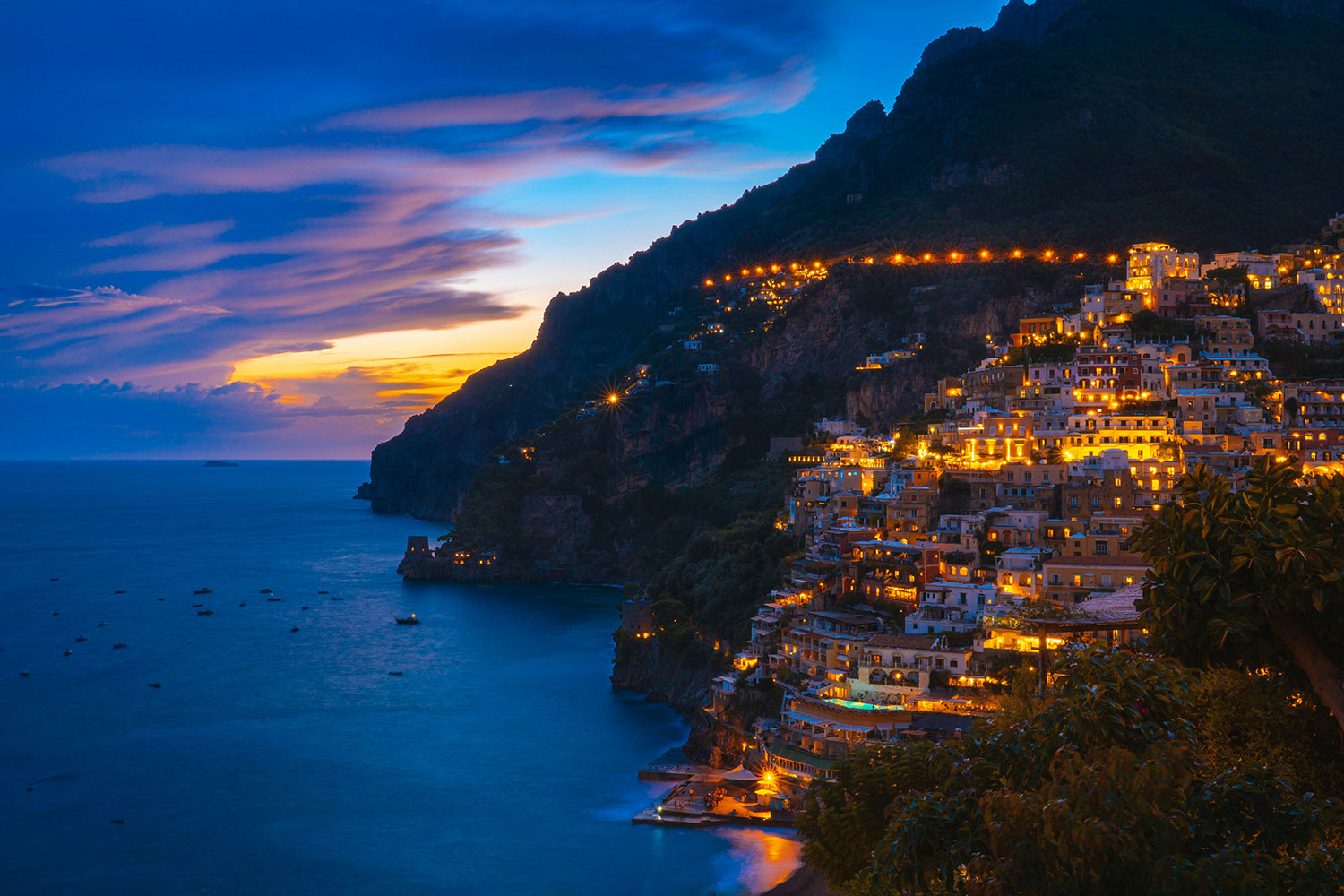
Sorrento vs Amalfi: a much closer comparison
Sorrento vs Amalfi is less extreme.
Amalfi is one of the coast’s most practical towns, with a compact centre, ferry connections, buses and straightforward access towards Ravello. Atrani is close enough to reach on foot, while boats allow you to move east and west without beginning each coastal day from outside the coastline.
It is still unmistakably the Amalfi Coast — compressed between mountain and sea, filled with movement during the day and calmer once the last departures begin.
For travellers attracted to Sorrento’s convenience but reluctant to sleep outside the Amalfi Coast, Amalfi is one of the strongest alternatives to Sorrento.
It gives away the railway connection to Naples and Pompeii, but gains something less quantifiable: you no longer need to travel to the coast because you are already there.
Sorrento vs Amalfi Coast for families
Sorrento is often recommended to families, and there are sensible reasons for it.
The centre is comparatively manageable, accommodation choice is broad and transport gives you more ways to change a plan when a child has different ideas about the day.
But treating Sorrento as the automatic best family base for the Amalfi Coast misses the same point again: families do not all travel in the same way.
If the holiday revolves around Pompeii, Capri and several regional excursions, Sorrento can make a family trip considerably easier.
If the priority is walking down to the sea, swimming and having dinner close to the hotel, Maiori or Minori may suit families far better.
For families especially, choosing the base around the actual shape of the days is more useful than choosing according to the most repeated recommendation online.
Sorrento vs Amalfi Coast for a short trip
Short stays make geography more important because every transfer consumes a larger share of the time available.
If you have only a few nights and the Amalfi Coast is the reason for the trip, staying on the coast usually makes it feel less fragmented.
You arrive, unpack and begin.
Sorrento becomes more persuasive when the itinerary genuinely extends beyond the coast. There is little advantage in placing yourself there merely because it appears easier on paper if nearly every morning begins with a journey towards Positano or Amalfi.
The deciding factor should be where your days happen, not an arbitrary number of nights.
Should you split your stay between Sorrento and the Amalfi Coast?
Often, yes.
The framing of Sorrento or Amalfi Coast creates an unnecessary binary.
A trip can easily contain both.
Spend time in Sorrento while exploring Pompeii, Naples, Capri or the peninsula. Then move onto the Amalfi Coast and allow a few days to become slower.
The disadvantage is obvious: you change hotels.
Yet changing hotels once can be less disruptive than commuting repeatedly through one of Italy’s busiest coastal regions.
A split stay also creates a pleasing shift in mood. The first half can be outward-looking and energetic; the second can contract around the sea, a smaller town and fewer reasons to be anywhere else.
Sorrento vs Amalfi Coast: which is better for your trip?
For most travellers, the choice comes down to what sits at the centre of the itinerary.
Choose Sorrento if you want one well-connected base for Pompeii, Naples, Capri and the Amalfi Coast. Rail, ferry and road connections make it easier to move through a wider part of Campania without changing hotels.
Choose the Amalfi Coast if the coast itself is the main reason for your trip. Staying in Amalfi, Praiano, Minori, Maiori, Positano or another coastal town means spending less time travelling into the area and more time actually living in it — including the quieter mornings and evenings that day trips miss.
If your itinerary genuinely includes both sides of the peninsula, a split stay between Sorrento and the Amalfi Coast can be the strongest option: Sorrento for the wider Campania excursions, followed by a few nights directly on the coast.
There is no universally better base. The better choice is the one that removes the most unnecessary travel from the trip you actually want to take.
Frequently asked questions
Is Sorrento better than the Amalfi Coast?
Neither is universally better. Sorrento is usually better for regional transport and itineraries combining Naples, Pompeii, Capri and the Amalfi Coast. The Amalfi Coast is better when staying within the coastal landscape is central to the trip.
Is it better to stay in Sorrento or Positano?
Choose Sorrento for easier transport, a broader hotel and restaurant market and simpler regional day trips. Choose Positano when atmosphere and waking up directly on the Amalfi Coast matter more than convenience, price or stairs.
Is it better to stay in Sorrento or Amalfi?
Amalfi is the stronger choice when you want to stay on the Amalfi Coast while retaining good ferry and bus connections. Sorrento is stronger when Pompeii, Naples and the wider Bay of Naples are important parts of the itinerary.
Can you visit the Amalfi Coast from Sorrento?
Yes. Sorrento is one of the traditional bases for visiting the Amalfi Coast, with seasonal ferry and road connections towards the coast. The question is not whether it is possible, but how many days you intend to repeat that journey. If much of your holiday is spent on the coast, staying there may be more efficient.
Is Sorrento or the Amalfi Coast better without a car?
Both can work very well without a car. Sorrento benefits from rail and ferry connections, while towns such as Amalfi, Minori and Maiori can work exceptionally well with ferries and buses. Your exact accommodation location matters more than simply having access to a car.
Is Sorrento or the Amalfi Coast better for families?
Sorrento generally simplifies regional sightseeing. For a coast-focused family holiday, however, Maiori, Minori or Amalfi can be more useful because the sea, restaurants and transport are already close at hand. Choose according to the days you are actually planning.
Should I split my stay between Sorrento and the Amalfi Coast?
A split stay can be one of the most balanced ways to see the region. Use Sorrento for Pompeii, Naples, Capri or the peninsula, then move onto the Amalfi Coast for the part of the trip where being there matters more than getting elsewhere.
At a glance
Sorrento vs Amalfi Coast: the whole decision in one table
Transport, beaches, atmosphere, day trips and practicalities — the useful comparison before you choose where to stay.
| What matters | Sorrento | Amalfi Coast |
|---|---|---|
| Overall feel | Easy, lively and built around flexibility. | More immersive, scenic and tied to the rhythm of the coast itself. |
| Pompeii | Much easier. Direct Circumvesuviana rail connection. | Usually requires an additional ferry, bus, road or rail connection. |
| Naples | Better connected. Rail and seasonal ferry options. | Possible, but usually requires more travel time and planning. |
| Capri | Excellent and frequent ferry access. | Also easy from several coastal ports during the main ferry season. |
| Exploring the coast | You travel into the Amalfi Coast each day. | You wake up already there. |
| Beaches | Small beaches and bathing platforms beneath the cliffs. | Greater variety, from Positano coves to Maiori’s long beachfront. |
| Luggage | Generally easier. Better road access and less dramatic terrain. | Highly dependent on the town, hotel elevation and number of stairs. |
| Evenings | Large choice of restaurants, bars and shops in an easy centre. | Quieter and more atmospheric once day-trippers leave. |
| Best for | A wider Campania trip: Pompeii, Naples, Capri and the coast. | An Amalfi Coast trip: towns, beaches, dinners and slower coastal days. |
| amalfimap.com verdict | Choose Sorrento when the trip is bigger than the Amalfi Coast. Choose the Amalfi Coast when the coast itself is the trip. | |
The bottom line
Stay in Sorrento when you want flexibility: railway connections, easy access towards Pompeii and Naples, ferries across the bay and one comfortable base for a trip that extends well beyond the Amalfi Coast.
Stay on the Amalfi Coast when the coast itself is the centre of the journey — when you want the first coffee, the swim before lunch and the quiet walk after dinner to happen there rather than at the end of another excursion.
And remember that choosing the Amalfi Coast does not mean choosing Positano.
Amalfi, Praiano, Minori, Maiori, Ravello, Cetara, Vietri sul Mare and the smaller towns between them create very different holidays.
The best base is rarely the most famous one.
It is the place that allows the trip you imagined to happen with the least resistance.
Continue planning