The Amalfi Coast has a peculiar talent for making perfectly sensible people behave badly.
They arrive with three days and a list containing Positano, Amalfi, Ravello, Capri, Pompeii, a boat tour, four beaches, the Path of the Gods and — because apparently sleep has become optional — dinner in Naples.
Don’t do that.
The coast is only about 50 kilometres long, but distance here is a dishonest measurement. Ten kilometres can mean a beautiful 20-minute ferry ride, an hour inside a bus, 700 stairs or a minor existential crisis behind a tour coach on the SS163.
The trick is not seeing everything. It is knowing which things to do on the Amalfi Coast are genuinely worth giving your limited time to.
Some famous places deserve the fuss. Positano really does look ridiculous in the best possible way. Ravello’s gardens really can stop a conversation halfway through a sentence. The Path of the Gods earns its theatrical name.
Others are better treated as a quick stop rather than the centrepiece of a day.
And some of the best Amalfi Coast experiences happen where the standard checklist gets quieter: an anchovy town at lunchtime, an old staircase disappearing between lemon terraces, a swim below enormous cliffs, an empty square after the ferry crowds have gone.
The wider landscape matters too. The Amalfi Coast has been a UNESCO World Heritage Site since 1997, recognised not simply for pretty towns but for the relationship between its settlements, mountains, terraced vineyards, orchards and human-shaped landscape.
UNESCO World Heritage: Costiera Amalfitana
So this isn’t a list of 30 obligations.
It’s 30 possibilities worth knowing about.
Choose well.
If you only do 10 things, make them these
You do not need all 30. For a first trip, this mix gives you the coast from the water, from above, from inside its towns and from somewhere with a plate in front of you.
The big ones: Amalfi Coast experiences worth building a day around
These are the experiences we’d protect first when time starts disappearing from the itinerary.
1. See the Amalfi Coast from the water
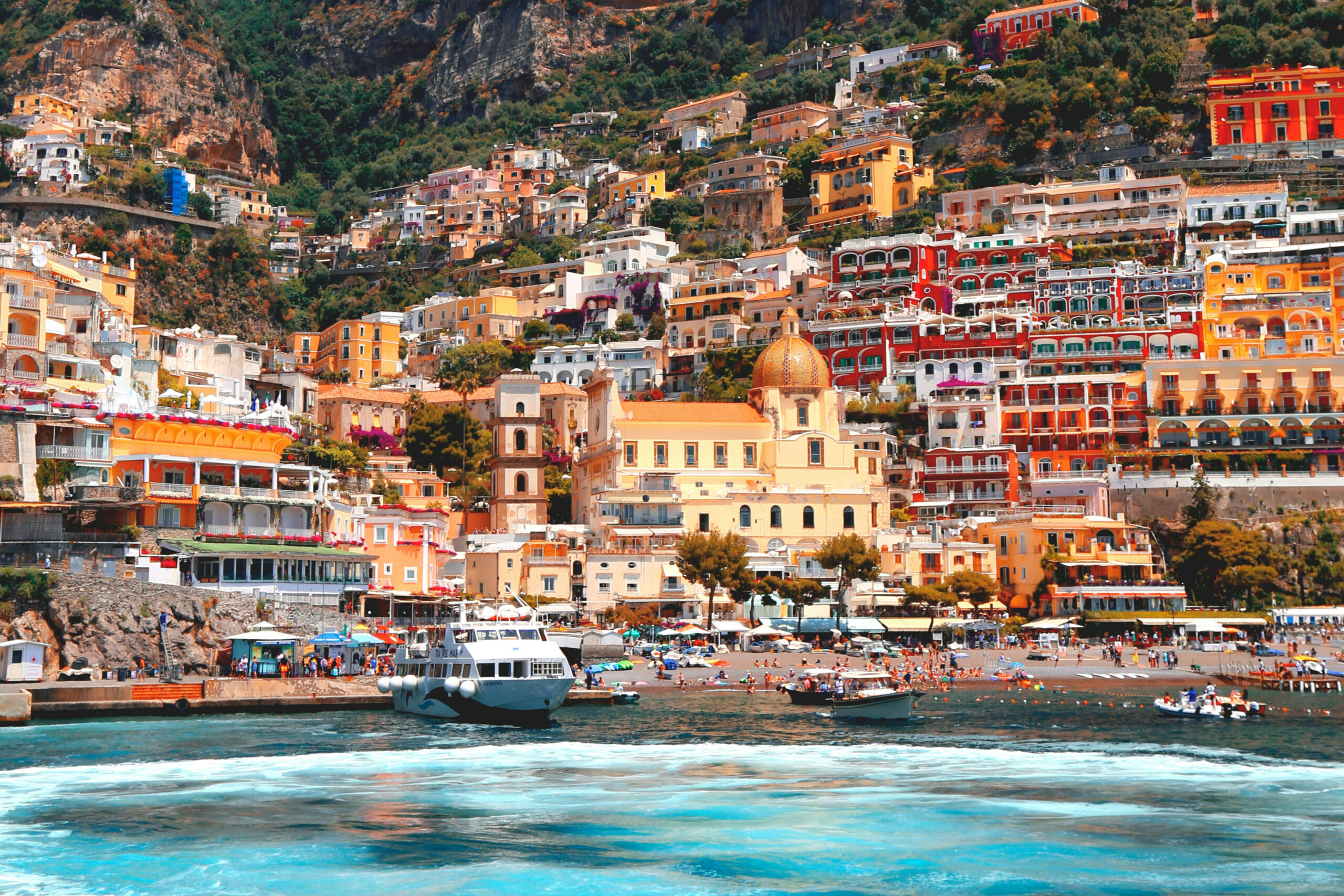
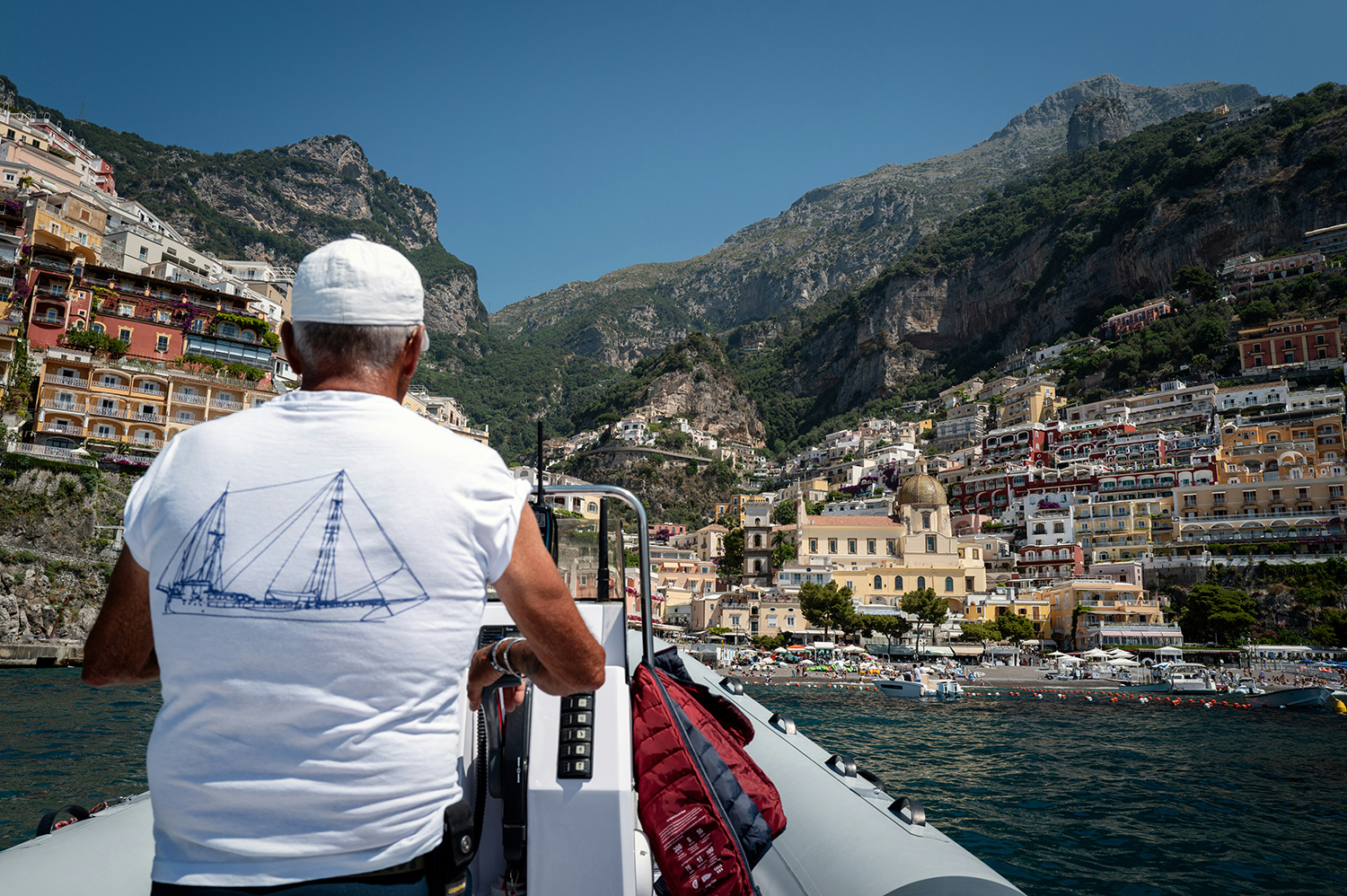
There is a moment, usually somewhere between Positano and Amalfi, when the coastline suddenly makes sense.
From the road, you experience it in fragments: a cliff, a tunnel, a town, the back of a bus.
From the water, you finally see the whole improbable construction at once. Mountains plunge into the Mediterranean while roads, villages, lemon terraces and churches occupy whatever scraps of usable land humans managed to negotiate from the rock.
This is why a boat belongs near the top of any list of the best things to do on the Amalfi Coast.
A private boat gives you freedom to swim and explore smaller coves. A shared excursion costs less and still gives you the essential experience: time offshore.
And you absolutely do not need a yacht.
During the ferry season, an ordinary passenger ferry can deliver some of the best views of the trip for the price of transportation.
The stretch around Positano, Praiano, Marina di Praia, Fiordo di Furore and Conca dei Marini is particularly good from the sea.
One small rule: turn around after leaving port.
Everyone photographs the town when approaching it. The view disappearing behind you is often better.
For current sailings, use the official Travelmar timetable rather than relying on screenshots or old travel blogs.
Check official Amalfi Coast ferry times with Travelmar
2. Walk Positano from top to bottom
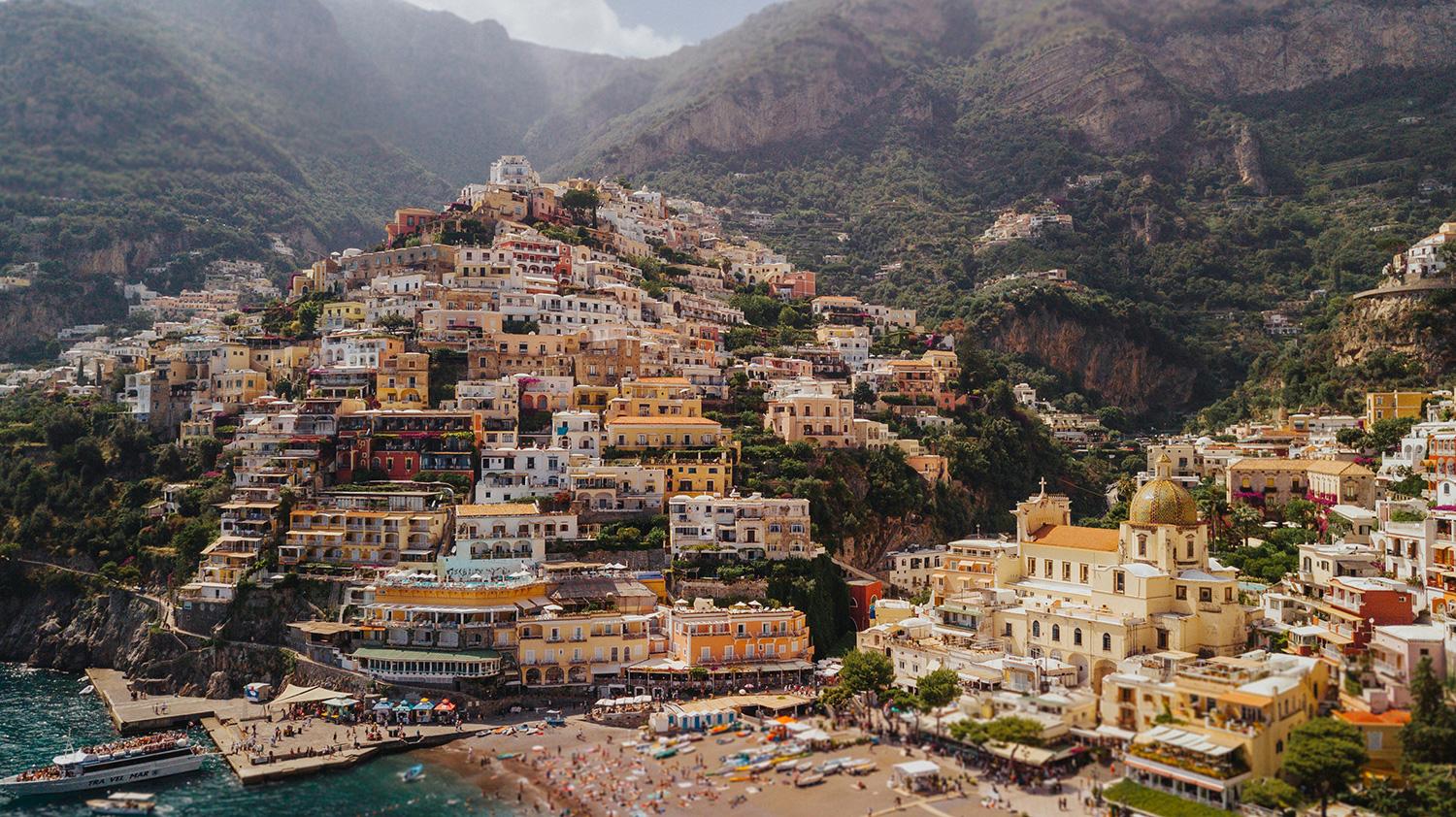
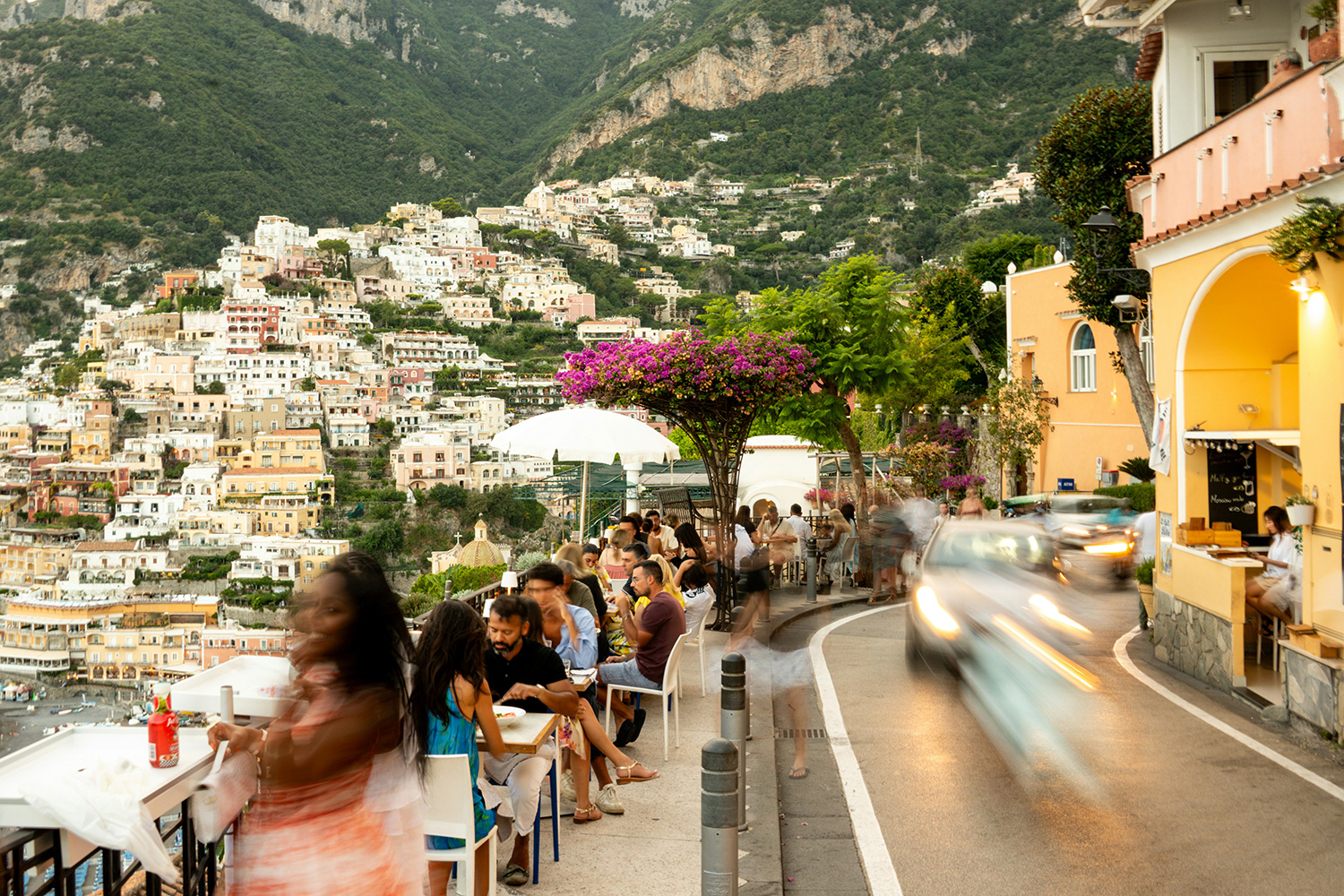
Positano is expensive, crowded, polished to within an inch of its life and occasionally capable of feeling like an international convention for linen shirts.
It is also spectacular.
Both things can be true.
The mistake is arriving at Spiaggia Grande, taking the standard photograph and concluding that you’ve seen Positano.
Start higher.
Its character comes from verticality. Streets become staircases. Staircases become passages. Houses sit above other houses which sit above hotels which occasionally appear to sit above absolutely nothing.
Walk downhill and let the town reveal itself slowly.
Eventually you’ll reach the Church of Santa Maria Assunta and Spiaggia Grande. Enjoy the theatrical waterfront, then continue around the pedestrian path toward Fornillo Beach, which feels considerably less like the centre of a movie set.
Two or three hours is enough for most people unless you’re adding beach time, lunch or shopping.
Positano deserves a visit. It does not require your unconditional surrender.
If you’re still deciding whether Positano is somewhere to visit or somewhere to actually sleep, our guide to the best towns to stay on the Amalfi Coast compares it with Amalfi, Praiano, Ravello, Minori, Maiori and the quieter alternatives.
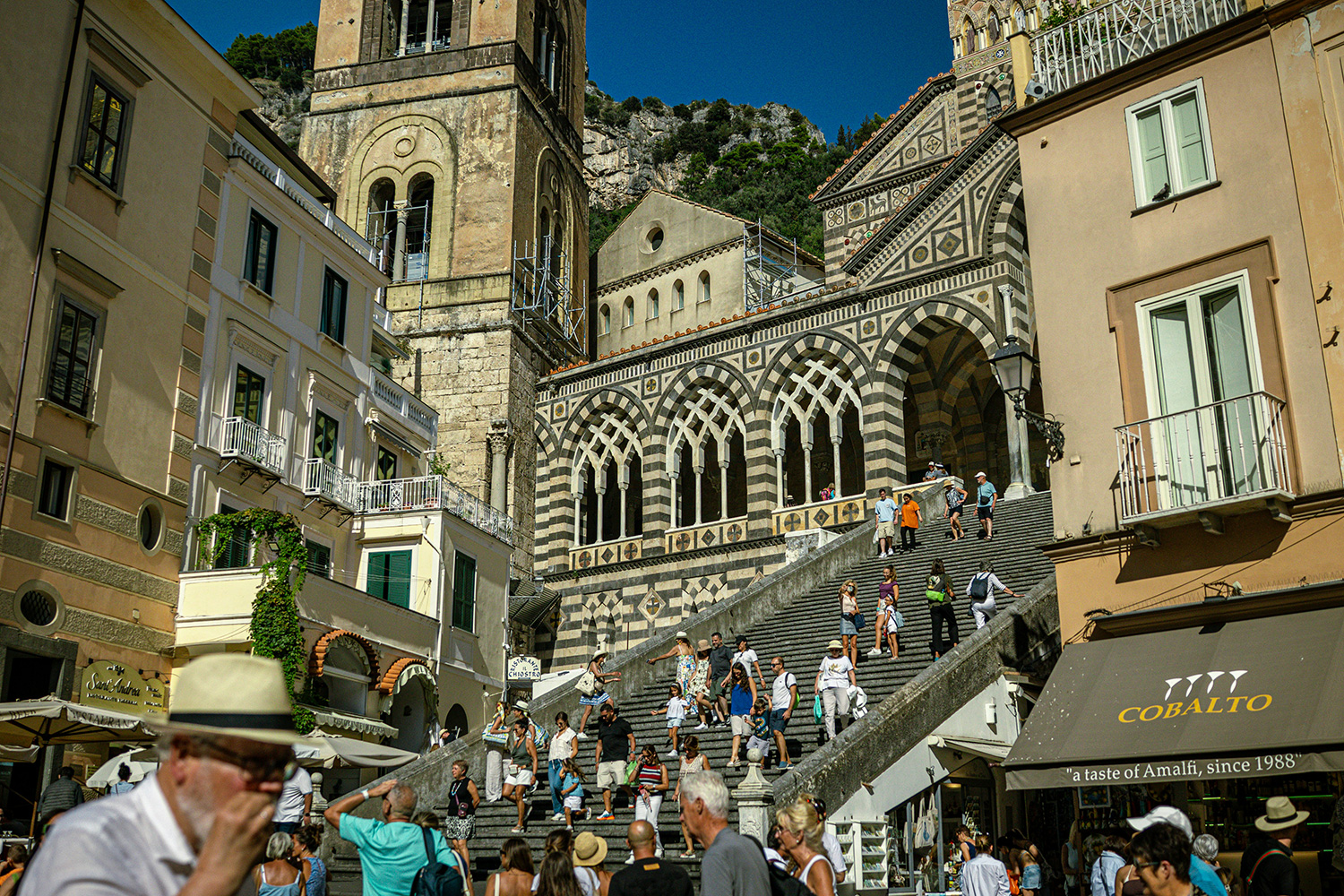
3. Actually enter Amalfi Cathedral
Piazza Duomo is where Amalfi becomes Amalfi.
Tables spill into the square. People stop at the bottom of the huge staircase. The striped façade of the Cathedral of Sant’Andrea hangs above everything like it was designed by somebody who understood entrances.
And then half the crowd takes the photograph and leaves.
Go inside.
The cathedral complex gives Amalfi something its waterfront alone cannot: historical weight.
This little town was once the centre of a powerful maritime republic trading across the Mediterranean. Its current physical size gives almost no indication of how important Amalfi once was.
The cathedral, crypt and Cloister of Paradise make that history considerably easier to understand.
Allow roughly an hour rather than treating the cathedral as background scenery on the way to lunch.
4. Walk to the Terrace of Infinity at Villa Cimbrone
Ravello has one unfair advantage over almost every other Amalfi Coast town:
height.
The sea is no longer beside you. It becomes the floor of the landscape.
Villa Cimbrone exploits this beautifully. You walk through gardens and shaded paths before eventually reaching the Terrazza dell’Infinito — Terrace of Infinity.
The marble busts get photographed constantly.
The real spectacle is everything behind them: an enormous drop through layers of mountain, coast and open water.
Don’t sprint through the gardens to collect the terrace.
The approach is part of it.
If you have half a day in Ravello, this is where we’d give the most time.
5. Visit Villa Rufolo as well — it isn’t the same thing
People occasionally ask whether they should visit Villa Rufolo or Villa Cimbrone.
The question usually means they’ve scheduled Ravello too tightly.
Villa Rufolo feels more architectural: courtyards, towers, Moorish-influenced details, gardens and terraces compressed into a historic complex beside the main square.
Villa Cimbrone is the grand landscape performance.
If you have only an hour, choose one. If you have half a day, refusing to choose is better.
For the 2026 season, Villa Rufolo lists opening hours of 09:00–20:00 from March 29, with last admission at 19:30 and standard admission of €8. Events can affect access, so check the official site before going.
Villa Rufolo official opening hours and tickets
6. Hike the Path of the Gods
The name sounds like the invention of a tourism department that had recently discovered adjectives.
Then you walk it.
The classic Sentiero degli Dei — Path of the Gods begins around Bomerano in Agerola and runs high above the western coast toward Nocelle above Positano.
The municipality of Agerola describes the route from Piazza Paolo Capasso in Bomerano and highlights the views over Positano, the Sorrentine Peninsula, Li Galli and Capri.
Official Agerola Path of the Gods information
This is not an urban stroll with a scenic section.
Expect rock, uneven ground, exposed sun and real elevation.
Carry water. Wear actual shoes. Start early in hot weather.
The popular Bomerano-to-Nocelle direction also makes more sense for most travellers than turning the experience into one very long uphill negotiation.
Getting there without a car is possible too; our Amalfi Coast transport guide explains how buses, ferries and transfers fit together.
If you enjoy walking even a little, this belongs near the top of your Amalfi Coast itinerary.
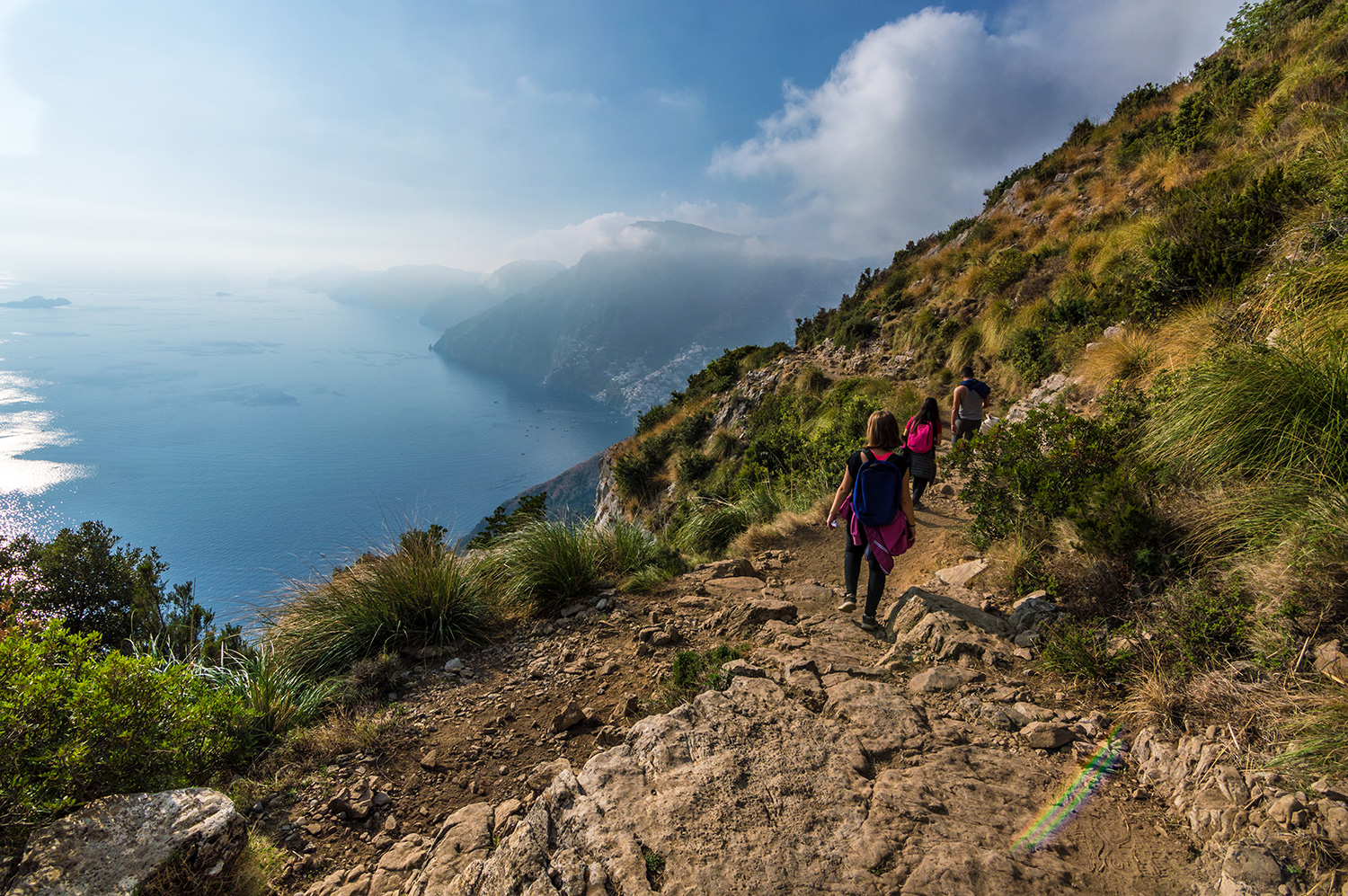
Hiking the Path of the Gods high above the Amalfi Coast. Photo by Stiflele via Wikimedia Commons, CC BY-SA 4.0.7. Swim beneath the bridge at Fiordo di Furore
Fiordo di Furore has been photographed so much that arriving there can feel strangely familiar.
Then you get underneath the bridge.
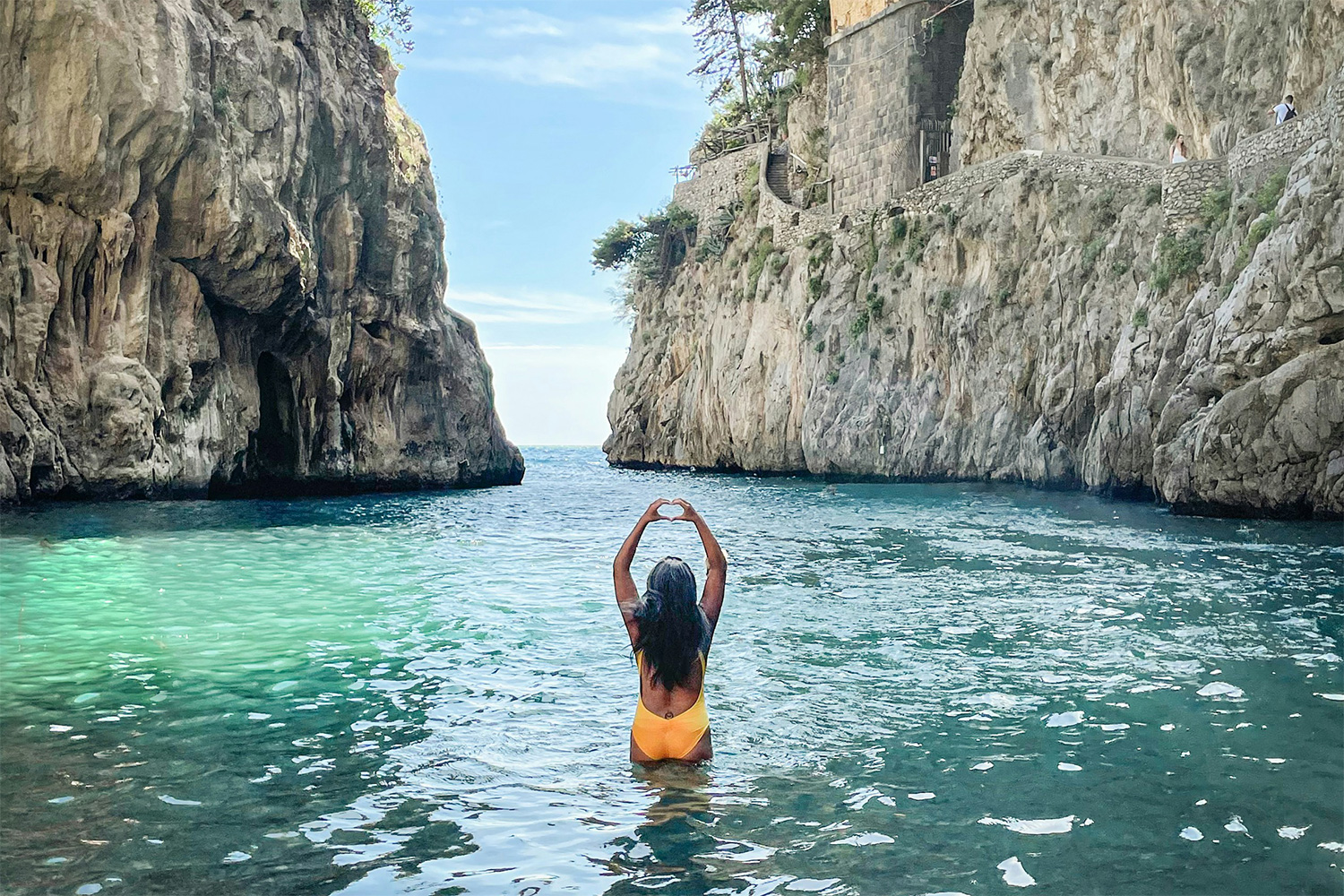
The narrow gorge, huge rock walls and tiny beach create a setting unlike anywhere else on the coast.
But understand what you’re visiting.
Furore is a brilliant swim stop and a mediocre place to plan an eight-hour beach day.
The beach is tiny. The cliffs shorten direct sunlight. Access needs planning.
Come early when possible, swim beneath the bridge, stay long enough to enjoy the setting and then continue.
Walks, water and the Amalfi Coast beyond the postcard
8. Walk the Path of the Lemons
If the Path of the Gods is the coast showing off, the Path of the Lemons is the coast explaining itself.
The old walking route climbs above Minori and crosses the terraced landscape toward Maiori.
You pass houses, gardens, stone walls and lemon cultivation while the sea sits below.
There are plenty of stairs.
But that’s part of the story.
The terraces aren’t landscaping installed for visitors. They are evidence of generations of people forcing productive land out of extremely steep terrain — exactly the relationship between humans and landscape that UNESCO identifies as central to the Amalfi Coast.
Walk it slowly. Look back often.
Then have lunch or swim in Minori or Maiori instead of immediately racing somewhere else.
9. Walk into Valle delle Ferriere
Behind Amalfi, the coast changes personality surprisingly quickly.
The tourist town narrows into a valley. The air becomes damper. Water appears. Vegetation thickens.
Old structures begin telling the story of mills and workshops that used the valley’s water long before boutique hotels occupied the waterfront.
Valle delle Ferriere barely looks like the Amalfi Coast you came expecting.
That’s precisely why it’s worth seeing.
Pair it naturally with Amalfi: town first, valley afterwards.
Check trail conditions before committing to longer routes, especially after poor weather.
10. Kayak beneath the cliffs
A boat gives you scale.
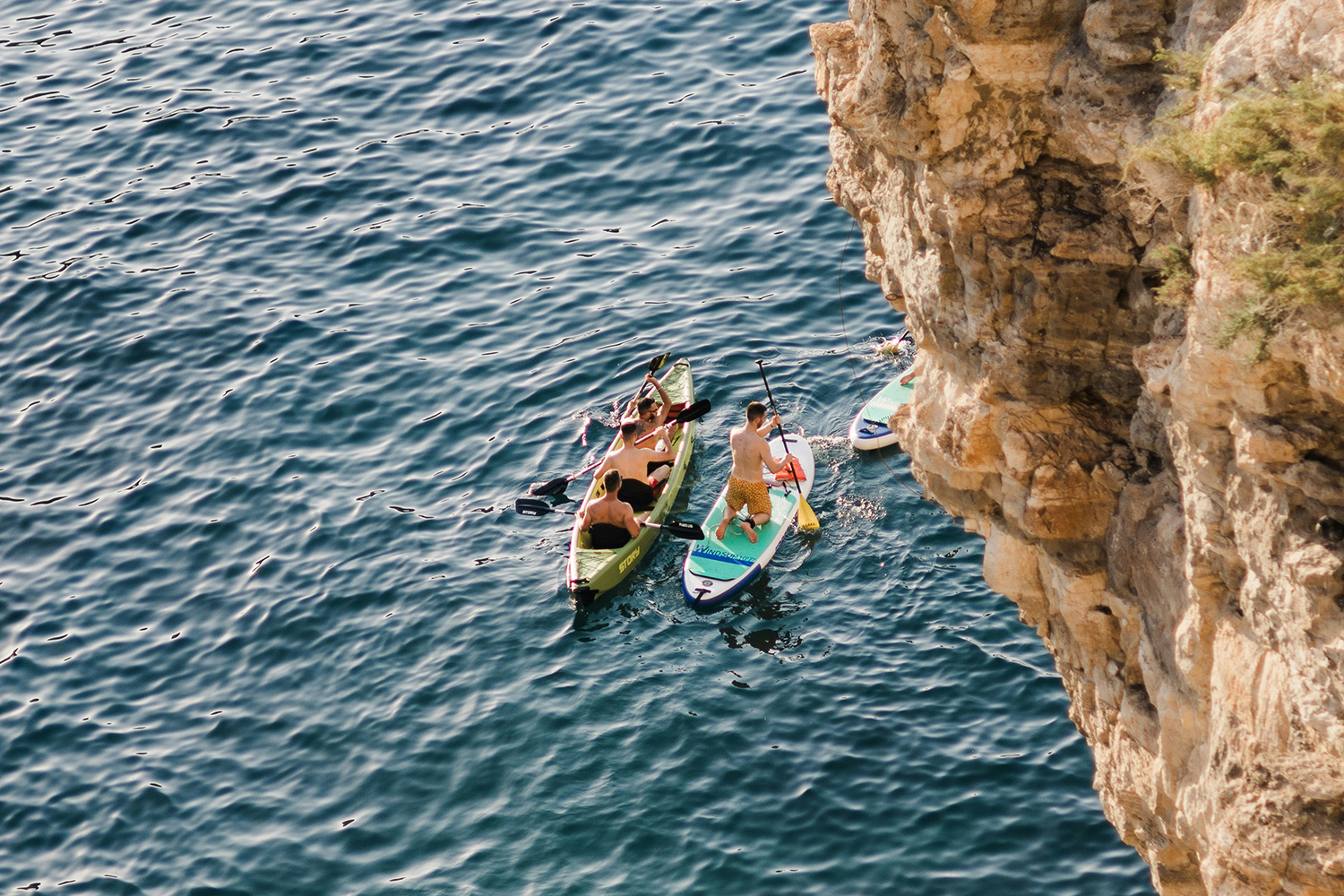
A kayak gives you detail.
At water level, the coastline becomes more intimate: little caves, rock formations, narrow openings and tiny coves that disappear completely from the road above.
Praiano and the central part of the coast work particularly well for this kind of exploration.
Do it in calm weather.
And remember that being able to paddle across a lake does not make you Poseidon. Wind, boat traffic and sea conditions matter.
If you’re inexperienced, go with a local guide.
11. Spend one proper day at the beach
This sounds embarrassingly obvious.
Apparently it isn’t.
People book a seaside holiday and then create an itinerary so dense that the Mediterranean becomes something they photograph while waiting for transportation.
Keep at least one half-day for swimming.
The right beach depends on the day you want.
Choose Fornillo for Positano scenery without quite as much Spiaggia Grande theatre.
Choose Maiori when space and easy access matter.
Choose Duoglio when swimming matters more than convenient access.
Choose Gavitella for late-afternoon light.
There is no universal winner — which is why our Amalfi Coast beaches guide compares them by access, swimming, scenery, crowds and who each beach actually suits.
Get the Amalfi Coast map before the free spots go.
300+ checked places, pinned and ready on your phone.
- Beaches
- Restaurants
- Viewpoints
- Hidden stops
- Routes
- Offline access
Sent instantly · save for offline use.
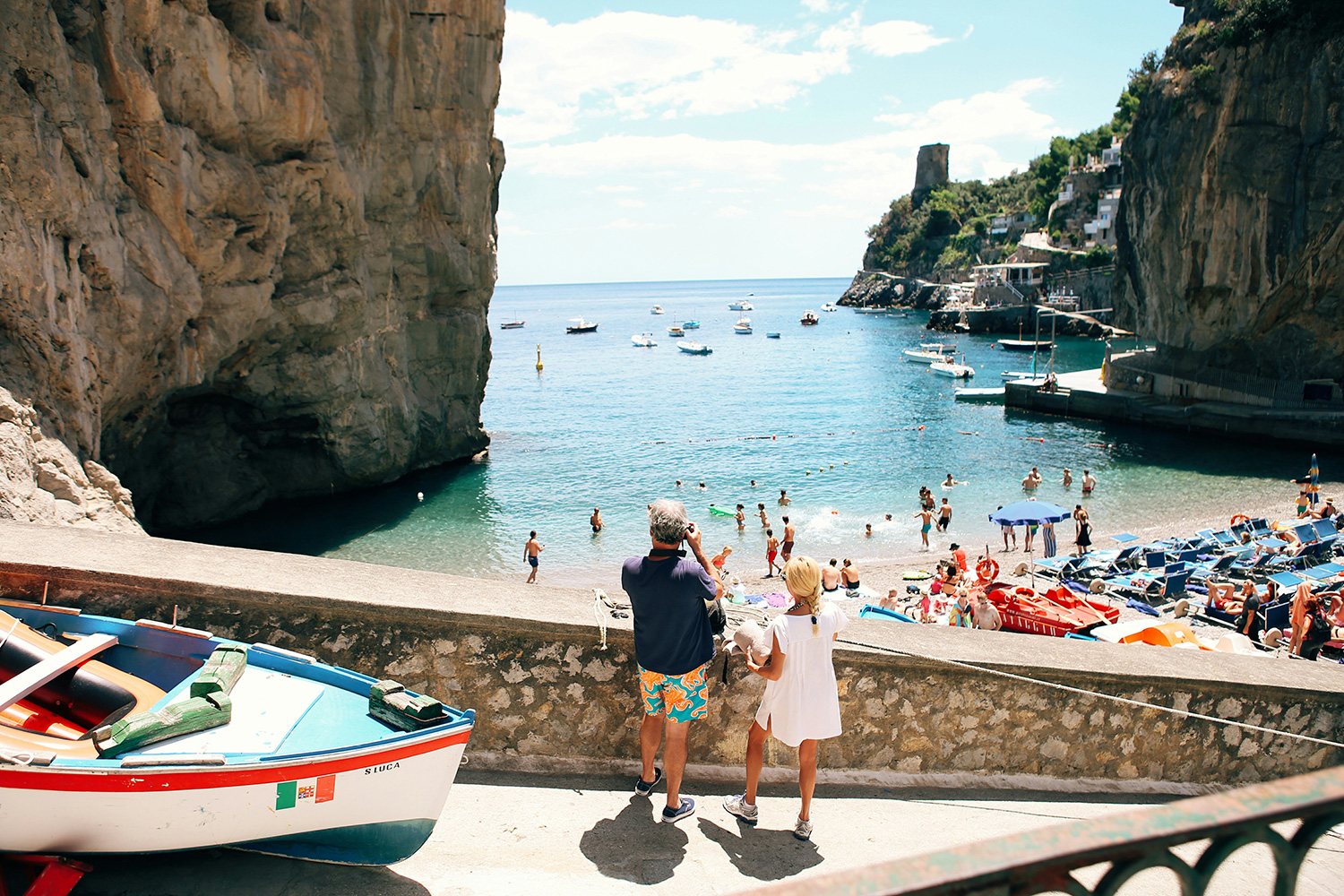
12. Find Marina di Praia between the cliffs
Marina di Praia barely looks like a beach from the road.
The tiny waterfront sits at the bottom of a deep rocky cut near Praiano, with boats, restaurants and a narrow strip of water squeezed between towering cliffs.
It works especially well as a swim + lunch stop.
Don’t arrive expecting kilometres of sand.
Come because few places make the scale of the Amalfi cliffs feel quite this physical.
13. Walk downhill from Ravello
There is something deeply satisfying about leaving elegant Ravello on foot and watching the coast rise toward you as you descend.
Historic stairways and old paths connect the high settlements around Ravello and Scala with Atrani, Amalfi and Minori below.
The scenery changes every few minutes: terraces, tiled roofs, gardens, church towers and sudden gaps opening toward the sea.
Gravity does some of the work.
Unfortunately Amalfi Coast staircases have a habit of continuing long after you’ve decided you’ve had enough.
Check the route before following whichever staircase looks romantic.
14. Climb toward Torre dello Ziro
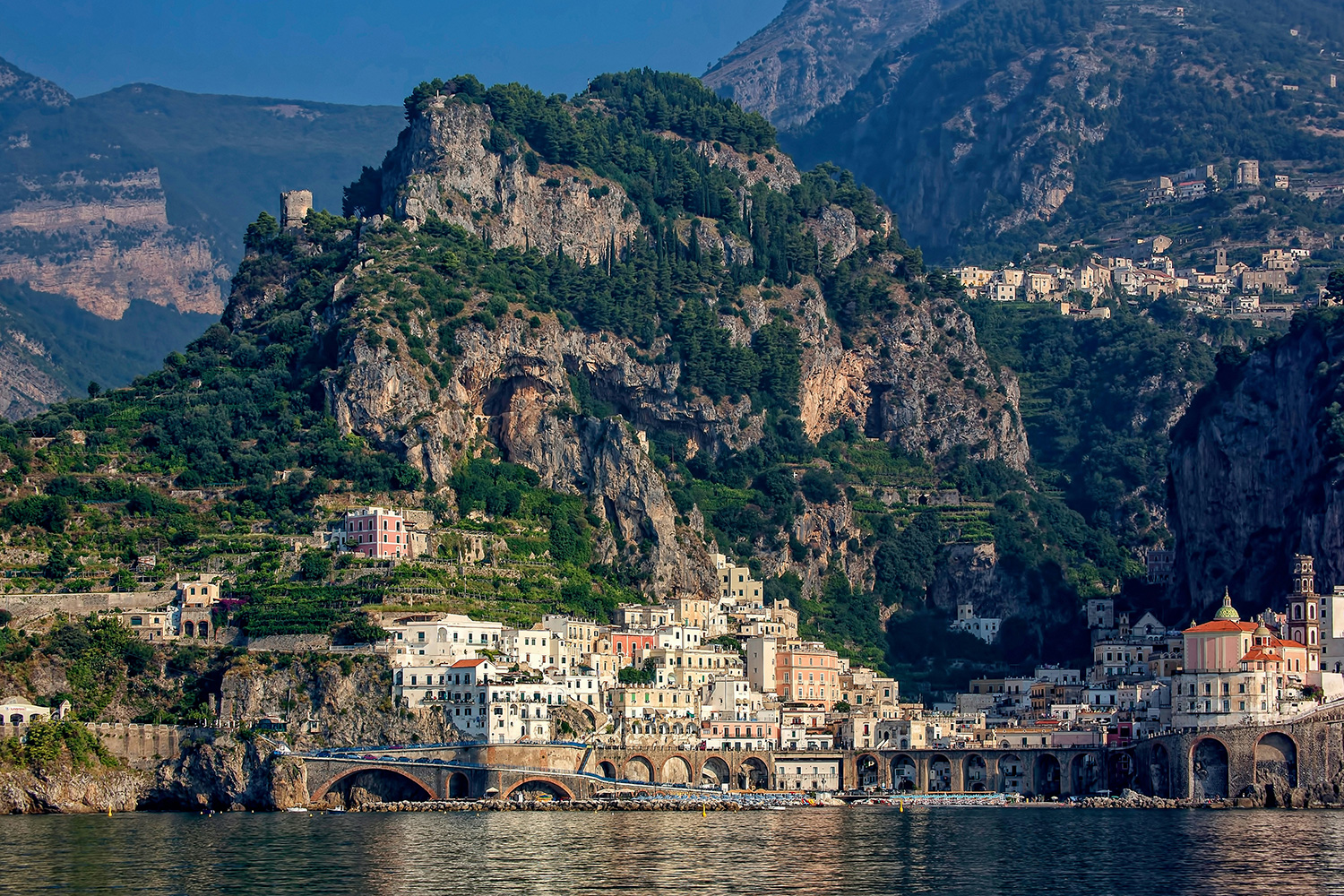
Above Amalfi and Atrani sits the ruined Torre dello Ziro, part of the defensive landscape overlooking the coast.
The walk gives you one of the most useful perspectives on the geography below.
From up here, tiny Atrani suddenly makes sense. Amalfi spreads into its valley. The mountains stop behaving like background scenery and reveal themselves as the structure everything is built around.
It’s a good choice if you want a shorter walking experience without committing half a day to the Path of the Gods.
15. Take the ferry even when the bus would work
Transportation on the Amalfi Coast is usually discussed as a problem to solve.
Sometimes it should simply be enjoyed.
When ferries are running, an ordinary journey between towns can produce better scenery than plenty of paid sightseeing experiences.
Stand outside.
Watch Amalfi shrink.
Watch Positano appear around the mountain.
Watch the road you’d otherwise be crawling along from a wonderfully civilised distance.
The ferry is transportation and sightseeing at the same time.
Schedules and routes change, so check the current operator timetable rather than building a tight itinerary around an old screenshot.
Towns worth slowing down for
16. Wait until evening for Atrani
Atrani is roughly the size of somebody else’s neighbourhood and sits practically next door to Amalfi.
That proximity works against it.
People glance over, mentally record small picturesque village and continue moving.
Stay.
The village folds around Piazza Umberto I, with staircases and passages disappearing through the buildings around it.
The beach sits immediately in front.
Amalfi is close enough to reach on foot.
Atrani is especially good toward evening, when the flow of day visitors thins.
There isn’t a giant attraction waiting to justify your presence.
That is the attraction.
Get a drink. Sit down. Stop optimising.
17. Give Minori a slow morning
Minori is one of the best places on the Amalfi Coast for performing revolutionary holiday activities such as walking somewhere without checking a bus timetable.
The centre is compact. The waterfront is close. Food is taken seriously.
It also makes a natural starting or finishing point for the Path of the Lemons.
Have coffee.
Eat something involving pastry.
Walk.
Swim.
The itinerary will survive without another attraction at 14:30.
18. Use Maiori when you want everything to become easier
Maiori does not deliver the concentrated vertical drama of Positano.
Sometimes that’s exactly what you need.
Its long waterfront, larger beach and relatively easy central terrain make it one of the coast’s most practical towns for families, longer swims and days when nobody wants to climb another staircase.
Pair Maiori with Minori rather than seeing the two as competitors.
And if easier terrain matters throughout the whole trip, our where to stay on the Amalfi Coast guide compares the main towns specifically by terrain, beach access, atmosphere and transport.
19. Eat lunch in Cetara and take the town seriously
Cetara has spent a very long time thinking about anchovies.
You should benefit from that.
The fishing town is closely associated with colatura di alici, the intensely savoury anchovy liquid used sparingly with pasta and other dishes.
But don’t turn Cetara into another product pilgrimage.
Walk the harbour.
Look at the fishing boats.
Swim if the weather is right.
Have a long lunch.
Cetara works because its food, port and identity still feel connected.
Come hungry and don’t order like you’re frightened of fish.
20. Go ceramic hunting in Vietri sul Mare
Vietri sul Mare announces itself in glaze.
Ceramics appear on walls, façades, signs, plates, bowls, tiles and objects you will suddenly become convinced absolutely belong in your hand luggage.
This is one of the more satisfying places to shop because the craft genuinely belongs to the town.
Take your time.
There is a vast difference between an interesting locally made piece and a souvenir engineered to intercept you before lunch.
Ask where things were made.
And occasionally buy the strange piece nobody at home will understand.
Those tend to be the keepers.
21. Go inland to Tramonti
Turn your back on the sea.
Seriously.
Tramonti spreads through the Lattari Mountains behind the coastal towns, where vineyards, chestnut woodland and agricultural terraces replace ferry terminals and beach clubs.
The area is particularly interesting for wine, farming and food traditions.
It isn’t the easiest place to explore spontaneously without your own transport or a planned visit.
That’s part of why it remains interesting.
After several days looking horizontally toward the Mediterranean, Tramonti reminds you that half of the Amalfi Coast story is behind you.
22. Visit Scala and Pontone
Directly across the valley from famous Ravello sits Scala.
The imbalance in attention is almost comic.
Scala and nearby Pontone give you quieter streets, closer mountains and access to walking routes leading toward valleys, ruins and Amalfi below.
Don’t come expecting another Positano.
Come because it isn’t one.
If you have four or five days on the coast, make room for at least one place where very little is trying to sell itself to you.
23. Watch sunset from Praiano
Praiano understands west.
Its position gives many parts of town open views toward Positano, Li Galli and the sinking sun, making it one of the strongest towns for late-afternoon light.
Gavitella is an obvious option if you want to combine sunset with a swim.
A terrace works equally well.
One warning: Praiano is spread vertically and horizontally across the hillside.
On the Amalfi Coast, “850 metres away” can be a threat rather than a distance.
Eat, drink and understand where you are
24. Walk through a real lemon grove
The Amalfi lemon has suffered the fate of becoming branding.
It appears on shirts, plates, tote bags, soap, candles and enough decorative objects to furnish an entire citrus-themed republic.
Go back to the source.
A proper lemon-grove or farm visit shows you what those terraces actually represent: stone walls, wooden structures, narrow paths and generations of agricultural work built into extremely steep terrain.
Suddenly the view changes.
Those green lines climbing the mountains are not scenery. They are infrastructure.
UNESCO specifically identifies terraced orchards and vineyards as part of the coast’s distinctive cultural landscape.
That’s significantly more interesting than another limoncello shot.

25. Eat colatura di alici where it comes from
Yes, Cetara already appeared above.
It deserves another mention for the thing it does unusually well.
Colatura di alici is amber, salty, savoury and powerful enough that a small amount changes an entire dish.
Try it in Cetara.
The pleasure isn’t simply novelty.
It’s eating something in a place where geography, fishing and local history explain why that food exists at all.
Those are usually the meals people remember.
26. Find the story behind sfogliatella Santa Rosa
The sfogliatella Santa Rosa tradition is tied to the former convent of Santa Rosa above Conca dei Marini and predates the pastry’s later fame in Naples.
Today you’ll find variations around the coast.
You do not need to conduct a doctoral thesis in pastry authenticity.
Just find a good one.
Preferably with coffee, a view and no appointment immediately afterwards.
27. Visit Amalfi’s Paper Museum
Paper sounds like a peculiar thing to investigate while surrounded by one of Europe’s most dramatic coastlines.
That’s why this stop works.
Amalfi developed a significant handmade paper tradition, aided by the water flowing through the valley behind town.
The Museo della Carta occupies an old paper mill and preserves working machinery connected with that craft. Its official museum information says visitors can see handmade paper production and historic machinery powered by the Canneto stream.
Amalfi Paper Museum official information
It gives Amalfi a layer of industrial history that is almost invisible if you never walk beyond Piazza Duomo.
Excellent on a rainy day. Still worth it when the sun is out.
Do not try to “complete” the Amalfi Coast.
Three towns enjoyed properly beat six towns seen from bus stops. If your itinerary requires constant clock-watching, remove something. The coast is not going anywhere.
The experiences people usually schedule badly
28. Drive the SS163 once — if driving actually makes sense
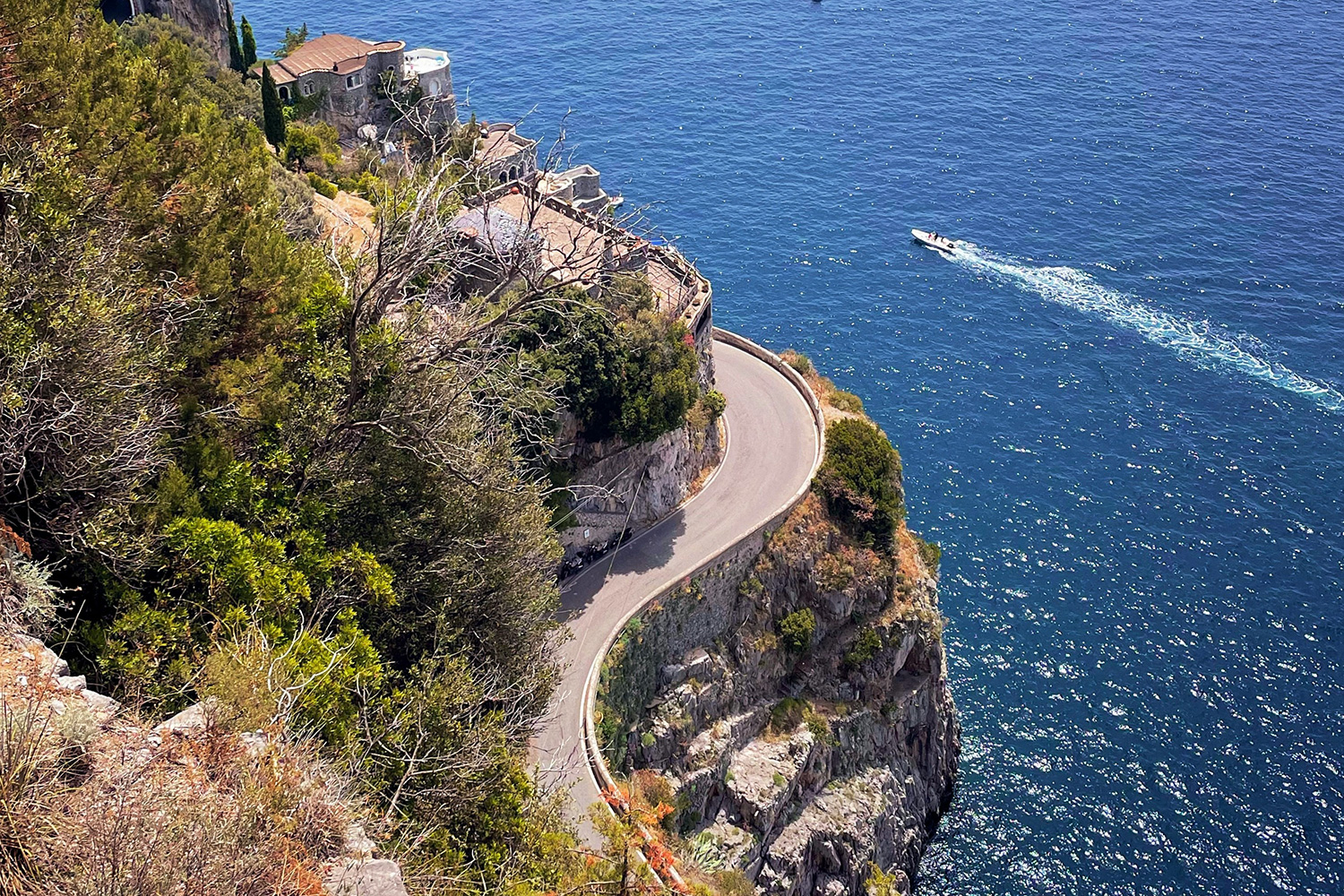
The Amalfi Coast road has been sold to the world as 50 kilometres of glamorous motoring.
Vintage convertible.
Sunglasses.
Empty asphalt.
Mediterranean glittering below.
Reality occasionally contains a coach occupying both lanes and several dimensions of space you had assumed belonged to you.
The SS163 Amalfitana is genuinely spectacular, and driving it at the right time can be memorable.
But don’t rent a car simply because the road looked good in a video.
Traffic gets brutal. Parking is difficult. Seasonal traffic rules matter. Safe places to stop are fewer than the views suggest.
If you’re even considering a rental car, read our Amalfi Coast driving restrictions 2026 guide before booking the car, not after collecting the keys.
Then enjoy the road for what it is rather than what an advertisement promised.
29. Go beneath Positano at the Roman archaeological site
Positano spends so much energy looking glamorous above ground that it’s easy to miss what sits underneath it.
Beneath the Church of Santa Maria Assunta are remains of a Roman maritime villa.
The Municipality of Positano describes the site as evidence of a luxurious Roman villa established here by the end of the first century BC; the archaeological museum sits in the centre of town at Piazza Flavio Gioia.
Official Positano information for the Roman Archaeological Museum
The contrast is excellent.
Outside: boutiques, cocktails, ferries.
Below: Roman rooms and traces of a completely different Positano.
If you think Positano begins and ends with twentieth-century glamour, go downstairs.
30. Leave half a day deliberately empty
This is the kind of thing people often skip when planning, then end up enjoying the most once they are there.
Leave a little space in the itinerary. No reservation on the other side of the coast, no timed attraction, no need to be somewhere at exactly 15:15. Just keep a few hours open and see what feels right.
Maybe you stay longer at the beach, have a slower lunch, take a ferry because the weather is perfect, or spend more time in a town you expected to visit for twenty minutes.
The Amalfi Coast is much more enjoyable when every part of the day is not scheduled in advance.
Instead of asking “What else can we fit in?”, leave room for a better question:
“What do we actually want to enjoy?”
How much Amalfi Coast can you actually fit?
One big experience per half-day. That’s the rule.
by ferry
Frequently asked questions about things to do on the Amalfi Coast
What is the number one thing to do on the Amalfi Coast?
For most first-time visitors, see the coastline from the water.
A boat trip or well-chosen ferry journey gives you a perspective on the cliffs, settlements and geography that you simply cannot get from the road.
If hiking is a major part of how you travel, the Path of the Gods is the other serious contender.
What should you not miss on the Amalfi Coast?
For a first visit, we’d prioritise Positano, Amalfi, Ravello, one journey by sea, one excellent beach and either the Path of the Gods or another coastal walk.
After that, choose according to your interests rather than somebody else’s checklist.
Is Positano worth visiting?
Yes.
Positano is crowded and expensive because an enormous number of people want to see a genuinely extraordinary place.
The mistake isn’t visiting Positano.
The mistake is assuming Positano is the Amalfi Coast.
Is Ravello worth visiting?
Absolutely — particularly if you value gardens, architecture and panoramic views.
Villa Cimbrone and Villa Rufolo make Ravello far more than a viewpoint above Amalfi.
Is the Path of the Gods worth doing?
Yes, if you’re comfortable walking on uneven mountain terrain.
The hike gives you a completely different perspective from travelling along the coast by road or ferry.
Start early in warm weather and bring enough water.
What are the best free things to do on the Amalfi Coast?
Walking through towns, swimming from public beach areas, watching sunsets, exploring Atrani and following many of the old walking routes cost little or nothing.
Some gardens, museums and organised beach areas charge admission.
What are the best things to do on the Amalfi Coast for couples?
A boat trip, sunset in Praiano, Ravello’s gardens, a quieter beach and a long dinner in Cetara or Minori are difficult to improve upon.
You do not need to spend the entire trip performing romance at expensive Positano restaurants.
What are the best things to do on the Amalfi Coast with children?
Maiori’s easier waterfront, beach time, ferry rides and shorter town explorations generally work better than days built around steep trails and repeated transfers.
On this coast, terrain matters almost as much as age.
Can you visit the Amalfi Coast without a car?
Absolutely.
For many itineraries, it’s easier.
Seasonal ferries connect coastal towns while buses, trains to the main gateways and private transfers cover the gaps.
Our complete Amalfi Coast transport guide explains the options and where each works best.
How many days do you need on the Amalfi Coast?
Three days gives you the major highlights.
Five days produces a much better balance of towns, beaches and experiences.
Seven days gives you enough room for quieter places and slower days without turning every morning into logistics.
So, what are the best things to do on the Amalfi Coast?
For a first visit, we’d build the trip around five things:
See the coast from the water.
Walk Positano properly.
Spend half a day in Ravello.
Choose one great hike.
Leave enough time to actually swim.
Then add Amalfi, Atrani, food, gardens and quieter towns according to the time you have.
The biggest mistake is treating the Amalfi Coast like a collection of villages to complete.
It isn’t.
It’s a landscape.
The towns make far more sense when you connect them with the sea, mountains, old paths, agricultural terraces and food traditions between them.
And that — rather than any single Positano photograph — is what makes this coastline extraordinary.
Final thoughts: the best things to do on the Amalfi Coast
The Amalfi Coast is at its best when you stop trying to “complete” it. Pick a few places that genuinely excite you, leave room for the sea, a long lunch, a walk and the occasional change of plan.
The best things to do on the Amalfi Coast are not just Positano, Ravello or one famous viewpoint. They are the mix of coastal towns, beaches, boat trips, hikes, food and slower moments between them.
Plan smart, move less and give the coast time to surprise you. That is usually when the best part of the trip happens.
Useful next reads
Compare the beaches worth the stairs, boats and detours — from Positano to Vietri.
→ Where to stay Best Towns to Stay on the Amalfi CoastCompare Positano, Amalfi, Praiano, Maiori, Minori and other bases before choosing where to sleep.
→ Getting around Amalfi Coast Transport Guide 2026Ferries, buses, trains, taxis and transfers — and which option makes sense for each part of the coast.
→ Driving Amalfi Coast Driving Restrictions 2026Check the plate restrictions and road rules before building your trip around a rental car.
→